January: Cernay, near Rambouillet by Léon Germain Pelouse
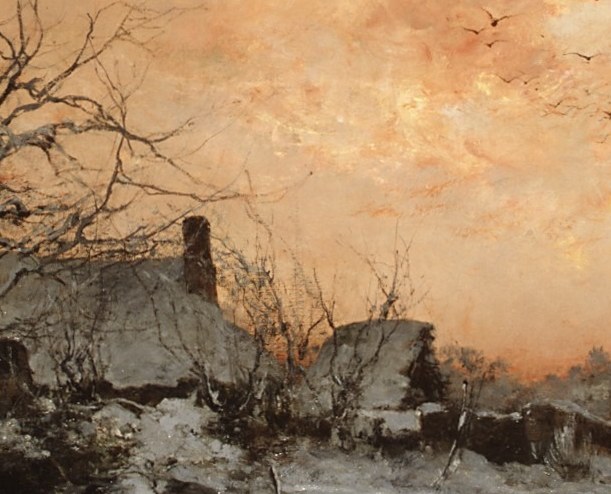
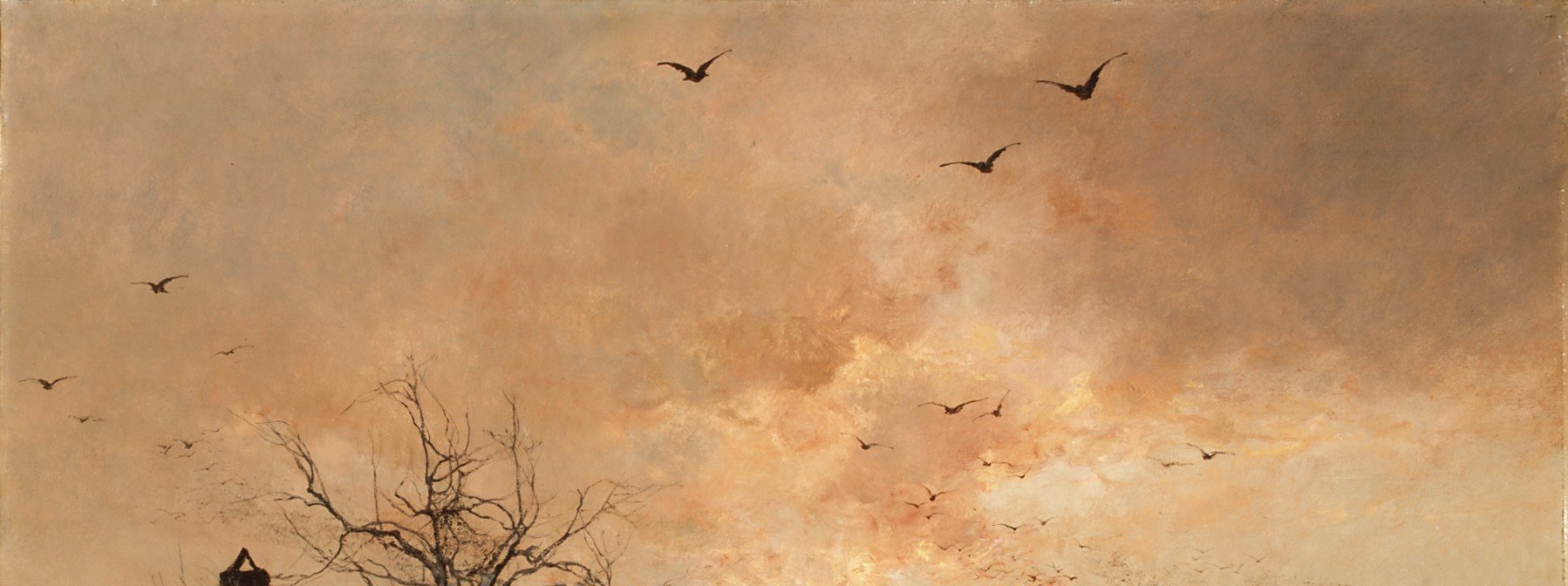
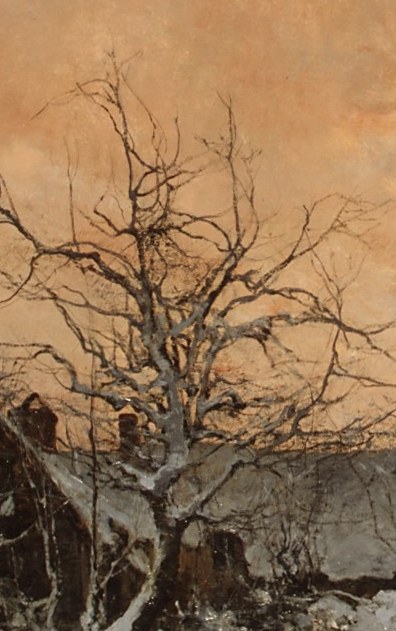
Léon Germain Pelouse painted January: Cernay, near Rambouillet in 1874, and the first thing you notice is the temperature paradox: a snow-buried farm under a sky that glows amber and orange like a late-summer sunset. The painting lives in the tension between those two color worlds.
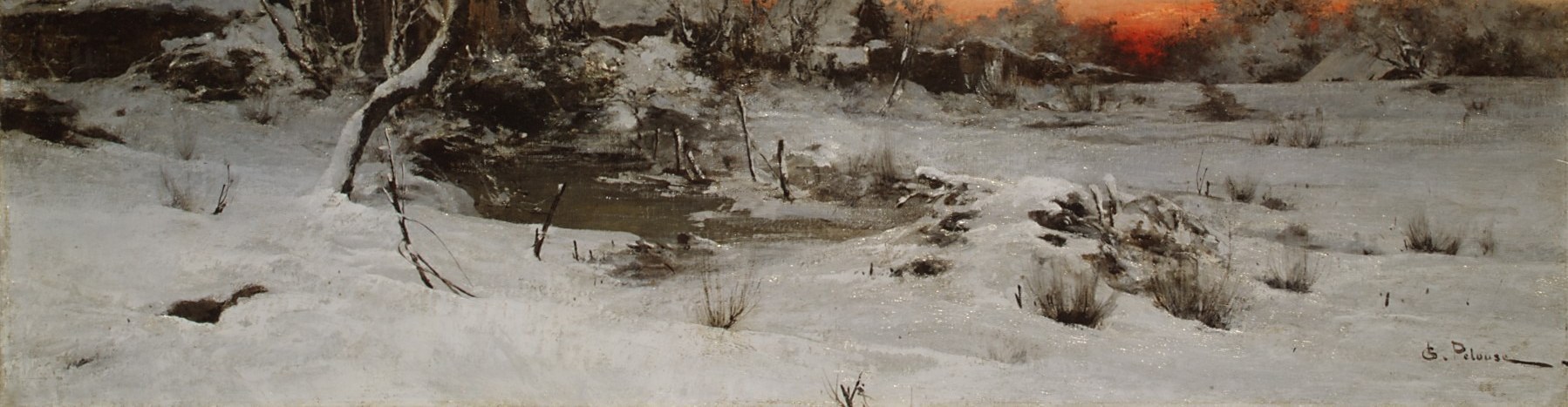
Watch the narrow band where the hot orange horizon meets the cool blue-white snow. Pelouse dragged those zones right up against each other with loaded, loose brushwork. He did not blend a smooth gradient the way an academic painter might. He let the eye do the mixing, and the result is a winter day that feels thermally unstable, almost electric.
Pelouse was a largely self-taught painter from Pierrelaye who built a reputation on stark, obsessively detailed landscapes. His contemporaries compared him to Corot and Daubigny, but his work is stranger: he painted nature as if no humans had ever entered it. Here, the only living motion is a scatter of dark birds crossing the burning sky.
Stand in front of this painting and your eye keeps bouncing between the ember glow above and the frozen ground below. That push-pull is not an accident. It is the whole argument of the picture.
Details

Transcript
January, 1874. A self-taught painter sets up outside Paris. He paints a farm buried in snow. Nobody is out in this cold. But look at the sky. That is not winter light. The whole sky burns amber and orange. A January sunset. Pelouse had to make this glow with paint alone, no photograph. He buried hot orange pigment deep in the horizon, then dragged cooler snow up against it. The eye reads warmth and cold at the same time. That is the trick. A frozen day that feels like it is on fire.