Jacques-Louis Leblanc (1774–1846) by Jean Auguste Dominique Ingres
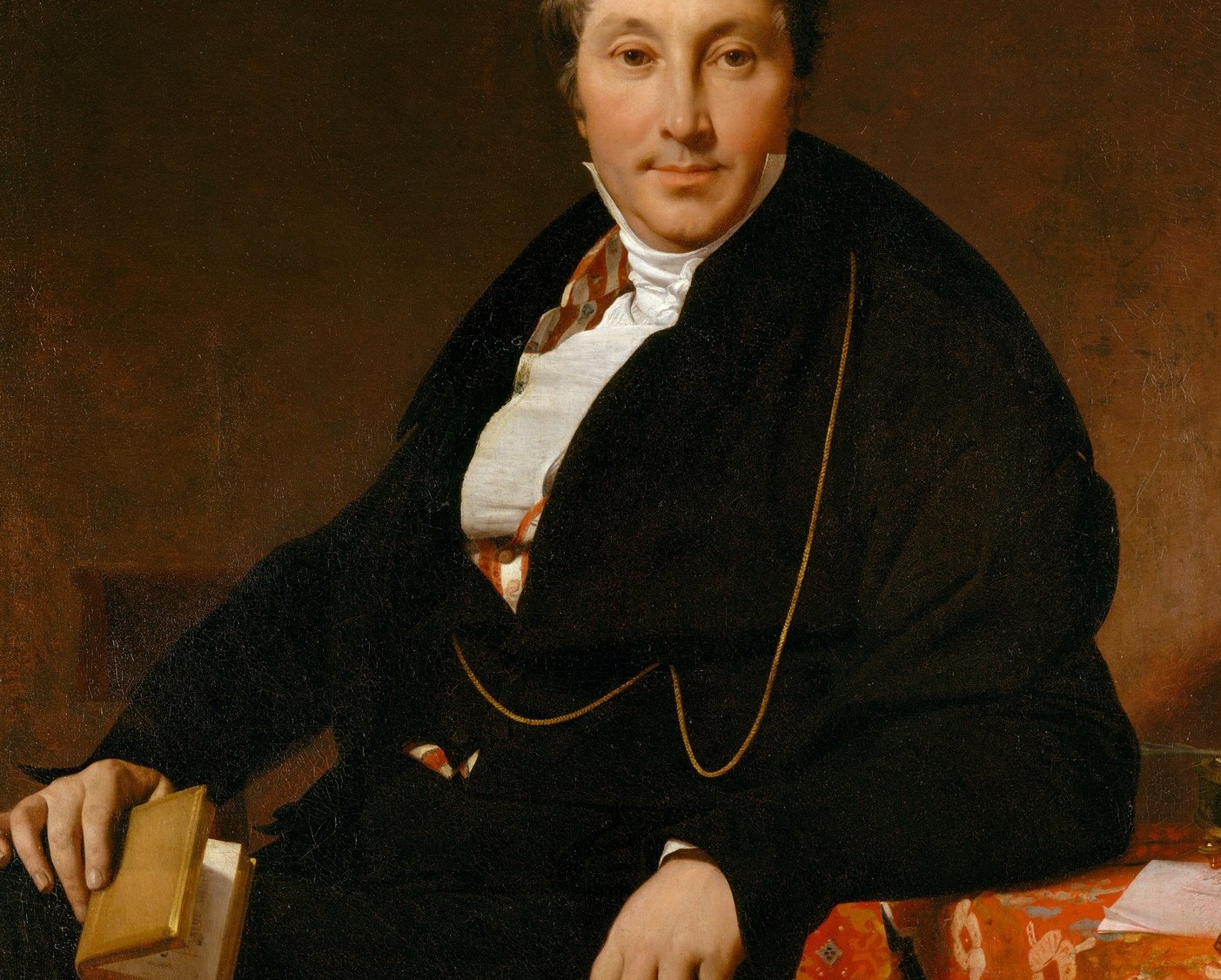
Jean Auguste Dominique Ingres painted Jacques-Louis Leblanc in 1823, and the portrait now hangs at The Metropolitan Museum of Art. It is a masterclass in texture rendered with almost invisible means.
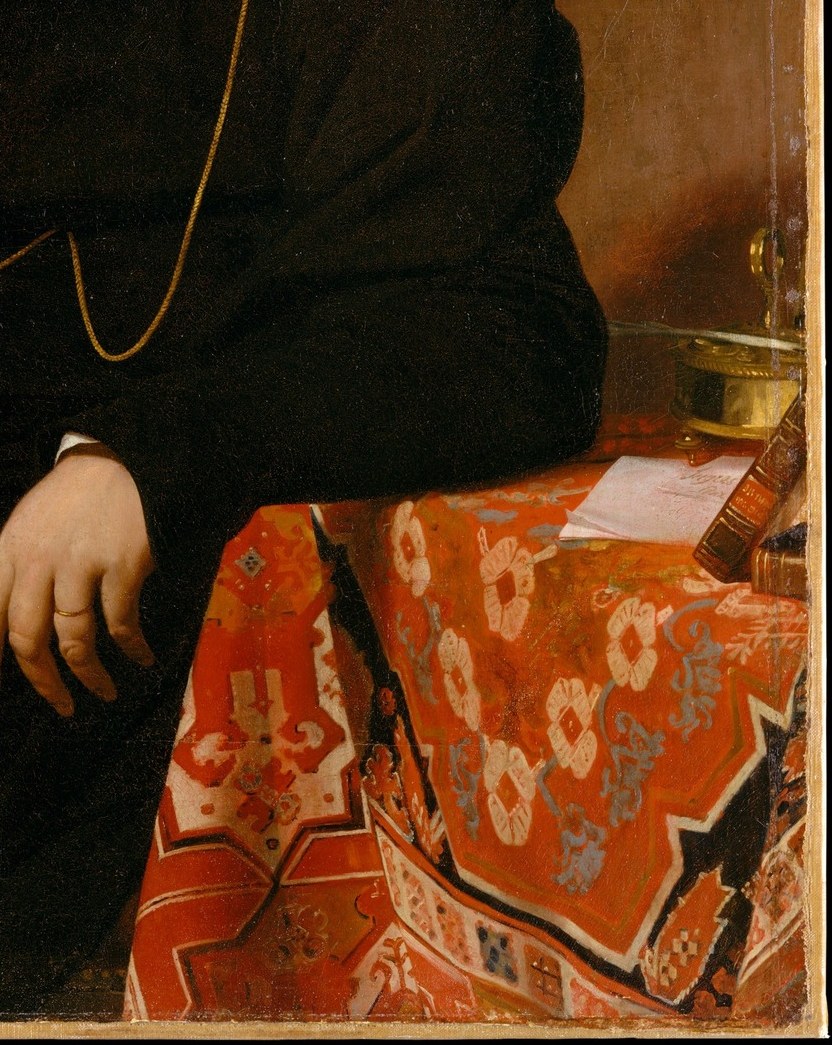
Look at the shoulder first: a huge mass of black wool that feels heavy and matte, built without a single obvious brushstroke. Then drop to the white cravat. Ingres used only gray and cream to carve the crisp folds of starched linen. The red-and-gold patterned cloth on the right introduces a third, entirely different surface: dense, woven, almost tufted.
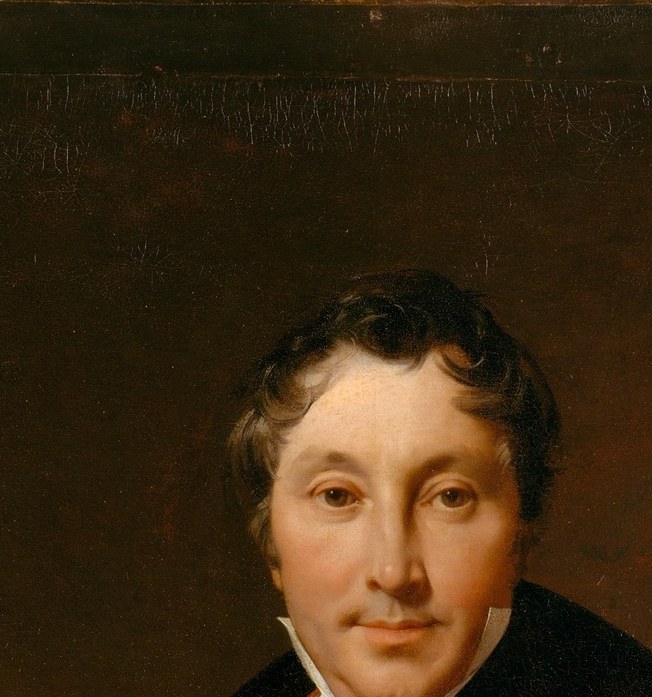
Ingres was a French Neoclassical painter who saw himself as a guardian of academic tradition against the rising Romantic movement. He achieved this tactile variety on a perfectly flat canvas through meticulous layering of thin glazes and subtle gradations of shadow, never breaking the smooth surface he prized.
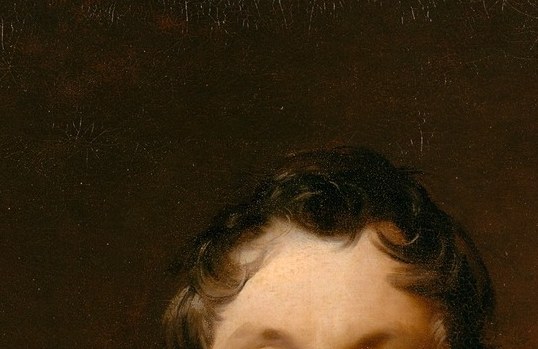
Zoom in and your eye will swear it can feel the wool, the starch, and the weave. The painting itself remains silent and slick.
Details

Transcript
Start with the shoulder: heavy black wool. No visible brushstrokes. Just weight and shadow. Now the cravat. Crisp, starched linen. Two different whites built from gray and cream alone. And this patterned cloth: thick, woven, almost tufted. Ingres painted it all on a flat canvas, in 1823. Your eye feels texture your fingers would never find.