Bearded Man with a Velvet Cap by Govert Flinck
A man looks out at you from 1645, wearing a crimson cap and holding a secret. Govert Flinck’s "Bearded Man with a Velvet Cap" hangs in The Metropolitan Museum of Art. The sitter’s name is lost, but his quiet command of the canvas tells you everything you need to know about his character.
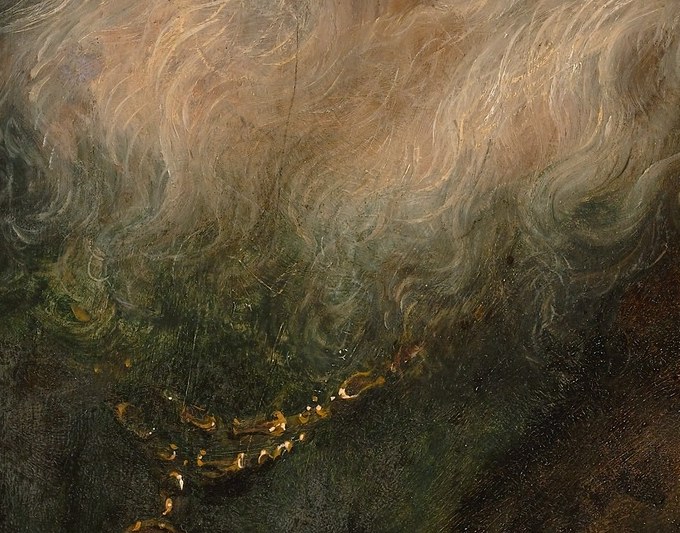
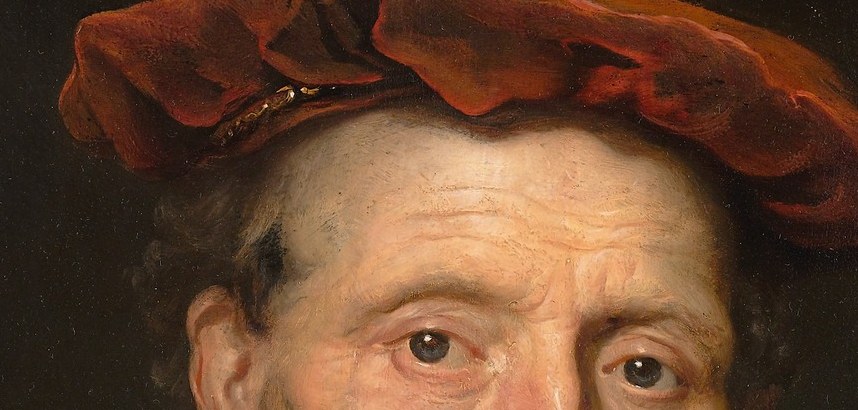
Start with the red cap, a deliberate splash of saturated color against an almost featureless brown background. Then follow the gold chain down to his chest. The pendant at its terminus is small, dark, and just barely legible as a possible gold coin or medallion. In mid-17th century Dutch portraiture, such chains were frequently awarded by civic guard companies or guilds. He earned this.
Flinck was Rembrandt’s most successful pupil, and you can see the master’s chiaroscuro in the warm ochre light raking across the sitter’s forehead. But look closer at the weathered skin of the jaw and cheek. Flinck builds it with visible, textured brushwork, a technique called impasto, that refuses to smooth away age. The white beard dissolves into loose, confident strokes. This is technical maturity, but it is also empathy.
The portrait ultimately decodes to something deeper than rank. The direct, unflinching eyes and the unvarnished handling of old skin add up to an honest record of a life. Who do you think he was, a retired merchant, a church deacon, or a burgomaster who sat for his favorite artist?
Details



Transcript
First, the red velvet cap, pure status. Then the gold chain, marking a man who held civic power. The pendant is too dark to read at first glance. Close up, it may be a gold coin, a reward for service. Flinck learned this light from Rembrandt himself. But the real message is in the skin, loose, warm, lived in. This is not a monument. It is a man, aging, and unafraid to be seen.