The Victory of Fleurus by Vincenzo Carducci
Step into the intense world of 17th-century warfare with Vincenzo Carducci's *The Victory of Fleurus*, painted in 1634 and held in the Museo del Prado.
Carducci, an Italian artist, spent his career working for the Spanish court. This powerful oil painting, a prime example of early Baroque Italian style, captures the chaotic energy and drama of the Battle of Fleurus.
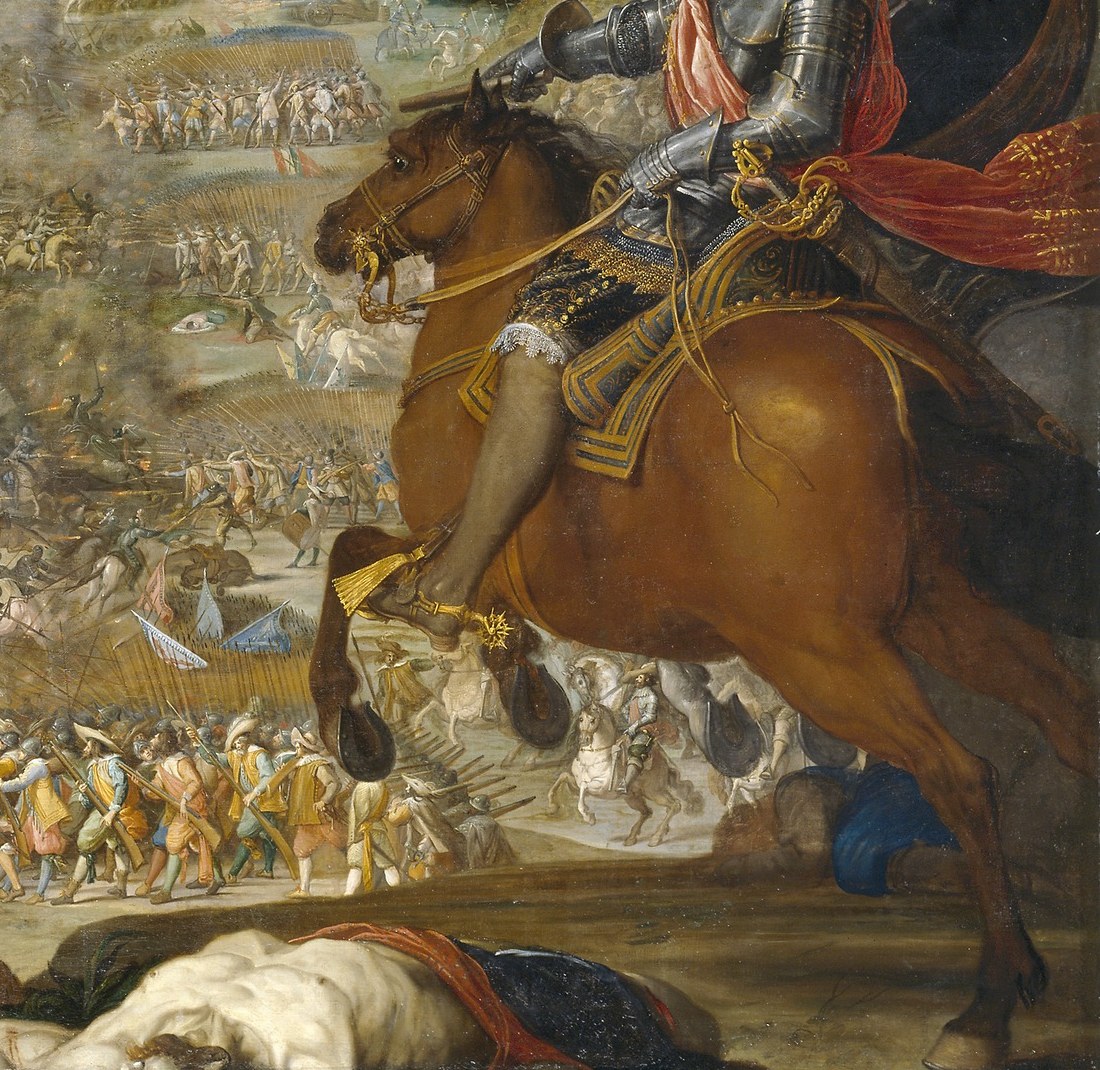
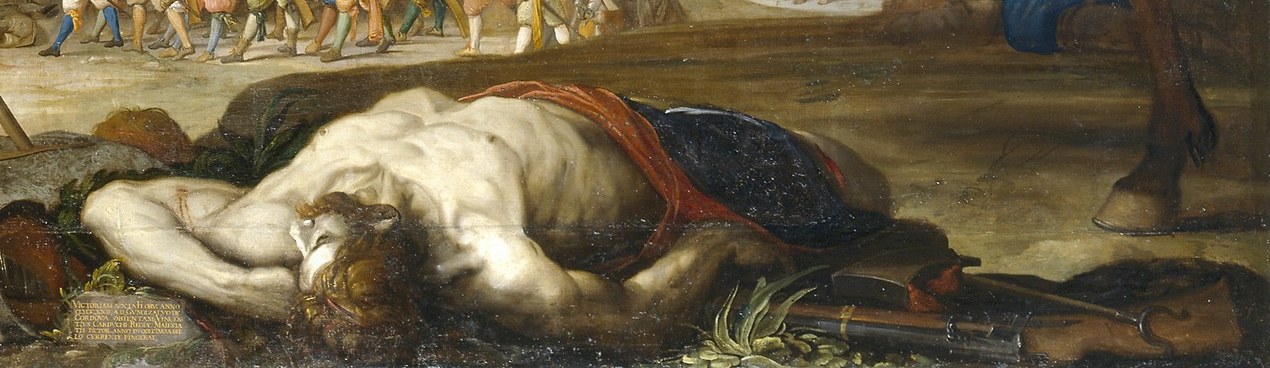
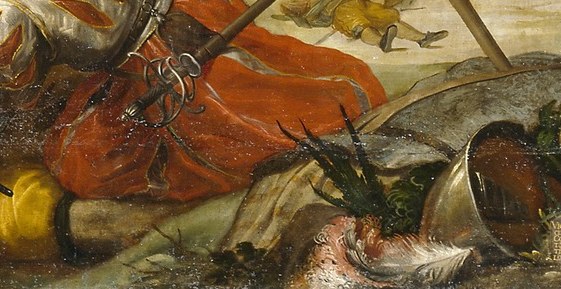
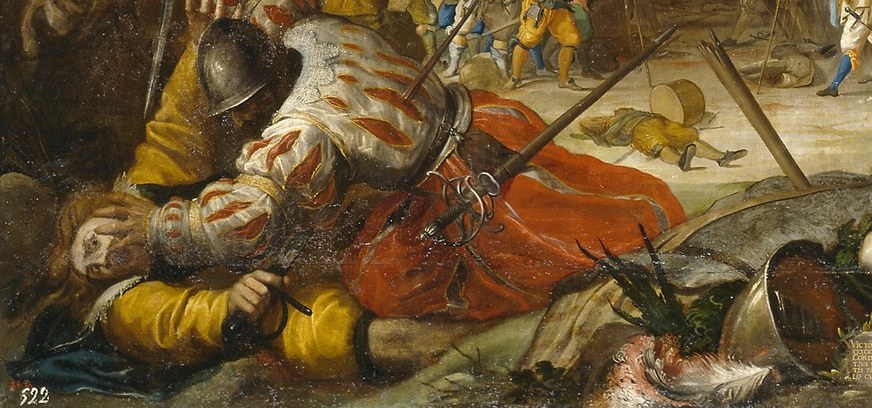
Observe the central armored commander on horseback, sword in hand, leading his troops amidst the fray. The foreground reveals the harsh realities of conflict, with discarded helmets and muskets scattered among fallen soldiers.
Carducci masterfully uses dynamic composition and dramatic light and shadow to bring this historical moment to life, making the metallic gleam of armor and the expressions of soldiers leap from the canvas. What details surprise you most in this scene?
Details
Transcript
This painting captures a pivotal 17th-century battle. It's the Battle of Fleurus, painted by Vincenzo Carducci in 1634. The artist, an Italian, worked for the Spanish court. Look at the central figure, a commander leading the charge. He is surrounded by the chaos and brutality of war. Notice the discarded helmet and musket in the foreground. Carducci used dramatic lighting to emphasize key details.