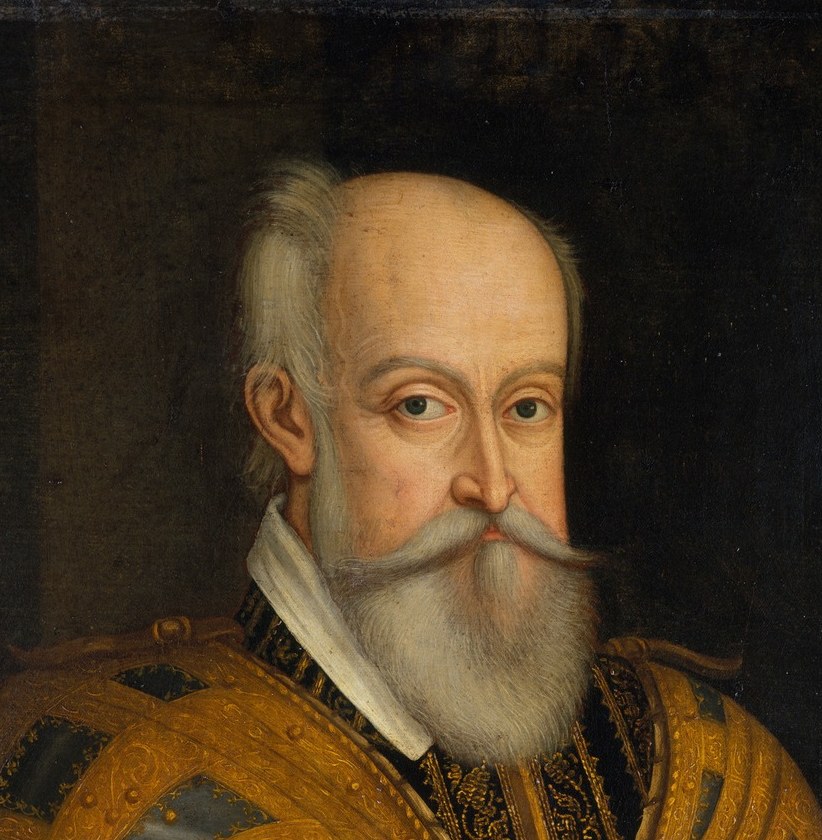
Alfonso II d'Este (1533–1597), Duke of Ferrara by http://www.wikidata.org/.well-known/genid/533847d45bc75496827ce2456c0116af
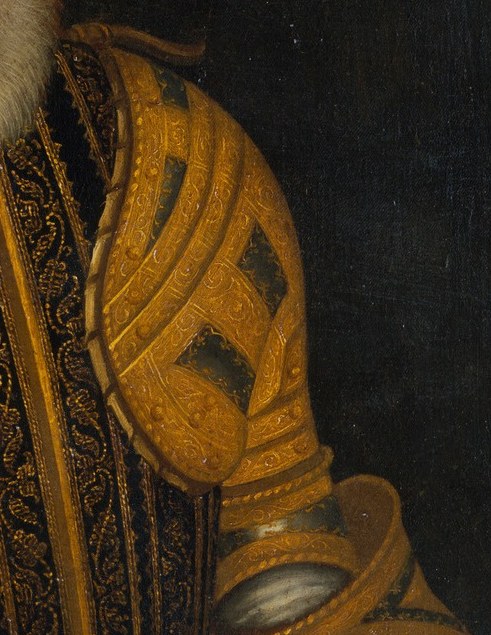
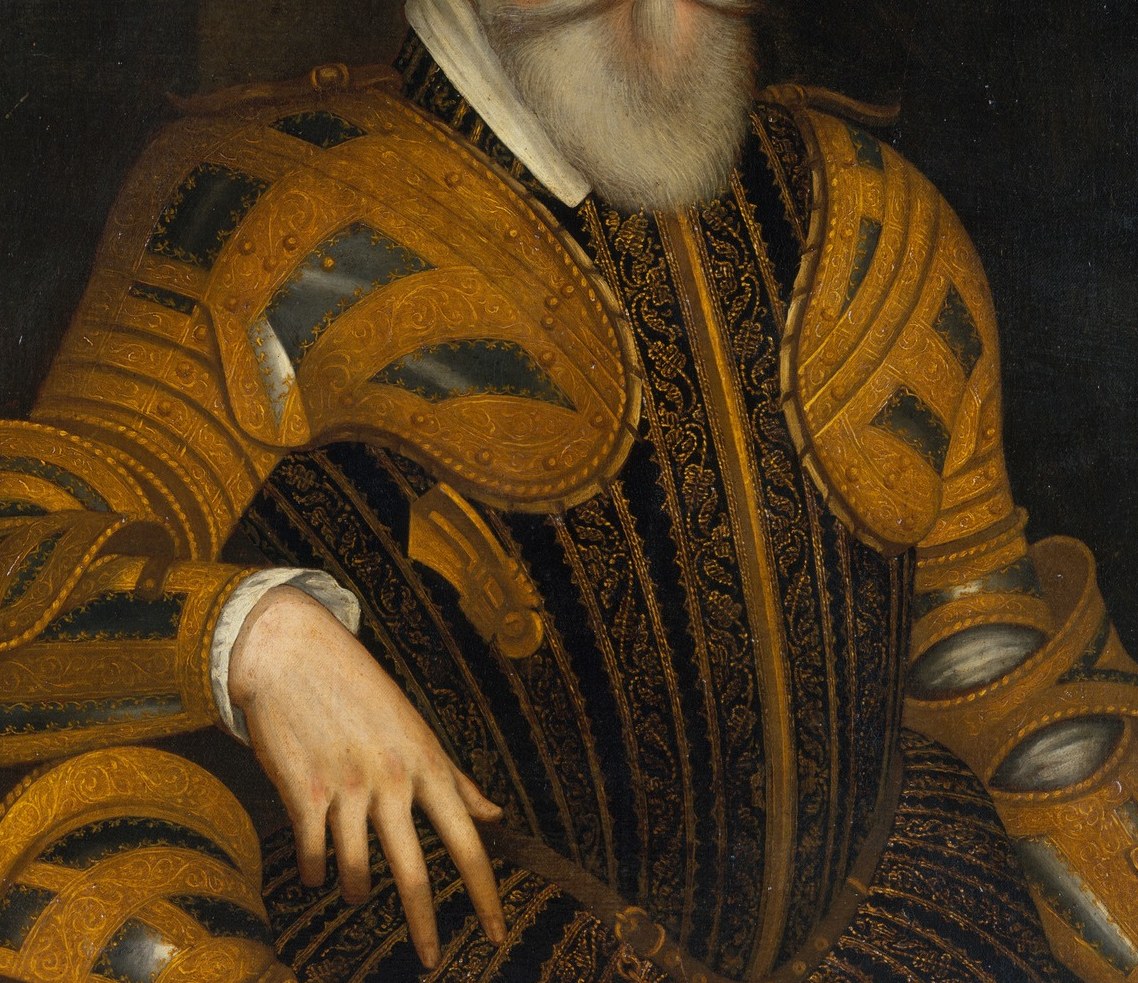
This is Alfonso II d'Este, Duke of Ferrara, painted around 1600 by an unknown Ferrarese artist. He looks every inch the Renaissance prince in gilt armor and slashed sleeves, yet the portrait is a strange anachronism. By the time this was painted, Titian was long dead and Baroque dynamism was taking over Europe. Alfonso's court had been one of the most sophisticated in Italy; he himself had commissioned works from Titian and supported poets like Tasso. So why does this portrait feel so stiff, so deliberately old-fashioned?
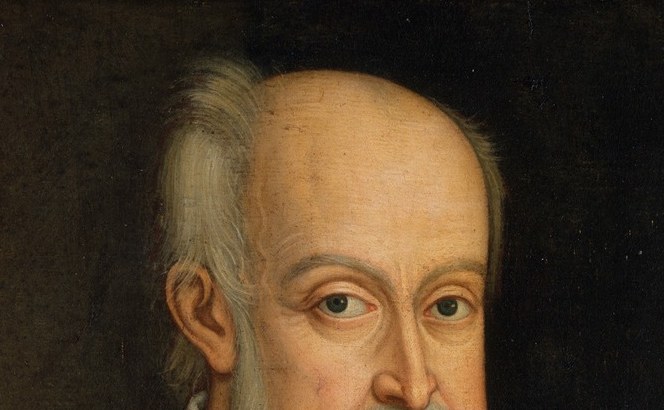
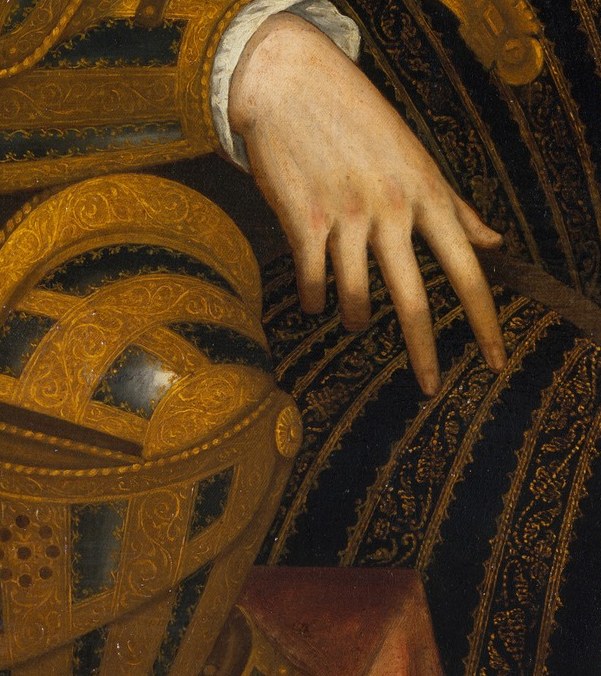
Look at the directness of the eyes. There is no softening gaze into the distance, no classical column or pastoral landscape behind him. Just a black void and a stare that meets yours and holds it. His left hand rests on a dark studded helmet, a clear signifier of military command, while the gold-and-black slashed sleeves broadcast the kind of wealth that can afford to cut up expensive fabric just to show the lining. Every detail is a claim to power that the real world was taking away.
The portrait was likely commissioned late in Alfonso's life, or possibly posthumously, as a piece of reputation management. He had married three times, famously failing to produce a legitimate heir. After his death in 1597, Pope Clement VIII reclaimed the Duchy of Ferrara for the Papal States, absorbing it into the territories of the Church. The Este family retained only Modena and Reggio. This painting is not a record of a man at ease; it is a deliberate construction of a duke determined to look permanent even as his line was being written out of history.
The armor, the helmet, the unbroken stare: all of it is saying the same thing. I was here. I mattered. What do you think a portrait does when it knows the story is already over?
Details
Transcript
He commanded Ferrara, patronized poets, and owned Titians. So why does this portrait feel so deliberately archaic? Look at the eyes. He's not performing for you. He's watching you calculate his worth. The hand on the helmet means: I have led men in war. The slashed sleeves mean: I burn money on fashion. He needed this image because his dynasty was ending. Three marriages. Zero surviving sons. The papacy took his city.