The Golden Age by Jean-Baptiste Pater
Jean-Baptiste Pater painted The Golden Age around 1725, and it lives quietly in a public collection as a perfect lesson in one thing: how to make oil paint feel like it is emitting light.
Forget the title for a moment and look at the left side. Pater uses a dense canopy of dark foliage like a theater curtain, blocking nearly half the frame in shadow. That darkness is not empty, it is the mechanism. Against it, the tall girl's blue-white silk dress appears to glow, not because it is painted brightly, but because it is painted next to something violently dark. The effect is called contre-jour, and Pater learned it from his teacher, the great Antoine Watteau.
Pater and Watteau had a difficult relationship. He studied under him briefly in 1713, was treated badly, and returned home. They reconciled only in 1721, a month before Watteau died. Pater later said he learned everything he knew in those final few weeks. You can see the debt here: the shimmering pastel palette, the fête galante spirit, the soft cloud-light that suggests the world is permanently gentle.
Next time you see a costume drama, ask who is lighting the scene. Here, the light is the most disciplined performer in the picture, and it has been delivering the same silent performance for three centuries.
Details
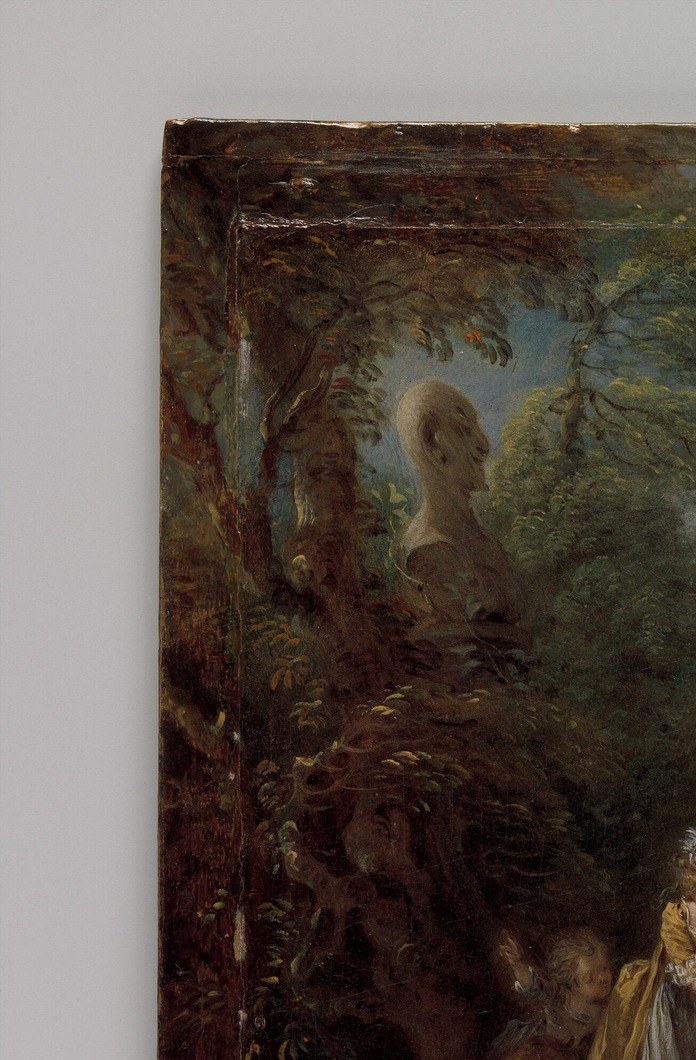
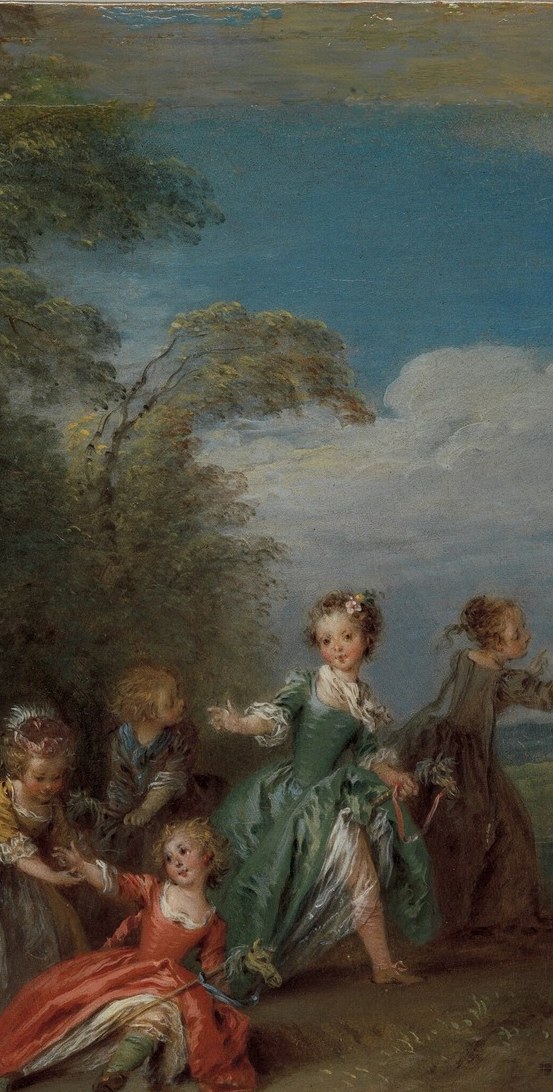
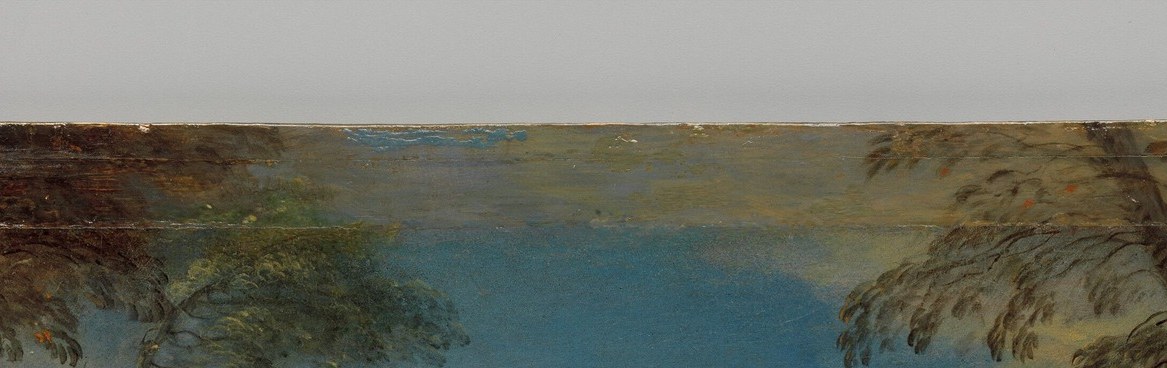
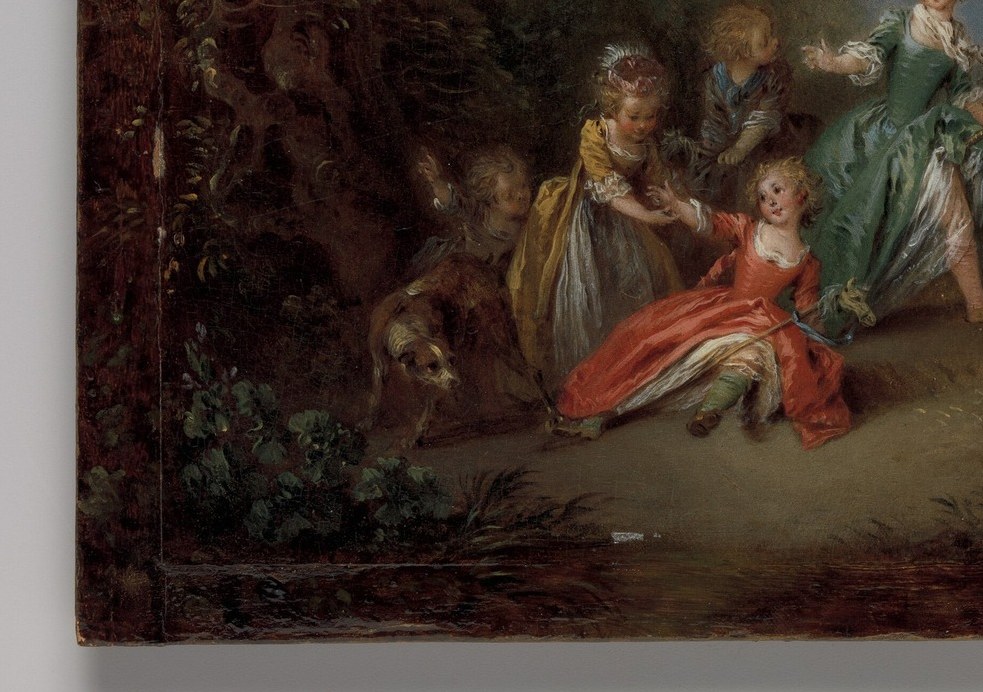
Transcript
It looks like a costume drama for children. But the real star is the light. Pater blocks half the canvas with pure shadow. Then he lets a single figure catch everything. Her silk glows because of the wall of dark behind it. That is contre-jour, against the day. A student of Watteau invented it. No actual light escapes the canvas. Only paint does.