Portrait of a Man (Possibly Peter Vogelsang Sr.) by American 19th Century
Painted in 1829, "Portrait of a Man (Possibly Peter Vogelsang Sr.)" is an oil on wood painting by an unknown American 19th Century artist. This artwork showcases remarkable technique, particularly in its ability to render texture and depth, a quality often enhanced by painting on wood panels.
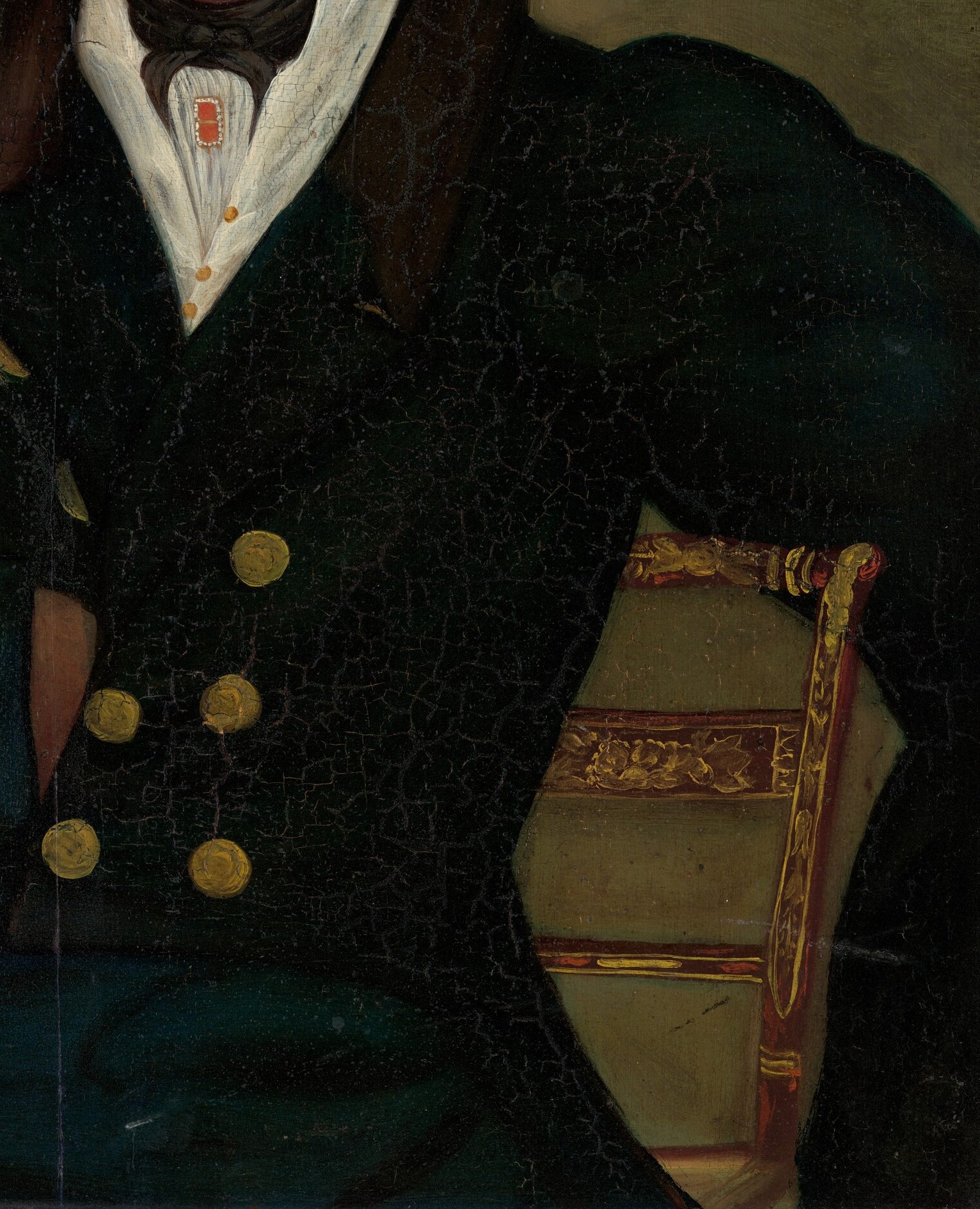
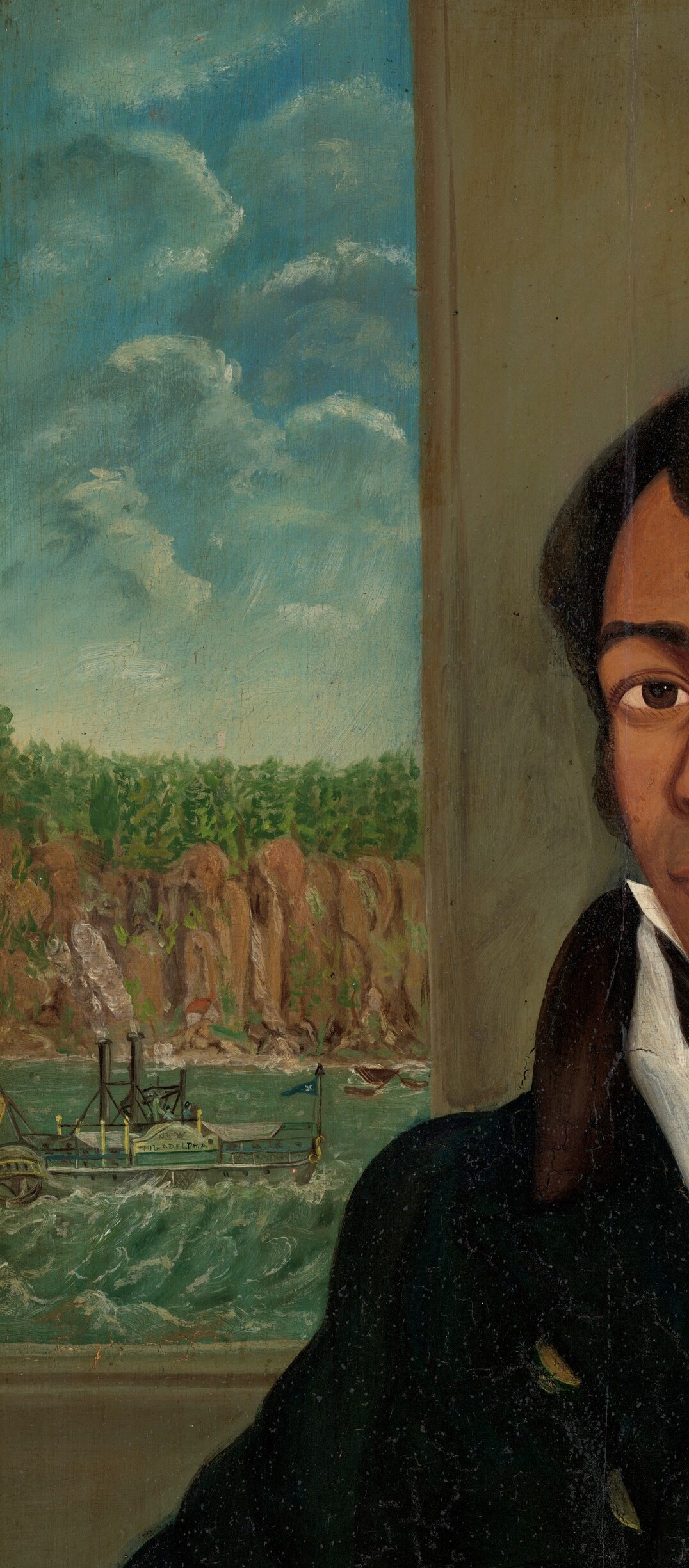
Observe the sitter's dark coat. The artist masterfully created a subtle, crackled effect in the paint, giving the fabric an unexpected richness and a sense of age. Then, shift your gaze to the window view behind him. Despite its small scale, it reveals a dramatic landscape complete with rugged cliffs and a tiny steamboat, hinting at the changing world outside.
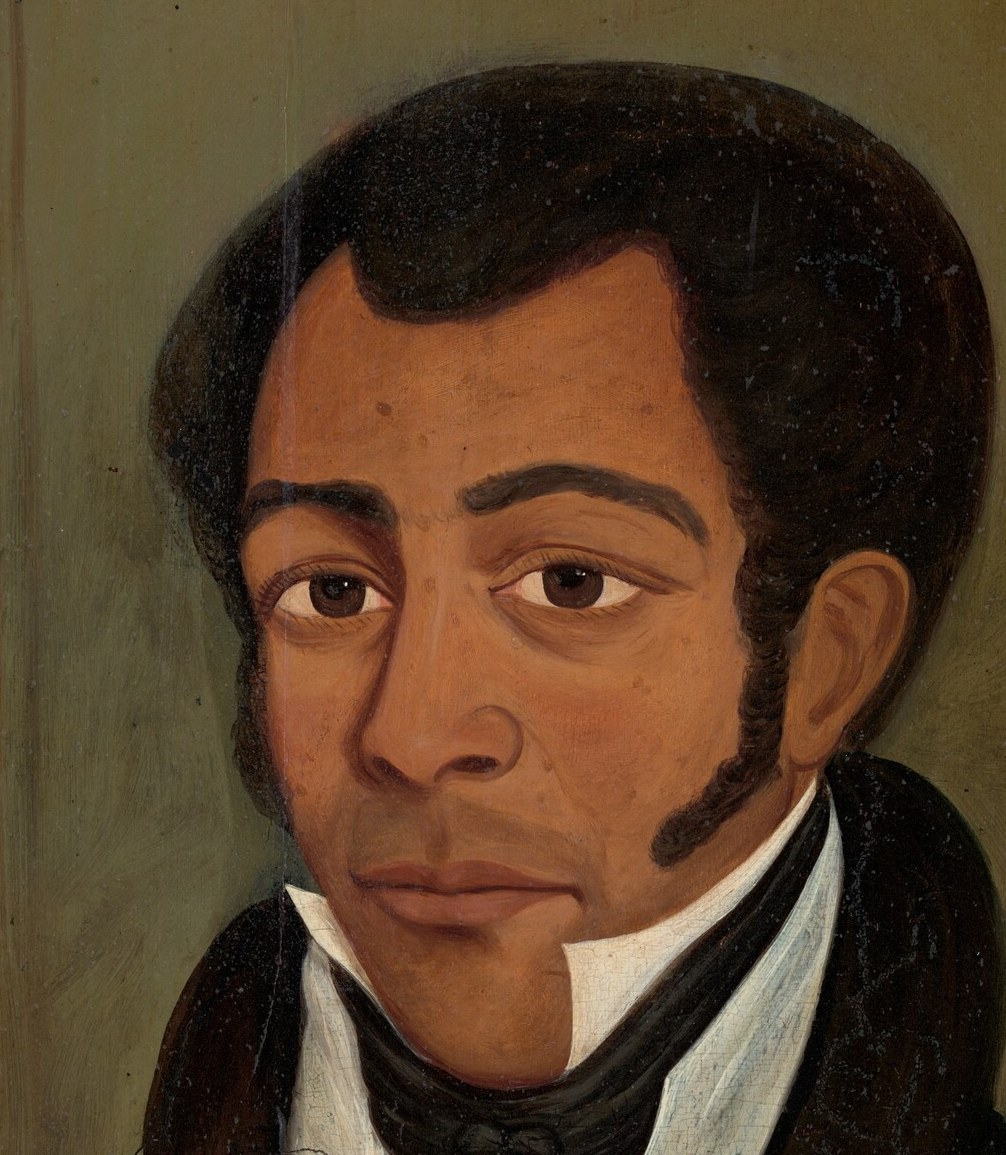
While the artist remains unknown, their skill in capturing both the sitter's serious demeanor and the intricate details of his surroundings is evident. The choice of oil on wood allowed for a precise, almost miniature-like quality in the background details, creating a compelling contrast with the foreground portrait. This painting, residing in a museum collection, is a testament to the quiet artistry of its time.
What other subtle details do you notice in this painting?
Details
Transcript
This painter, working in 1829, had a special trick. They painted on wood, not canvas, for incredible detail. Look closely at the man's dark coat. The paint here is crackled, but intentionally. It gives the fabric a rich, aged texture. Beyond the window, a world of detail emerges. See the steamboat, a tiny sign of modernity.