The Third Princess with her Cat, from the "New Herbs I" (Wakana I) chapter The Tale of Genji (Genji monogatari} by Tsukioka Settei
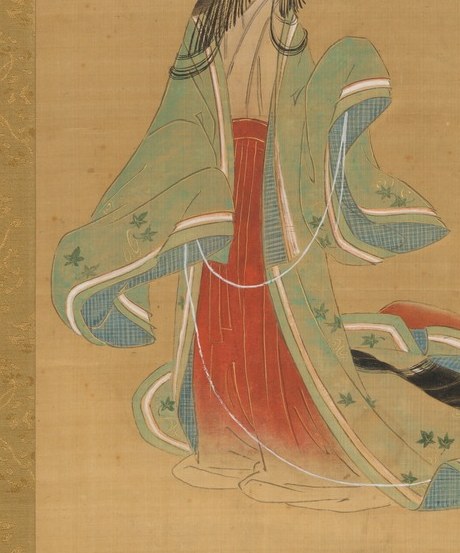
Tsukioka Settei's "The Third Princess with her Cat," painted in 1749 and held at The Metropolitan Museum of Art, captures a poignant moment from Murasaki Shikibu's epic 11th-century novel, The Tale of Genji.
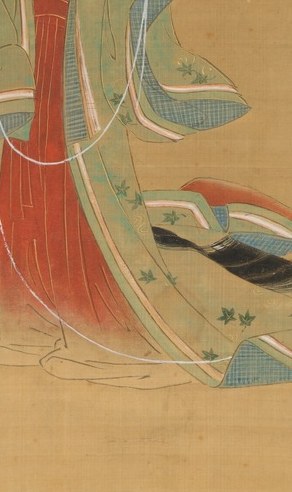
The painting focuses on the Third Princess, depicted in a state of quiet contemplation. Her averted gaze and the delicate pose of her hand near her face suggest introspection. The vibrant red of her undergarment, peeking through her green kimono, adds a touch of depth and color to her serene attire, hinting at a complex inner world.
This scene illustrates a chapter known as "New Herbs I," where the princess grapples with personal sorrow and isolation. Her white cat, calmly curled beside her, serves as a silent, intimate companion in a moment fraught with underlying emotion. Settei's restrained aesthetic emphasizes the tranquility of the scene, allowing viewers to connect with the princess's human experience within the narrative.
What do you imagine she is thinking in this quiet moment?
Details
Transcript
This princess lives in a famous 11th-century Japanese novel. She is the Third Princess in The Tale of Genji. The artist painted her quiet and contemplative. The red undergarment hints at a rich inner life. Her beloved cat is her sole companion in this scene. This moment from the story is one of quiet sadness.