Yellow Warbler by Kidd, Joseph Bartholomew
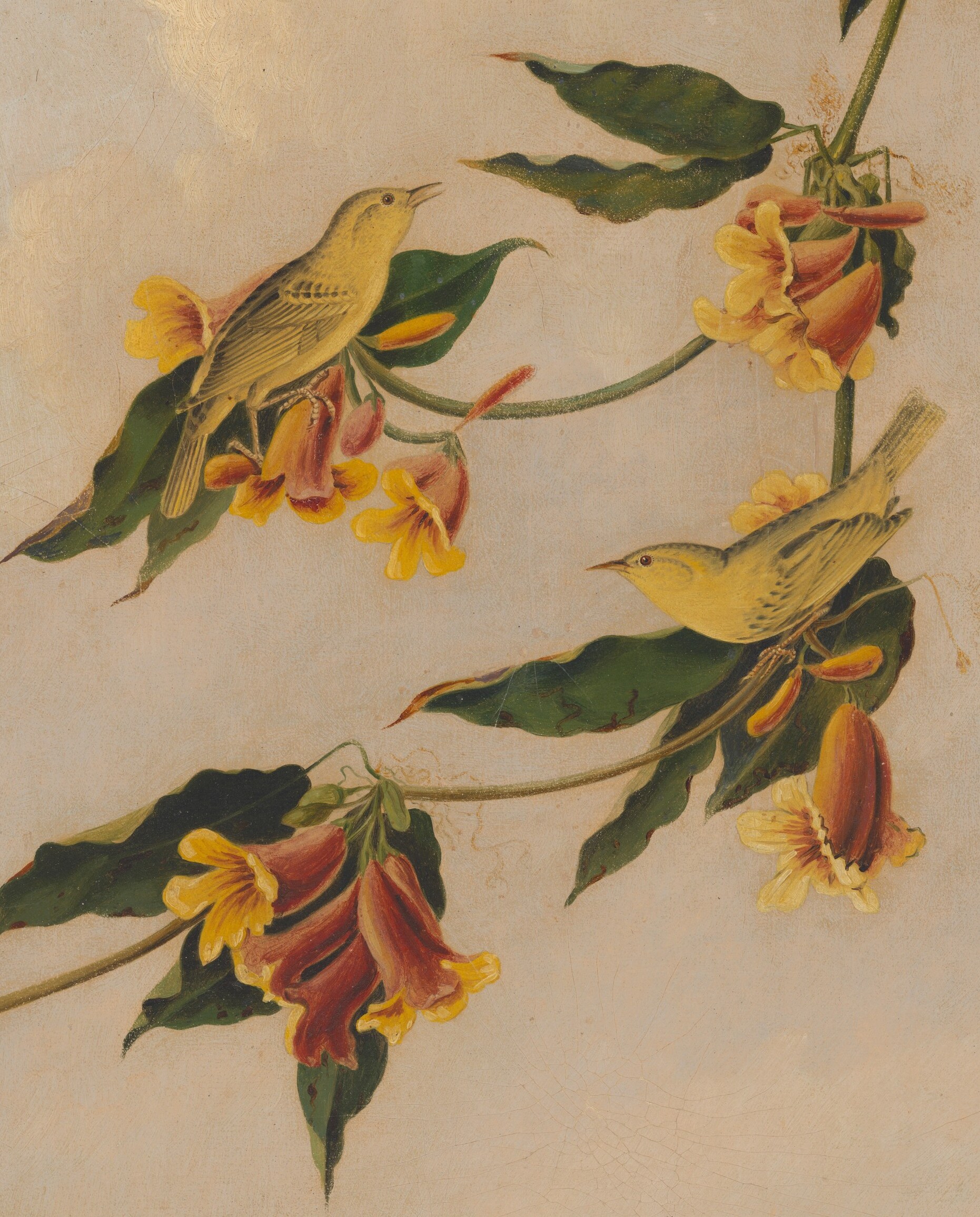
This is Joseph Bartholomew Kidd's Yellow Warbler, painted in 1832 and now in the collection of the American Museum of Natural History. It is oil on millboard, small enough to hold in one hand, and it was built on a hidden pencil drawing that remains visible beneath the paint.
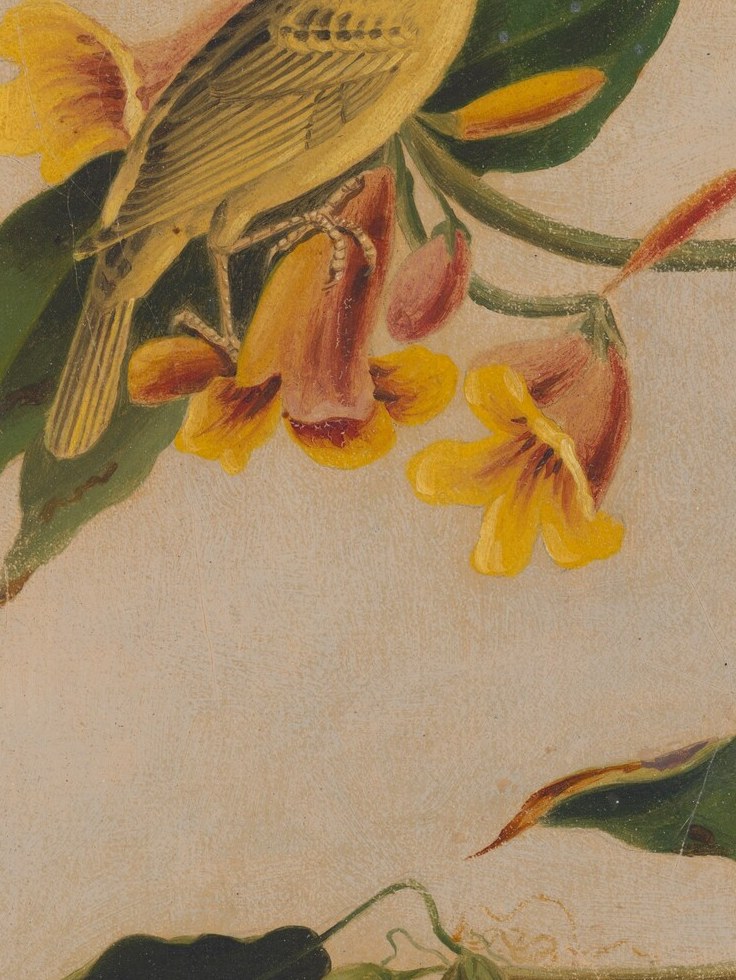
Look closely at the warbler's wing. The olive streaking isn't just plausible; it is diagnostically accurate. A birder could identify the species from those marks alone. Then look at the bright eye. The glossy catchlight is not white paint applied on top, it is a tiny patch of the pale ground left deliberately bare, a trick of subtraction rather than addition.
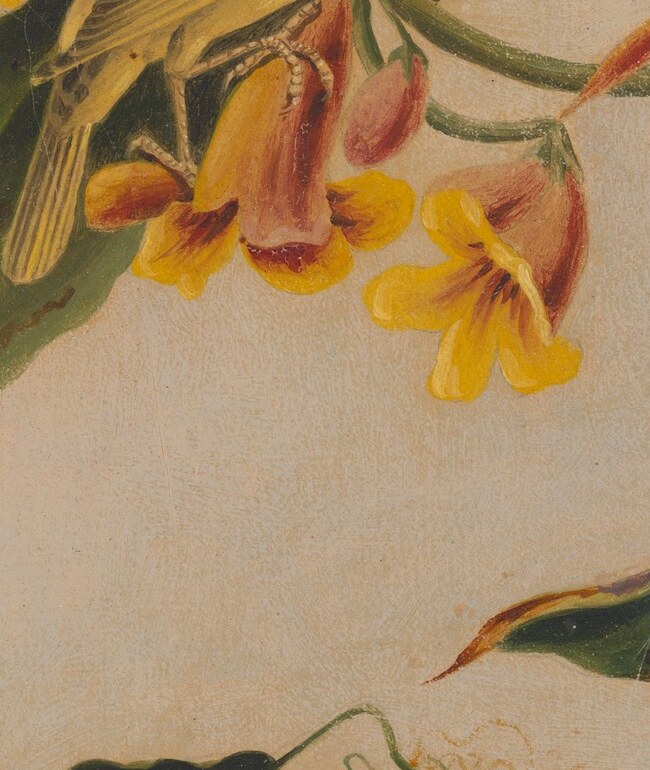
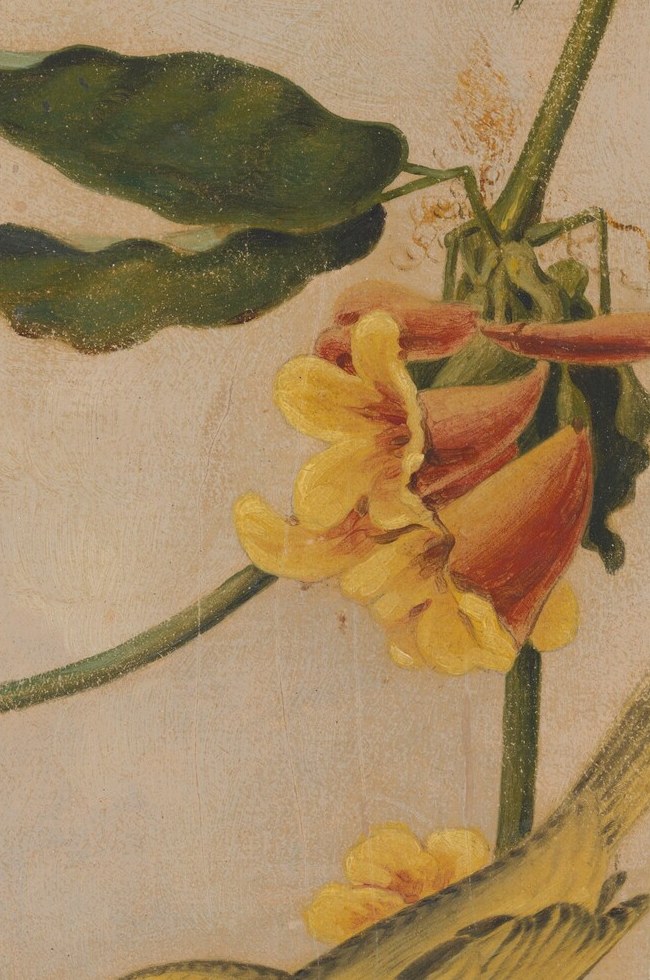
Kidd, who worked in the 1830s, belonged to an exacting tradition of natural-history illustrators who prioritized scientific fidelity over decorative flourish. His process began with a complete pencil underdrawing on the millboard. Only after the forms were locked in did he apply thin glazes of oil, letting the drawing guide every stroke. The stamens inside the open trumpet flower show the same layered method: dry structure beneath wet color.
This is a painting that rewards a viewer who gets close. Most of its best decisions happen at a scale you can only see by leaning in.
Details
Transcript
It reads as a simple study of a bird in a tree. But this is oil paint on a board barely larger than your hand. And underneath the paint is a complete pencil drawing. Every olive streak on the wing was mapped before color filled it. The orange petals share that scaffolding, dry pencil beneath wet glaze. That catchlight in the eye is a single withheld dot of bare ground.