Roma Woman with Baby by Modigliani, Amedeo
Modigliani painted Roma Woman with Baby in 1919. He was thirty-five and gravely ill with tubercular meningitis; he would be dead before the year was out. The painting now lives in the public domain, a quiet survivor of a desperately short life.
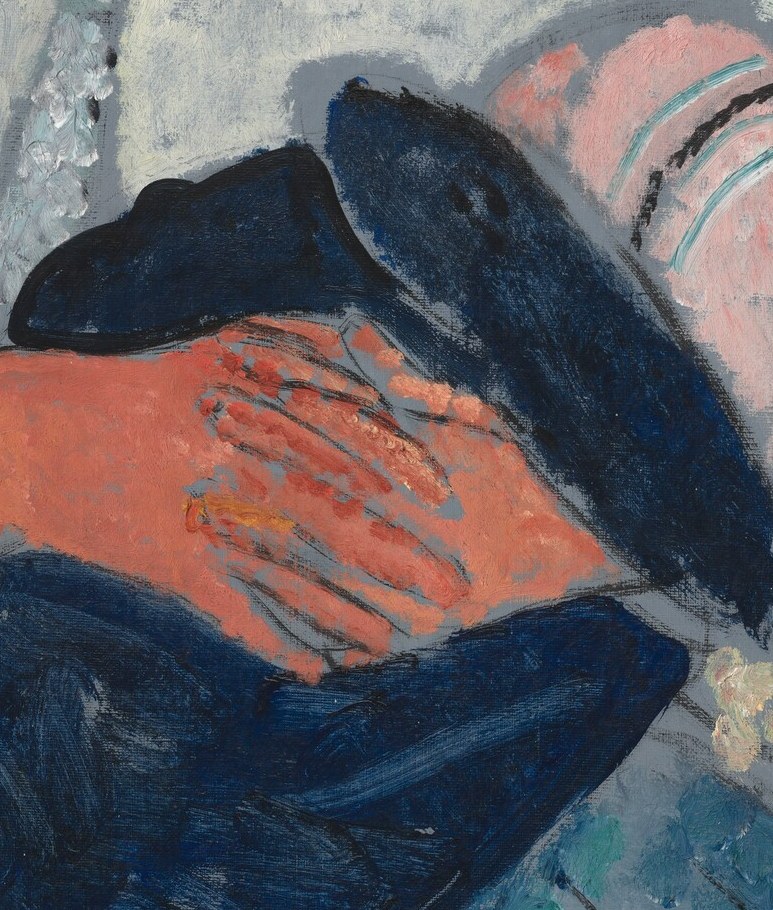
At first glance it is a simple domestic scene: a seated woman in a white blouse with red trim, cradling a swaddled infant against a soft gray background. Her blue eyes are clear and steady, her hands wrap the child easily. There is no drama, no allegory, just an everyday moment of care.
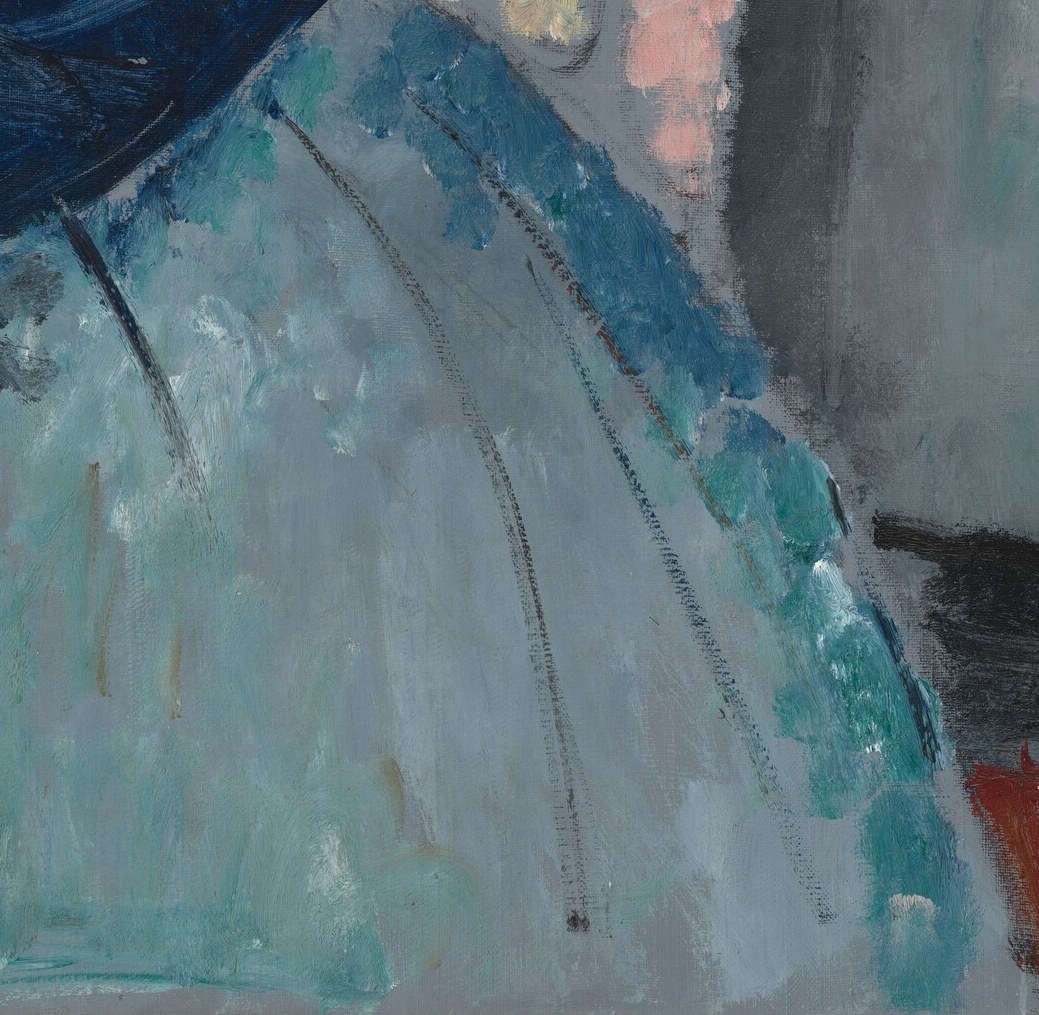
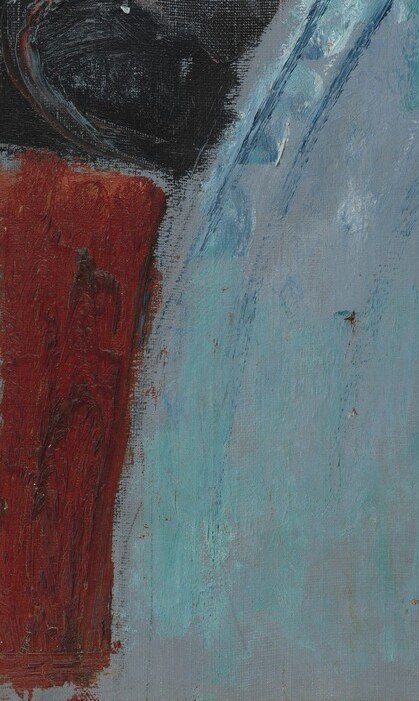
But down in the lower left margin, beyond the sweep of her blue skirt, is a small red mark almost anyone scrolling would miss. It is not a compositional flourish. Scholars believe it is the artist’s thumbprint, pressed into still-wet oil paint. Modigliani was physically failing; the fingerprint reads like an involuntary signature of presence, the painter reaching through the picture plane.
The portrait is not only of a mother and child. It is of the man holding the brush, insisting on being there.
Details
Transcript
She looks like any mother, anywhere. Her eyes are calm. Her hands are sure. Modigliani painted this in 1919. He was 35. He would be dead within a year. But now look past the blue skirt, down to the lower left. A small red detail. Almost nothing. This is likely Modigliani's own thumbprint, pressed into the wet paint. A dying man, reaching through the canvas to touch his subject.