Madonna and Child Enthroned by Master of Monte Oliveto
View the artwork: Madonna and Child Enthroned →
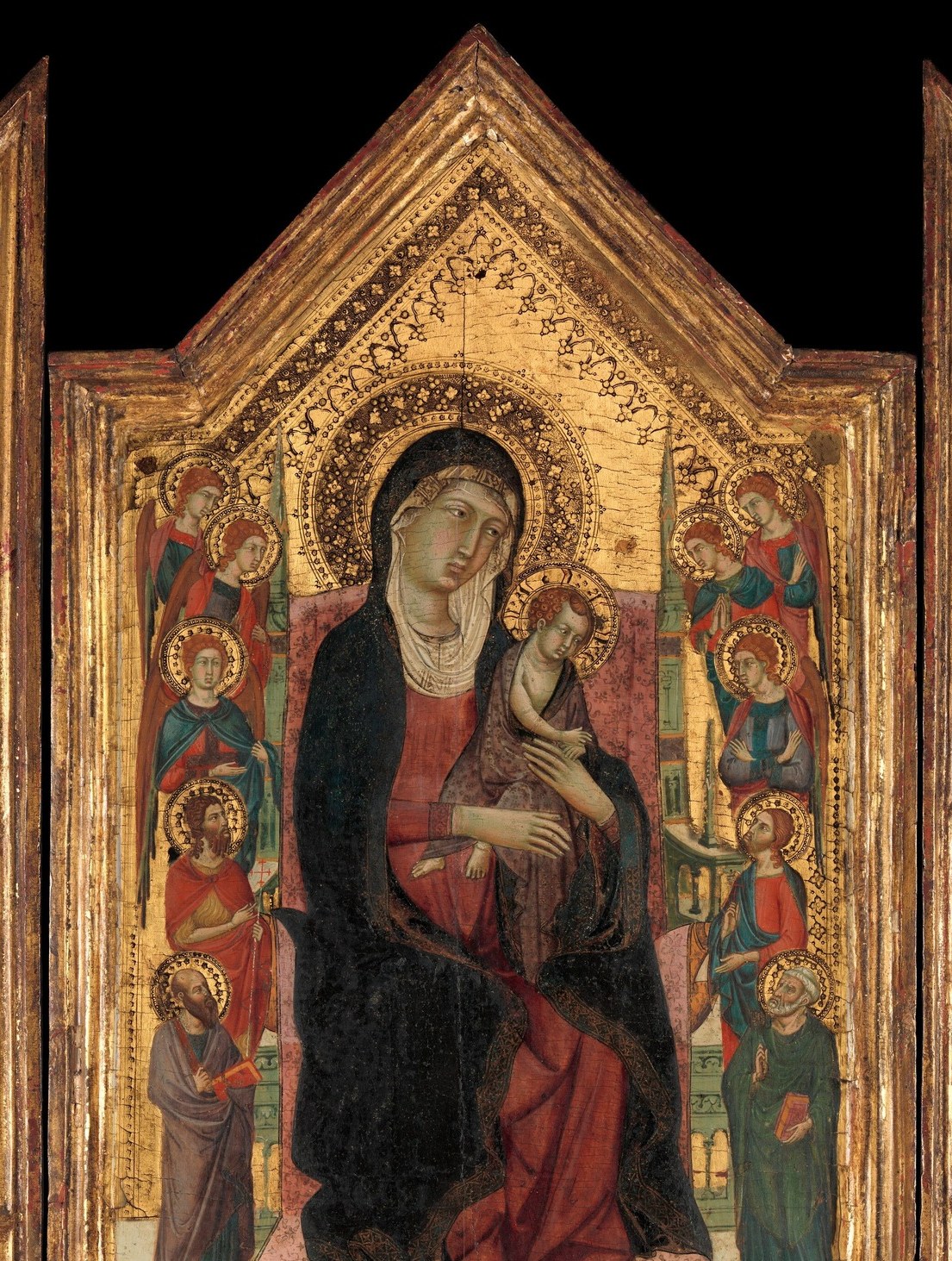
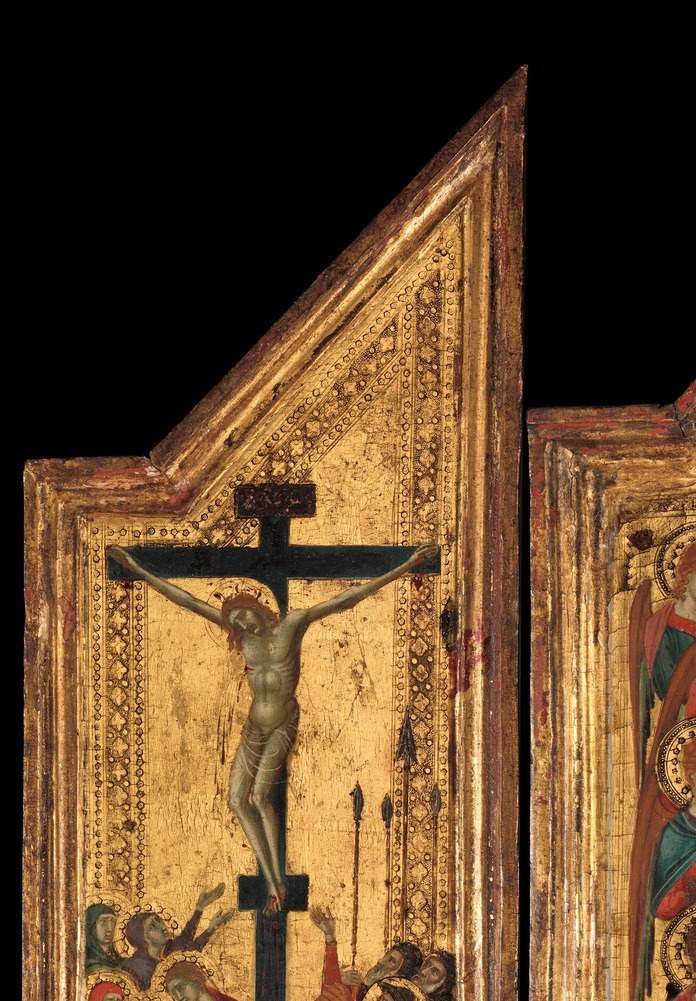
This is the Madonna and Child Enthroned, painted around 1320 by an anonymous Sienese artist now called the Master of Monte Oliveto. It lives at the Metropolitan Museum of Art, and it is tiny, a folding triptych designed to be carried like a personal chapel.
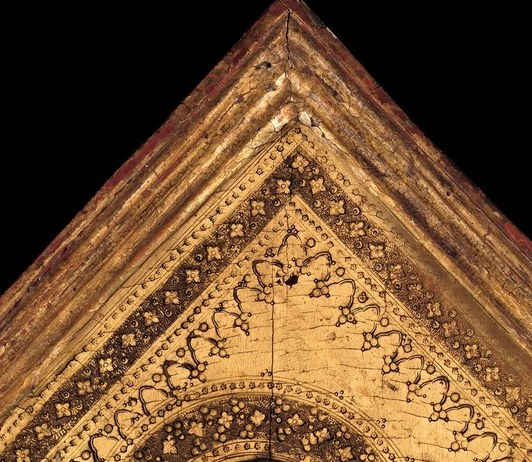
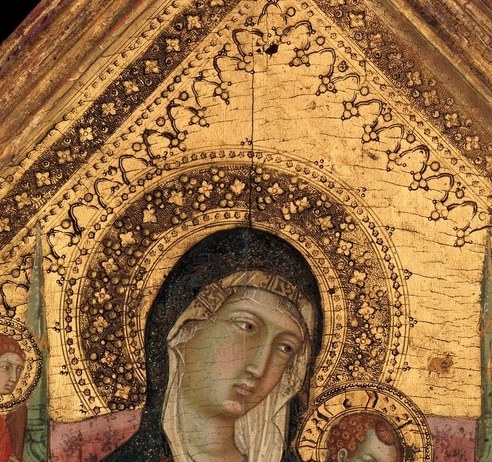
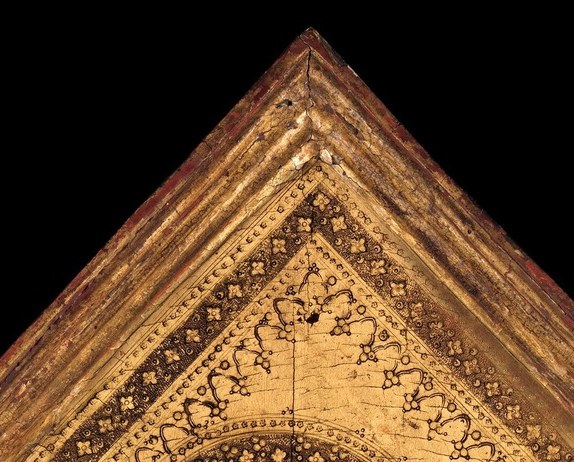
Look at the gold. Sienese panel painting is famous for it, but here the burnished background isn't empty decoration. When the camera pushes in on Madonna's halo, those dots and lines are individual punches struck into the gesso, a virtuoso technique called 'punzonatura.' The Master applied this texture only around Christ and Mary, making the gold itself encode a visual hierarchy of holiness.
This painter worked in the shadow of Duccio, Siena's giant. Scholars still argue over whether he trained in Duccio's workshop or absorbed his innovations secondhand through a pupil named Segna di Buonaventura. Either way, his oval-headed figures and small-scale triptychs brought the monumental style of the city's cathedrals into the private bedchambers of patrons who could never commission an altarpiece of their own.
The Met acquired the piece in 1918. For six centuries, someone probably opened these little wings for daily prayer. What would you focus on first, the gold, or the story in the wings?
#arthistory #sienesepainting #trecento
Details
Transcript
More than just a painting, this was a private universe. It folds up. A portable devotional object for a single soul. The painter built a Gothic cathedral inside the panel. Angels crowd the arch, their halos pushing your eye to the center. Now look at the gold behind the Madonna. That is not smooth. Each dot is a hammered strike into the surface. A technique reserved only for the most sacred figure on the panel.