Artwork
Madonna and Child Enthroned
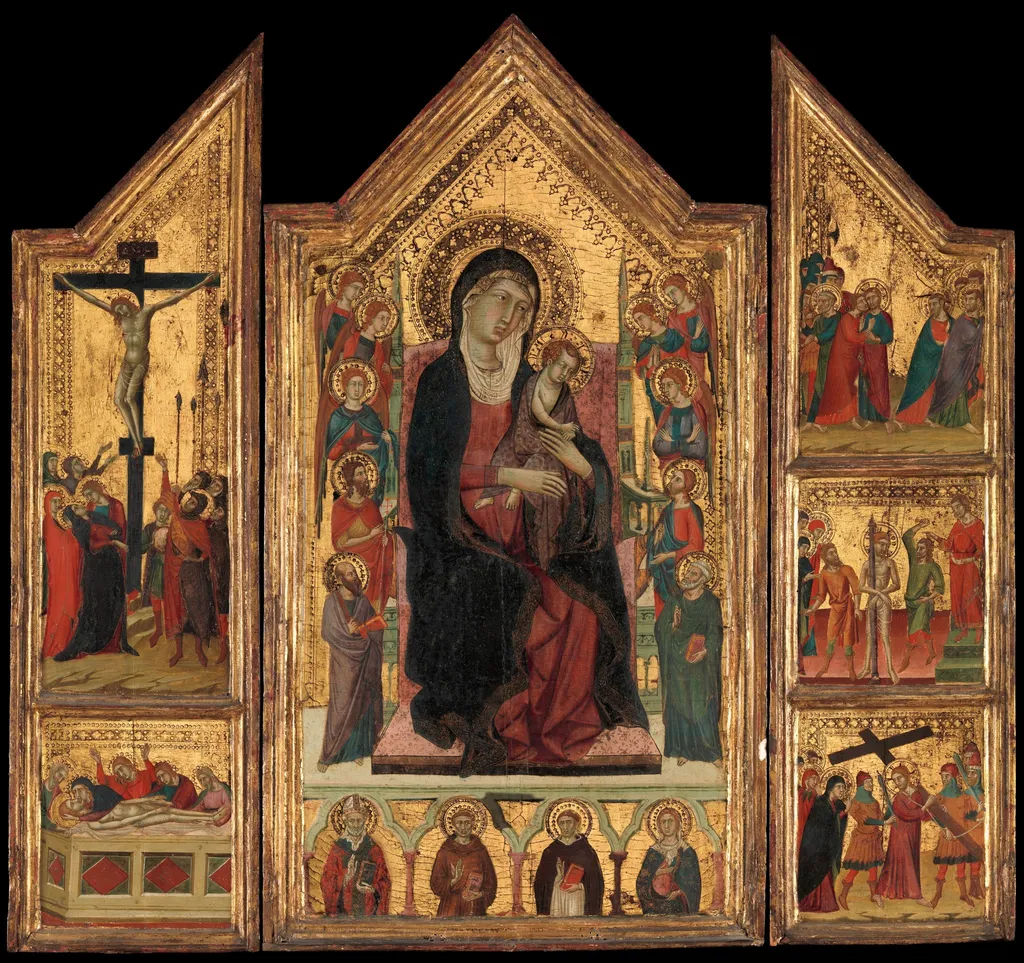
Madonna and Child Enthroned is a tempera painting by the Byzantine icon painting artist Master of Monte Oliveto. It dates from 1320 and is held in the collection of the Metropolitan Museum of Art.
About this work
A portable triptych whose wings show the Passion of Christ in jewel-like panels echoing Duccio's Maestà of 1311. At center the Virgin sits enthroned with the Christ Child among saints in a gilded arcade. The anonymous Master of Monte Oliveto painted it in tempera on a gold ground around 1315 to 1320.
Subject & Meaning
The painting centers on the Madonna and Child, a standard subject in Christian art representing the Virgin Mary holding the infant Jesus, symbolizing the Incarnation and divine motherhood. According to the sources, the work also depicts scenes of Christ's Passion, the Flagellation, Christ Carrying the Cross, the Crucifixion, and the Lamentation, along with saints Peter, Paul, John the Baptist, and Francis of Assisi. These additional figures and narratives likely serve as a devotional or didactic complement to the central image, emphasizing Christ's redemptive sacrifice and the intercessory role of the saints.
The inclusion of these elements points to the altarpiece's function within a religious context, inviting meditation on both the humanity and divinity of Christ as mediated through the Virgin.
History & Provenance
The painting was created in 1320 by the Master of Monte Oliveto, executed in tempera and gold leaf on wood.
The painting was created in 1320 by the Master of Monte Oliveto, executed in tempera and gold leaf on wood. It originally belonged to the collection of the architect George Edmund Street before entering the holdings of the Metropolitan Museum of Art, where it is currently housed. The work was featured in the exhibition "Italian Primitives." No specific commission details are recorded in the available sources.
Overview
This triptych, attributed to the anonymous Sienese painter known as the Master of Monte Oliveto, was created around 1315–20. It is a small devotional object, distinct from the large altarpieces of the period. The central panel features the Madonna and Child enthroned, while the wings depict scenes from Christ's Passion.
Executed in tempera on wood with a gold ground, the work was designed for private contemplation, offering its owner a portable, condensed version of the visual world found in Siena’s grand public churches.
Technique & Style
The painting employs tempera on wood with a luminous gold ground, a standard technique for Sienese panel painting during the early fourteenth century. The Master of Monte Oliveto's figures are characterized by their distinctive oval heads and elongated, slender forms. While adhering to the broader stylistic conventions of the Sienese school, the artist developed a recognizable manner suited to the intimate scale and devotional purpose of his works, distinguishing them from larger public commissions.
Legacy
The Master of Monte Oliveto, active between approximately 1305 and 1335, primarily produced small devotional pieces for private patrons, a practice that set him apart from contemporaries like Duccio and Simone Martini, who focused on large-scale public altarpieces. The iconography of the Passion scenes in this triptych demonstrates a clear relationship to Duccio’s influential Maestà. Scholarly debate has explored the Master's connection to Duccio's workshop, with current research suggesting an indirect assimilation of Duccio's innovations, possibly through artists such as Segna di Buonaventura.
Own this work as a print
Artist & collection
Artist
The Master of Monte Oliveto is an anonymous painter of the Sienese school whose career can be traced from about 1305 to the mid-1330s.

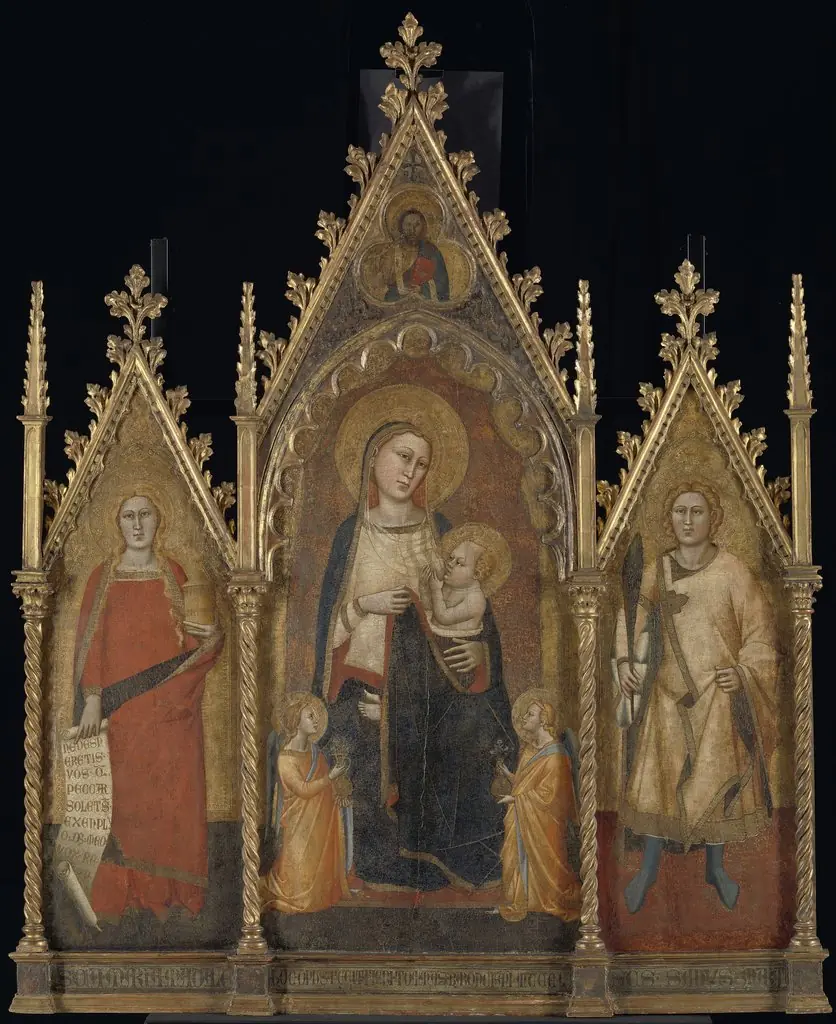 Triptych with the Virgin and Child, and Saints Mary Magdalene and Ansanus
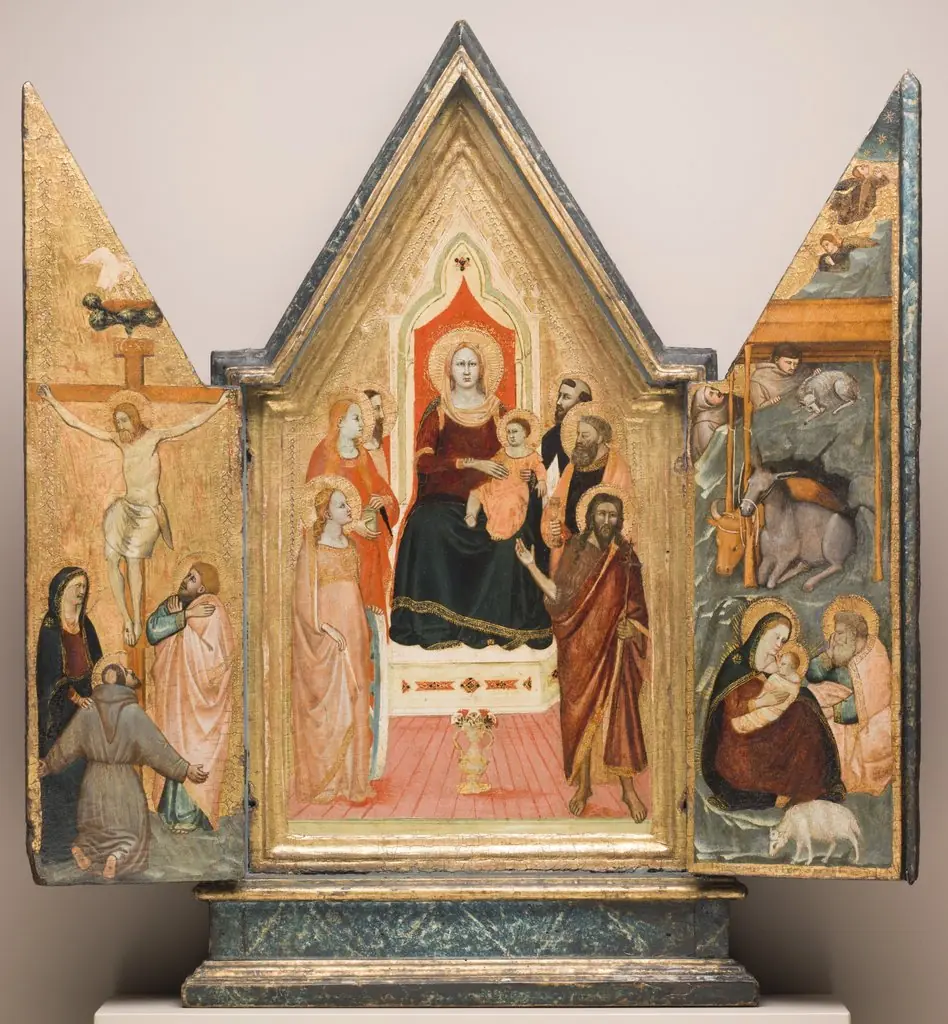 Virgin Enthroned with Saints, Nativity and Crucifixion
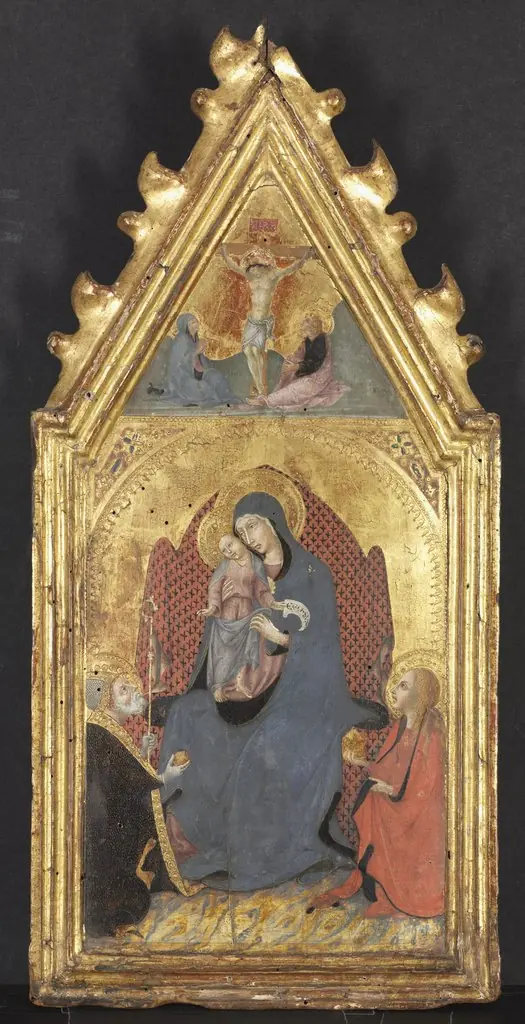 Virgin and Child Adored by Saints Mary Magdalene and Nicolas of Bari; Christ Crucified with the Virgin and Saint John the Evangelist
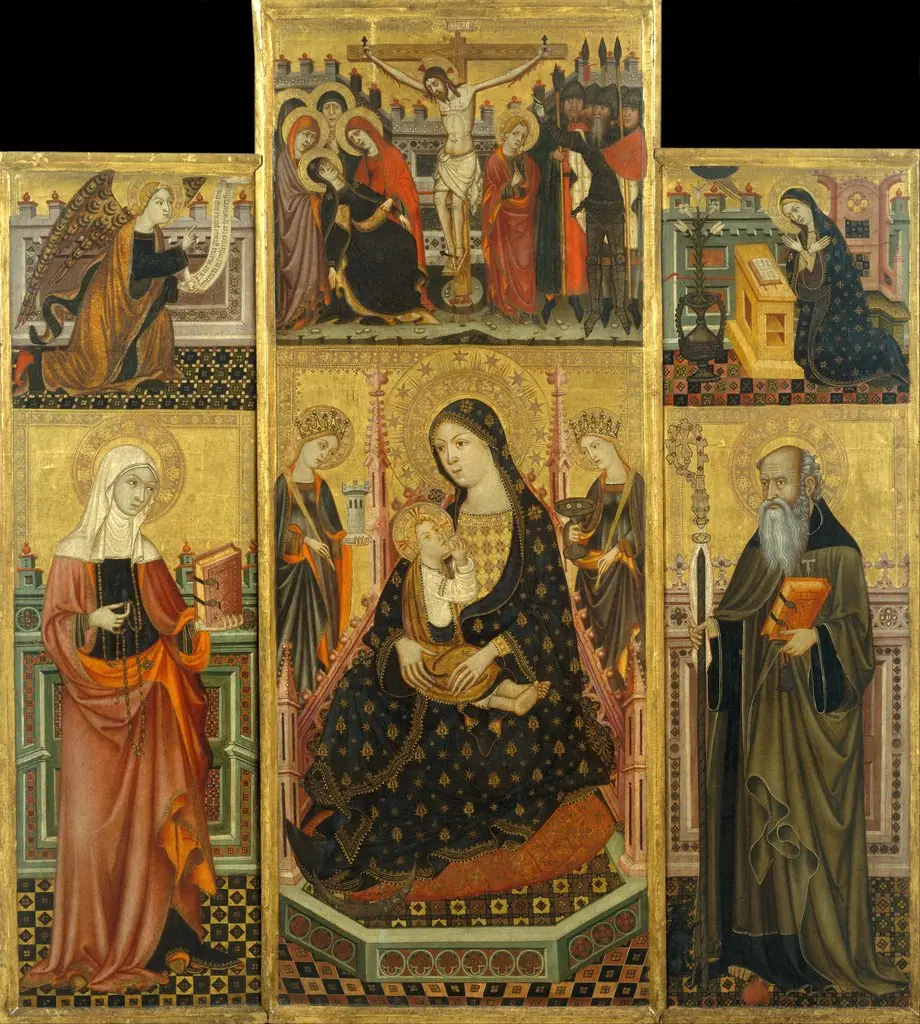 Altarpiece of the Virgin Suckling the Child, Saint Clare and Saint Anthony the Abbott
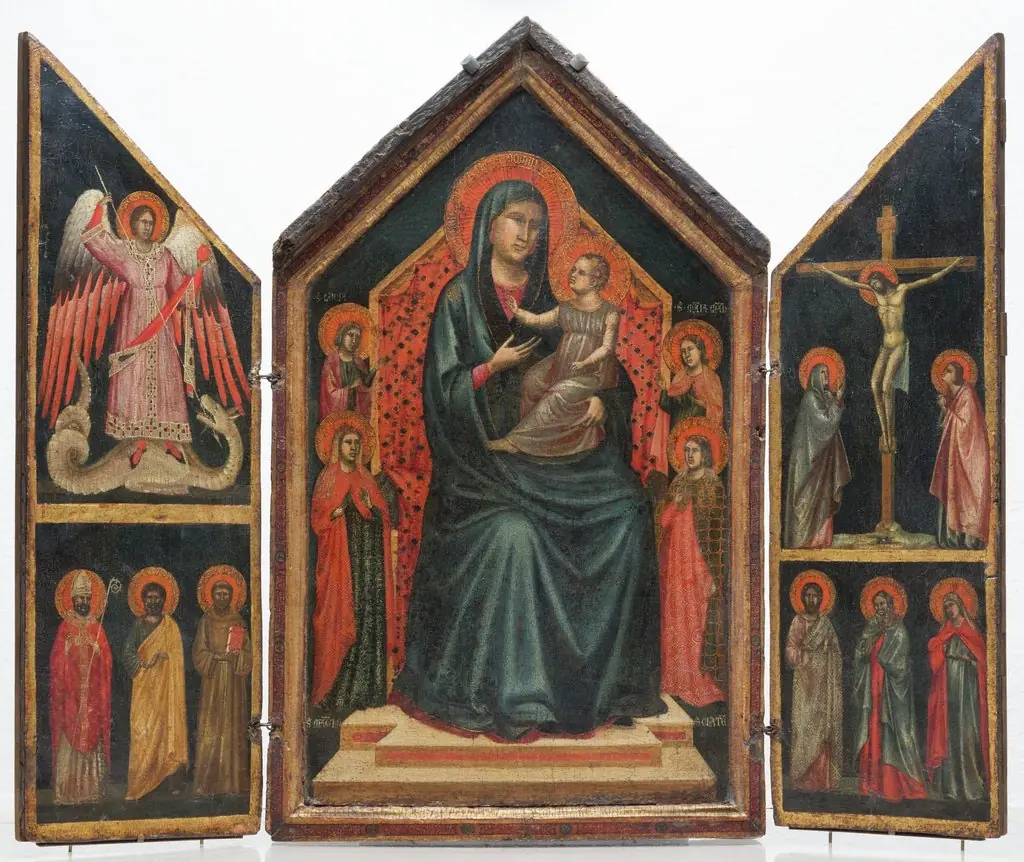 Madonna and Child Enthroned with Saints Lucy, Margaret, Mary Magdalene and Catherine of Alexandria
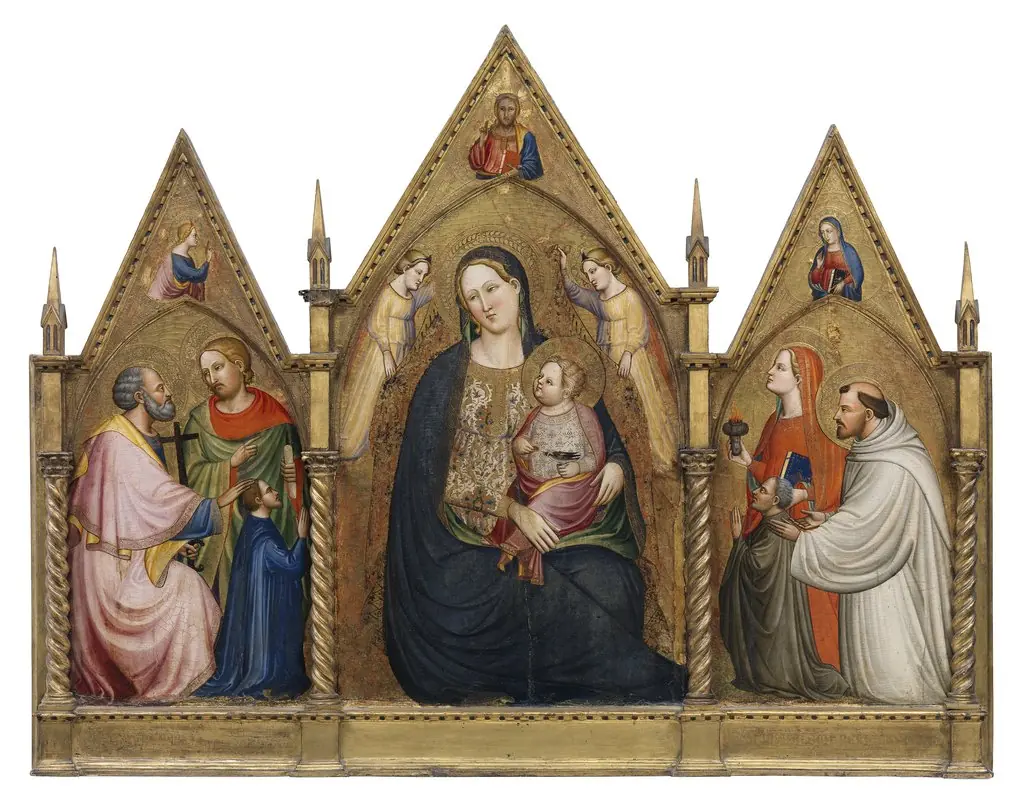 The Virgin and Child with Saints and Donors
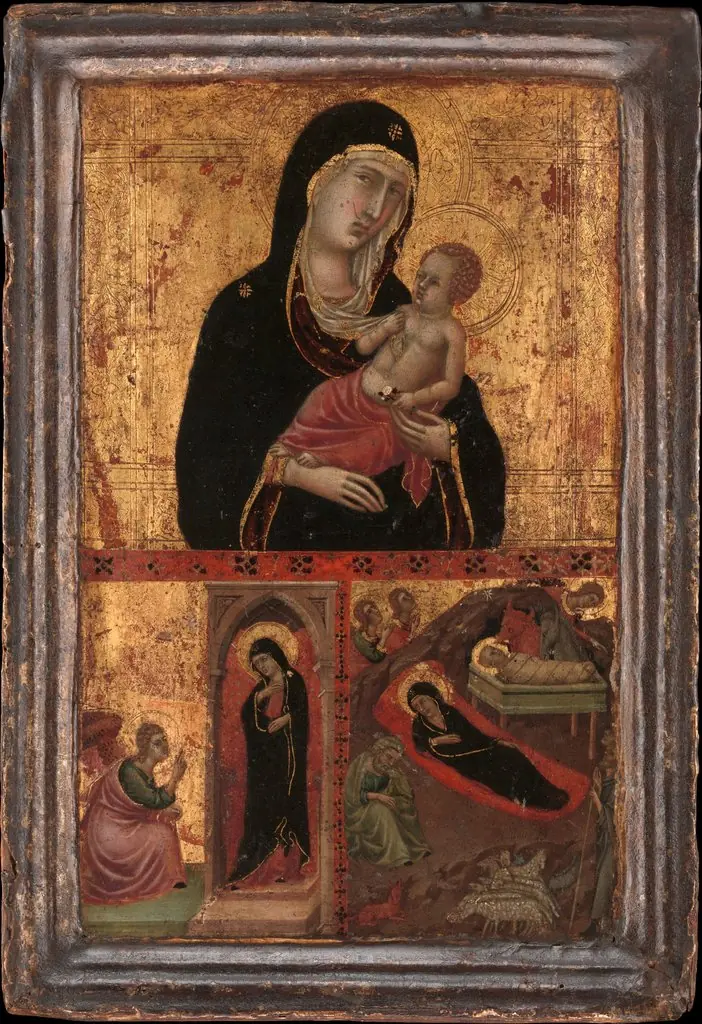 Madonna and Child with the Annunciation and the Nativity
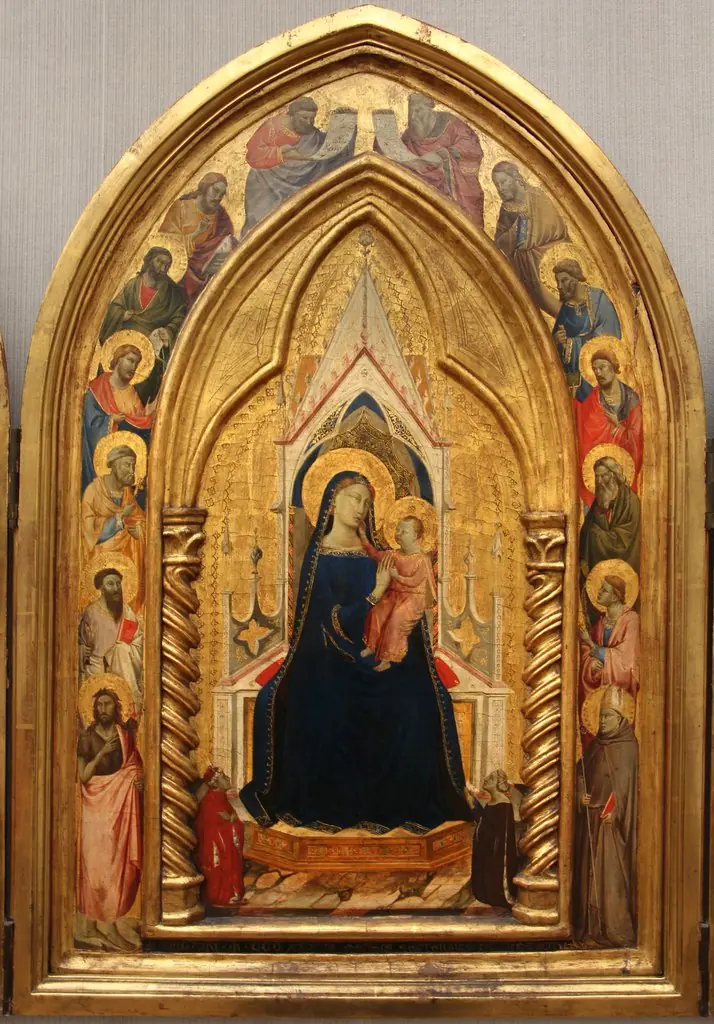 Central panel of the triptych
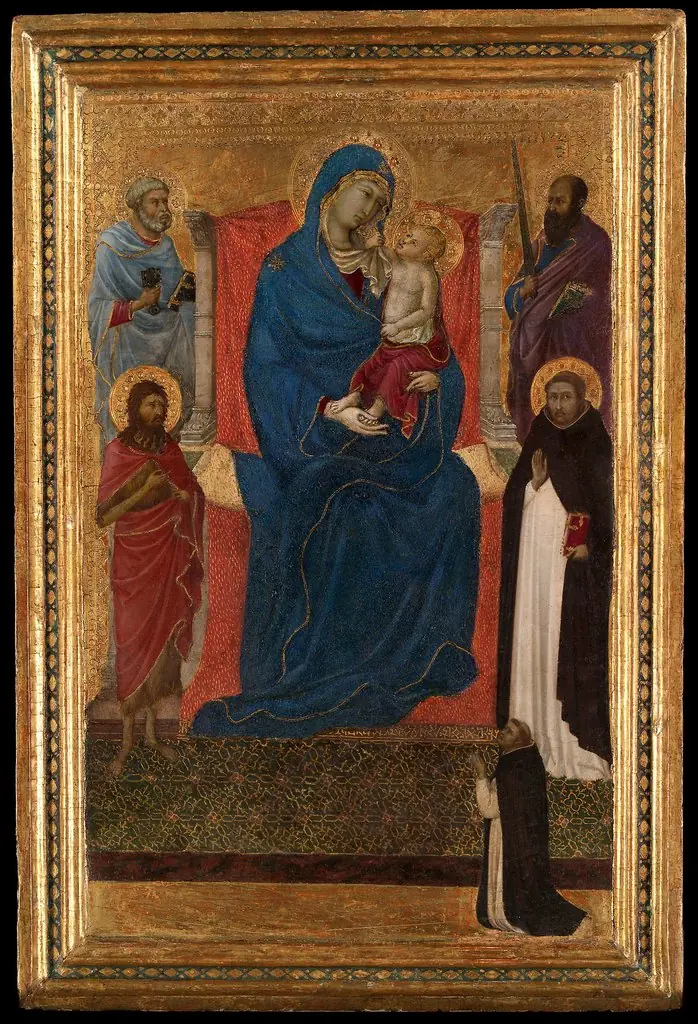 Virgin and Child Enthroned with Saints Peter, Paul, John the Baptist, Dominic and a Donor
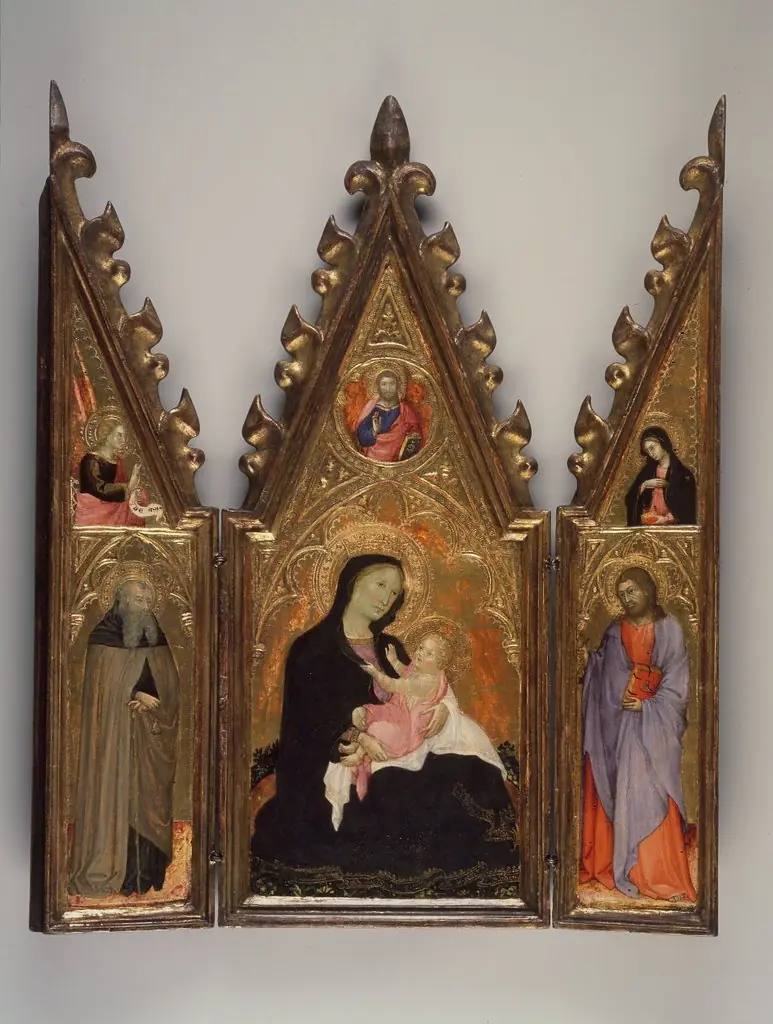 Madonna of Humility, portable altarpiece
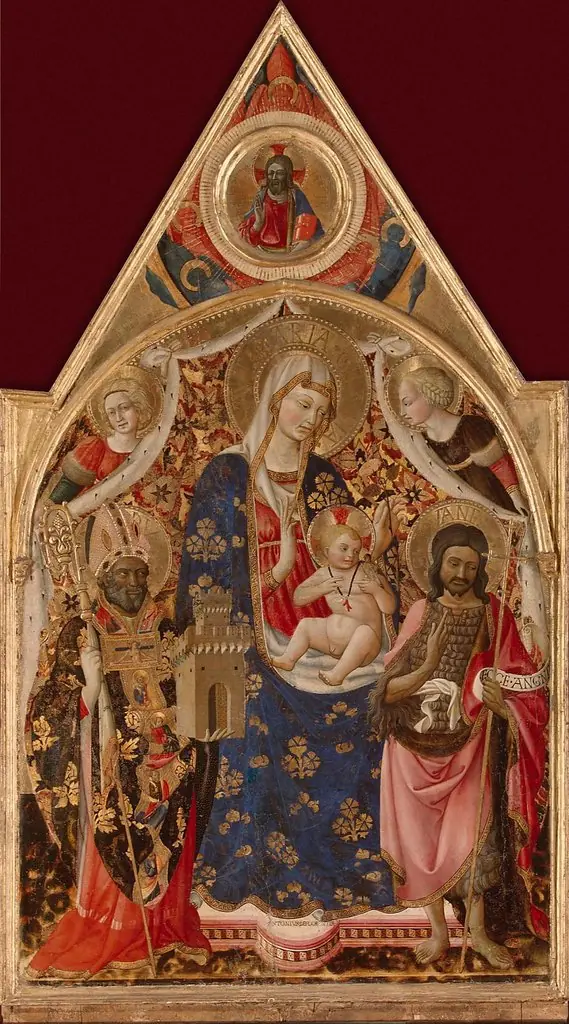 Madonna and Child, with a Bishop, St John The Baptist and Angels
- Madonna and Child Enthroned