清 王翬等 康熙南巡圖 (卷三: 濟南至泰山) 卷|The Kangxi Emperor's Southern Inspection Tour, Scroll Three: Ji'nan to Mount Tai by Wang Hui
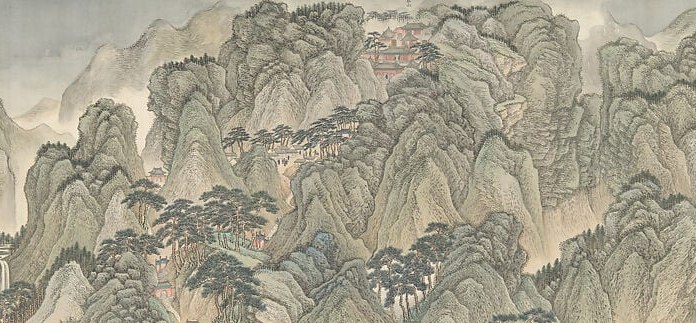
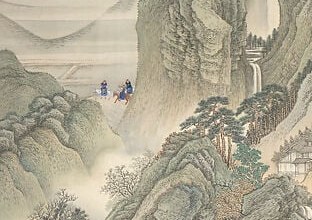
This is not a fantasy landscape. It is the Kangxi Emperor's Southern Inspection Tour, Scroll Three, painted by Wang Hui and his workshop in 1698. The handscroll, ink and color on silk, documents the imperial procession traveling from Ji'nan to Mount Tai. Today it is held at the Metropolitan Museum of Art.
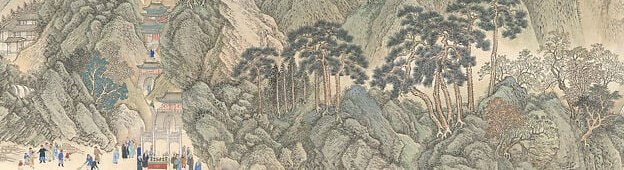
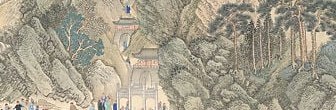
Look past the misty peaks and fine pines. The real subject is the column of soldiers, cavalry, and officials winding through the valley floor. Every figure is a tiny, precise claim of absolute control. The stone bridge, the walled city at the left margin, the hilltop pavilion, all mark measured progress through a realm the Manchu Qing dynasty needed to show it commanded.
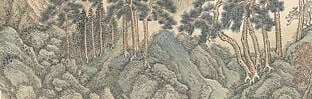
Kangxi was the second Qing emperor of China. The southern tours were his masterstroke of political theater: a foreign-born ruler traveling deep into Han Chinese heartland to prove he was not a conqueror but a rightful sovereign. He commissioned twelve massive scrolls to document the journey. Each one took teams of court painters years to finish. Wang Hui, already famous, led this segment personally, the brushwork on the foreground pines is considered a virtuoso signature.
It is easy to read a misty Chinese landscape and see poetry. Here, the poetry was propaganda. And it worked: the scroll helped cement the Qing dynasty's legitimacy for another two centuries.
Details
Transcript
This landscape was never meant to be beautiful. It was a political document, painted on silk in 1698. A monumental tour scroll commissioned by a Manchu emperor. He needed to prove he ruled all of China, not just the Forbidden City. So he sent a thousand soldiers across the countryside. And hired a team of court painters to follow behind. Led by Wang Hui, they stitched the empire into one seamless scroll. Every rock, every pine, every soldier said: this land has always been ours.