A Masked Ball in Bohemia by http://www.wikidata.org/.well-known/genid/3ac9faefd651ca6fc3d95b30dcd1ea72
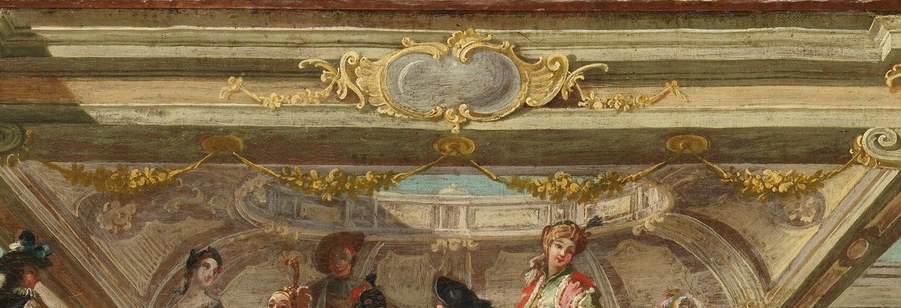
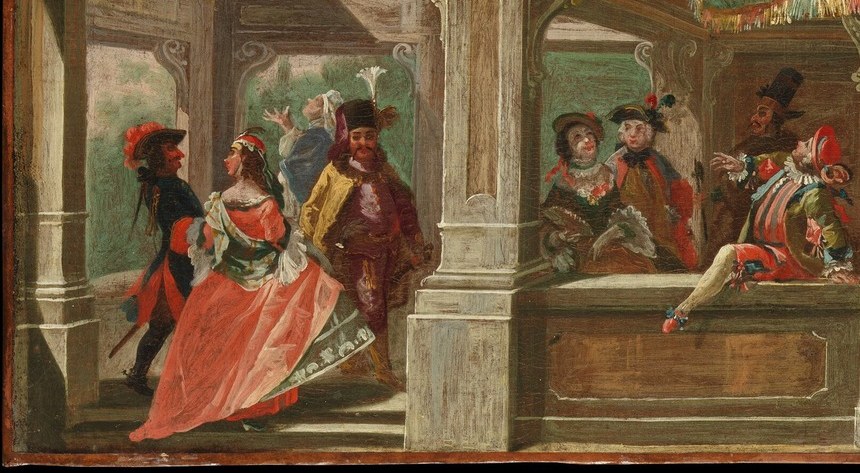
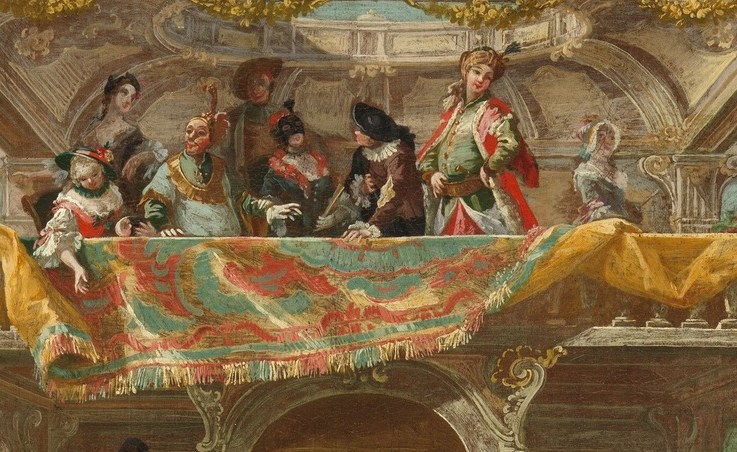
This is 'A Masked Ball in Bohemia,' attributed to the Austrian painter Johann Georg Platzer, around 1748. It hangs today in a way that pulls you straight into the middle of an 18th-century social theater. The painting is small and densely packed, requiring a slow, close read of every balcony and cluster of figures, which is exactly how the artist rewards you.
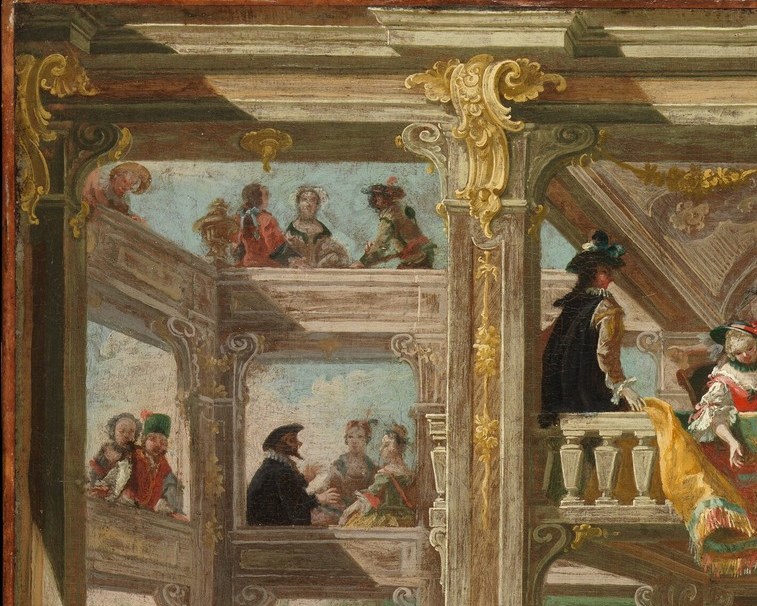
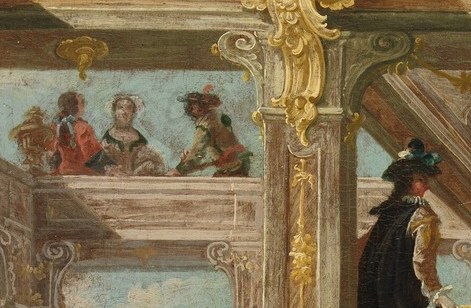
Look first at the red curtain and gilded arch at center stage. They frame the ball as a literal performance, where even the spectators in the tiered boxes are part of the show. Then scan the upper balcony, just right of center. That is where a man hangs upside down from the rail. He is tiny, easy to miss, and seems to have decided that the party needed a prank more than it needed another polite dance.
Masked balls were one of the few 18th-century social spaces where strict class lines softened. Behind a mask, a wealthy merchant could mingle with an aristocrat without immediate detection. Platzer captures that licensed confusion by mixing elaborate costumes with simpler ones across the crowded floor, and by putting the most chaotic act of the evening not on the dance floor but right above it, in the gallery.
The upside-down man is the painting's best-kept secret. He has stayed there for nearly 280 years, waiting for someone who does not just scroll past.
Details
Transcript
Prague, 1748. A masked ball inside a theater. The gold arch and heavy red curtain announce the occasion. Boxes full of aristocrats watch costumed dancers below. A masked ball was one place where a merchant could brush against a prince. Now look up at the upper balcony, just right of center. A man has flipped himself upside down over the rail. Inside one of the most formal rooms in Bohemia, a prankster.