The Windshield, On the Road to Villacoublay by Henri Matisse
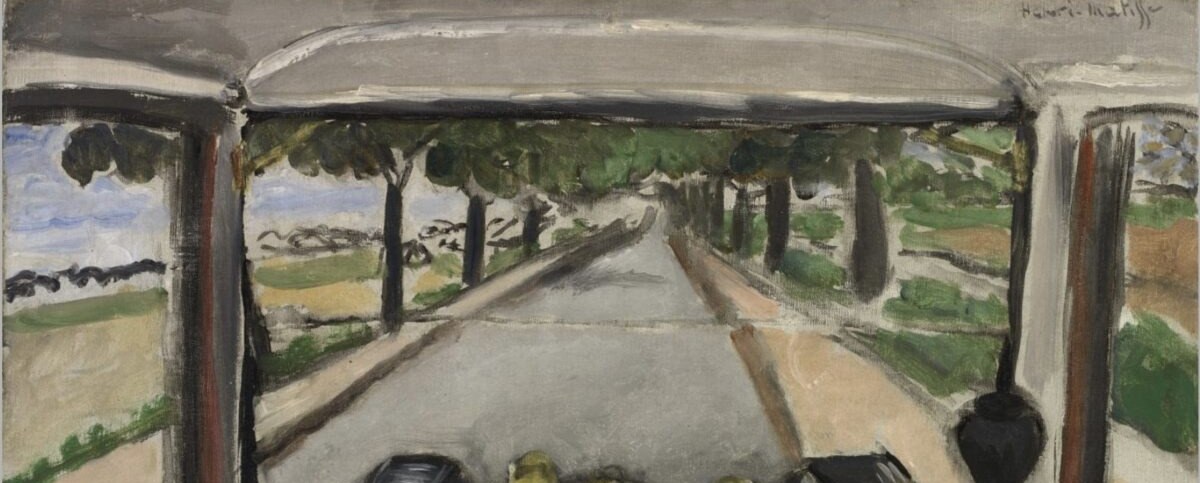
Henri Matisse, known for his revolutionary use of color and form, took a surprisingly personal turn in 1917 with "The Windshield, On the Road to Villacoublay." This painting, now at The Cleveland Museum of Art, offers a unique window into the artist's life during World War I.
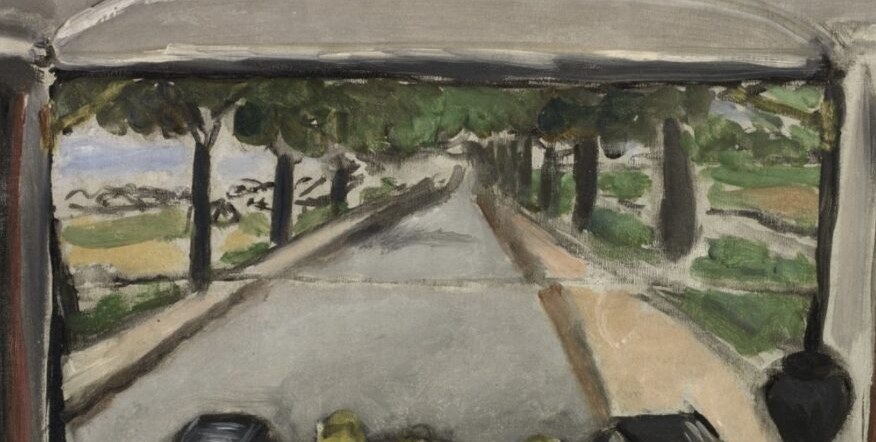
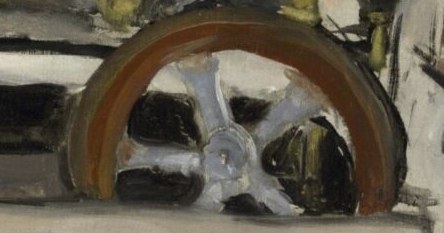
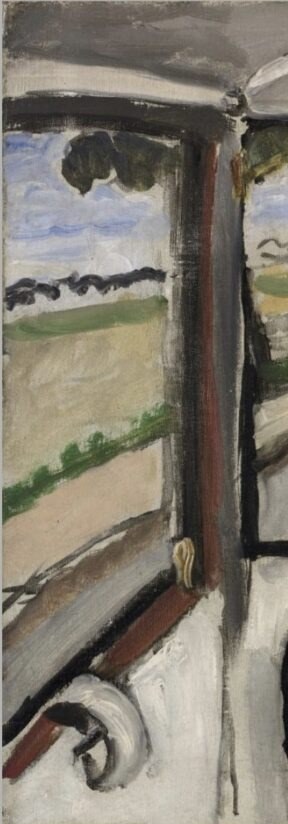
Look closely at the scene through the windshield, framed by the car's interior. Matisse captures a mundane moment of travel, with a tree-lined road rushing by. The steering wheel and dashboard objects hint at the artist's own perspective from behind the wheel.
Painted during a period of global upheaval, this work reflects Matisse’s interest in modern life and technology, like the automobile. It's a departure from his more monumental compositions, providing a quiet, introspective view that feels remarkably intimate.
What does this unexpected glimpse into the everyday reveal about the artist?
Details
Transcript
This painter was known for bold colors and flat forms. But in 1917, he painted something completely new for him. It's a view from inside his own car, on a road outside Paris. The car was a new symbol of progress, even during wartime. His distinctive signature is small, tucked away here. A rare, intimate moment from an artist often grander.