Madame Le Fèvre de Caumartin as Hebe by Nattier, Jean-Marc
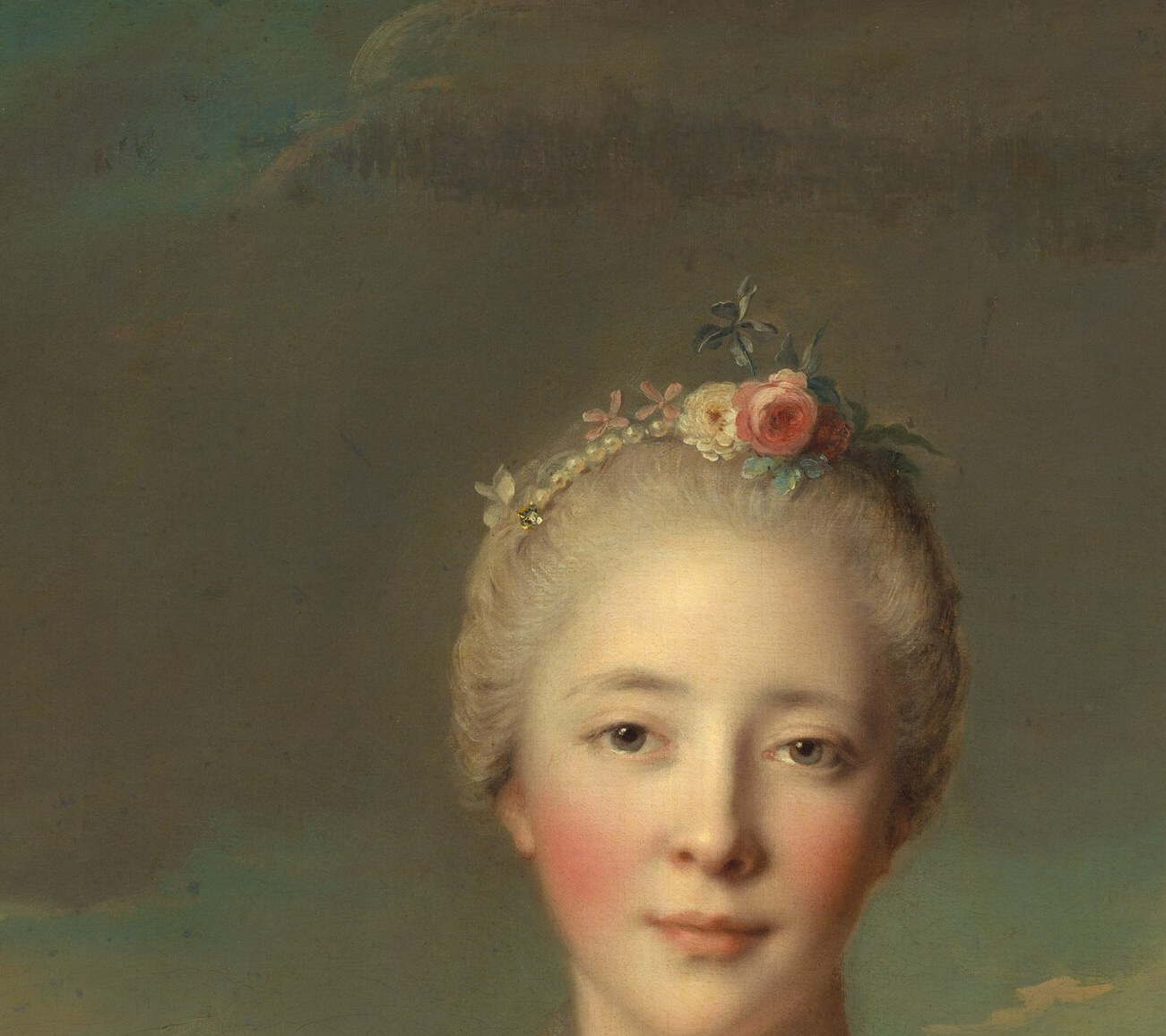
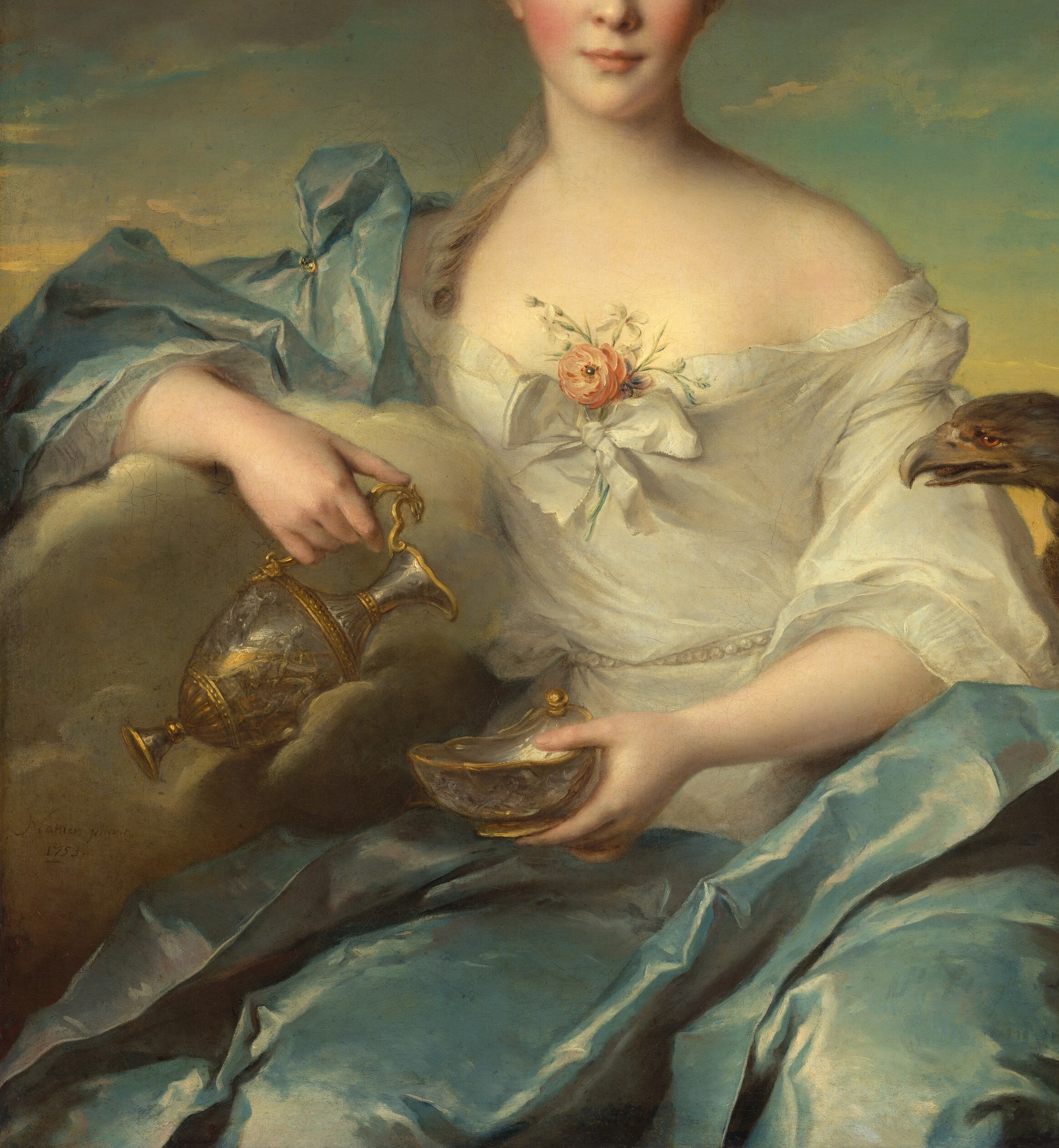
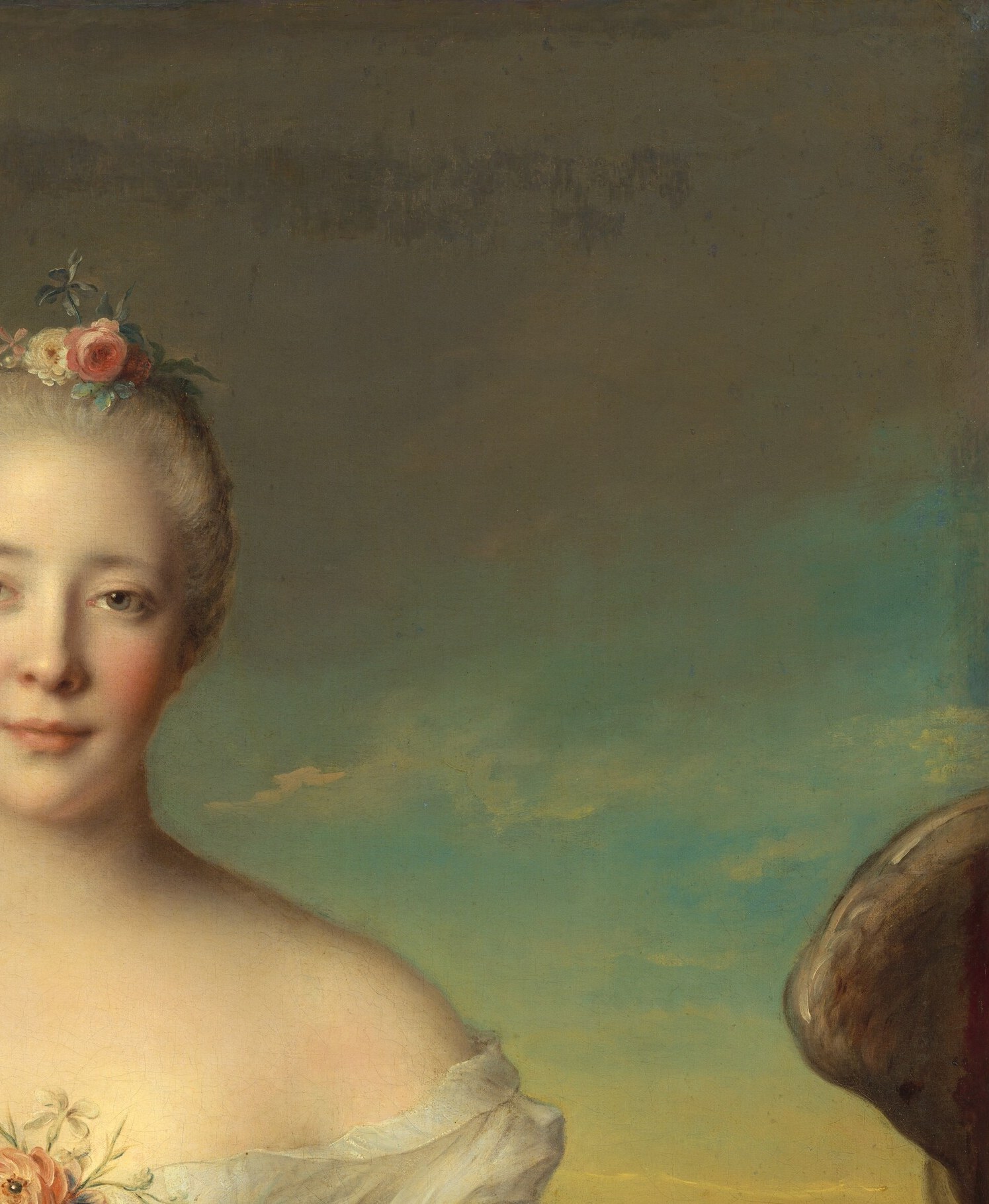
Jean-Marc Nattier painted "Madame Le Fèvre de Caumartin as Hebe" in 1753, and it hangs today in the National Gallery, London. The sitter is Geneviève Anne Marie Moufle de la Thuilerie, costumed as the Greek goddess of youth. Nattier had a lucrative formula: paint real women from Louis XV's court as mythological figures, and make their skin glow with a warmth that silk and oil paint should not be able to produce.
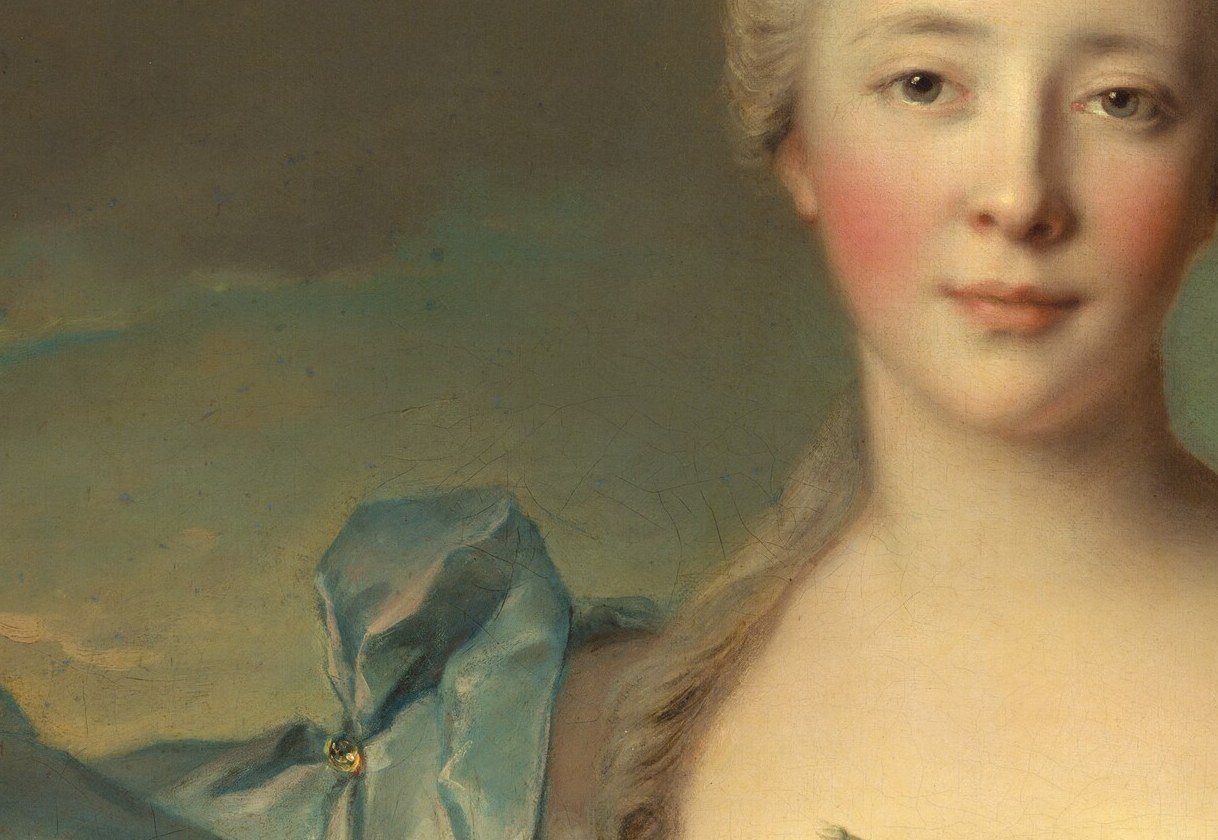
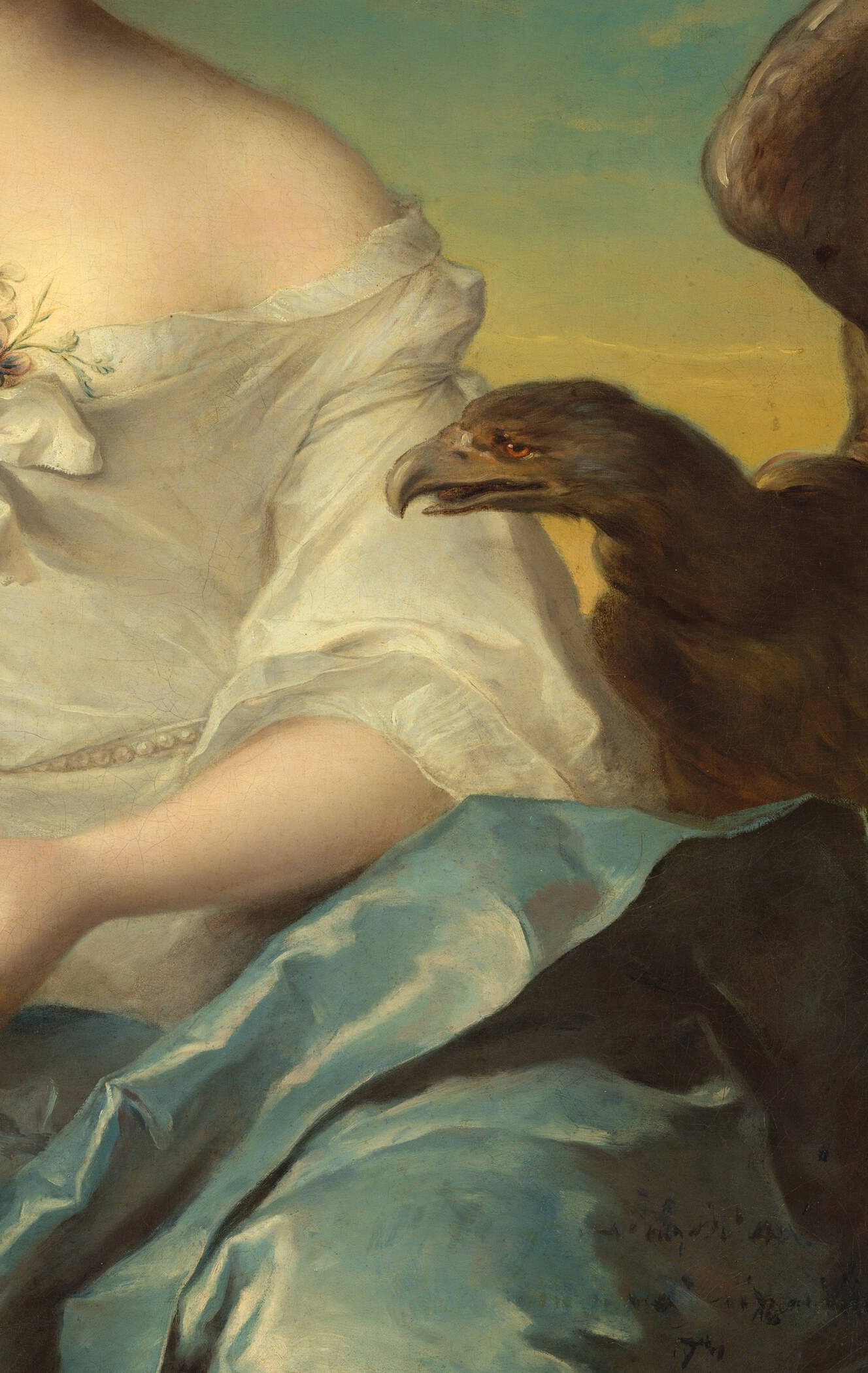
The whole painting hangs on a single technical decision. Nattier places the warm ivory of her bare shoulder directly against the cool blue-grey silk of her gown. The shoulder is painted in soft, blended, almost invisible brushstrokes, it reads as skin. The silk, inches away, is built from crisp highlights and sharp folds, every crease catching light differently. Two different surface temperatures, built from the same palette, and the gap between them makes the flesh feel alive.
The mythological props do real work. The golden cup in her left hand identifies her as Hebe, cupbearer to the Olympian gods. Jupiter's eagle on the right, dark, watchful, with a hooked beak and a golden eye, anchors the allegory and creates a second living presence in the frame. Her right arm extends toward the bird, bridging the human portrait and the divine fiction in a single believable gesture.
Next time you stand in front of a Nattier portrait, ignore the costume for a moment. Find the place where bare skin touches fabric, and look at the temperature of the light on both. That is the seam where the trick lives.
Details
Transcript
1753. The most sought-after portrait painter in France. Jean-Marc Nattier's trick was turning aristocrats into goddesses. Look at the bare shoulder. Warm ivory. A living, breathing warmth in oil paint. Now look at the silk falling beside it. Cool blue-grey. The two temperatures sit right against each other. That contrast is what Nattier built his whole career on.