Virgin and Child by http://www.wikidata.org/.well-known/genid/5d513275c199b6020c9d71f1ed069fea
This is Virgin and Child, painted around 1520 by a follower of Jan Gossaert, now in the National Gallery in London. It is a Madonna that refuses to be only a symbol. The artist made a quiet but radical choice: to show us a mother and her infant in a real, tender exchange.
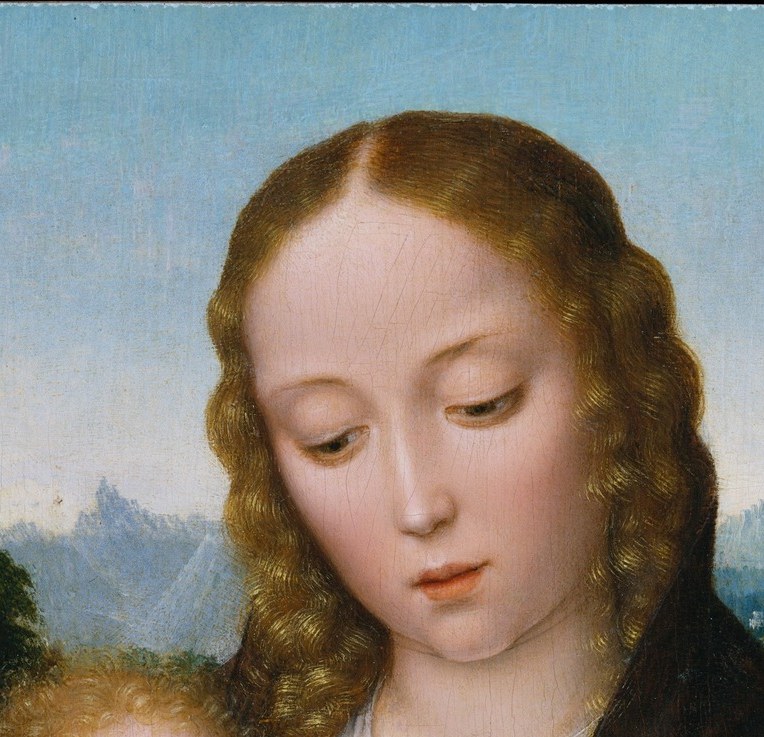
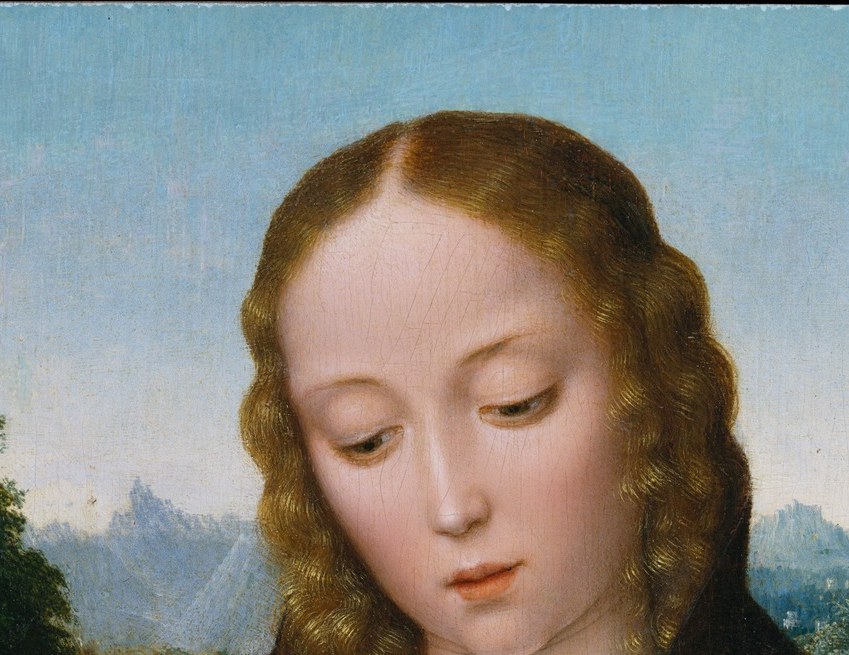
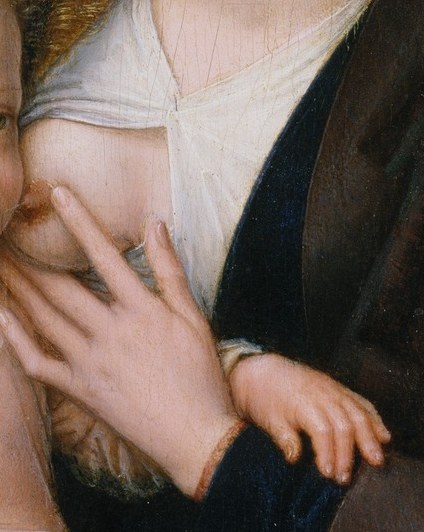
Look at the circuit between their faces. The Virgin gazes down with a calm, almost private expression. The infant looks back up, his hand reaching toward her face. Her golden hair, loose, not covered, was unusual for a Madonna in this period, a detail borrowed from Northern Renaissance portraiture that brings Mary closer to a real woman than an icon.
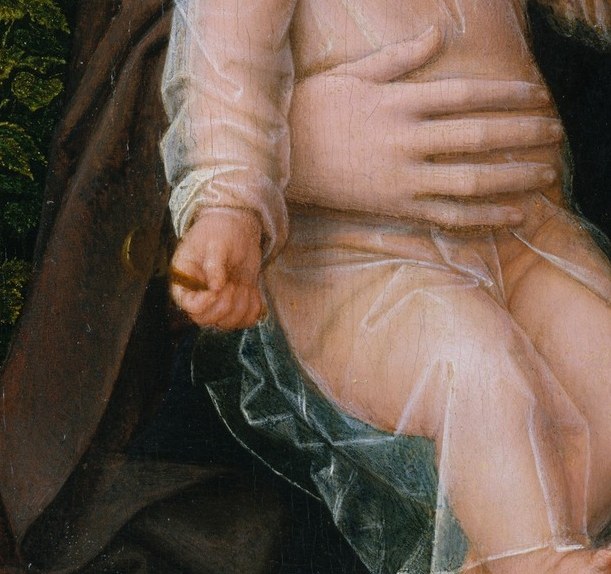
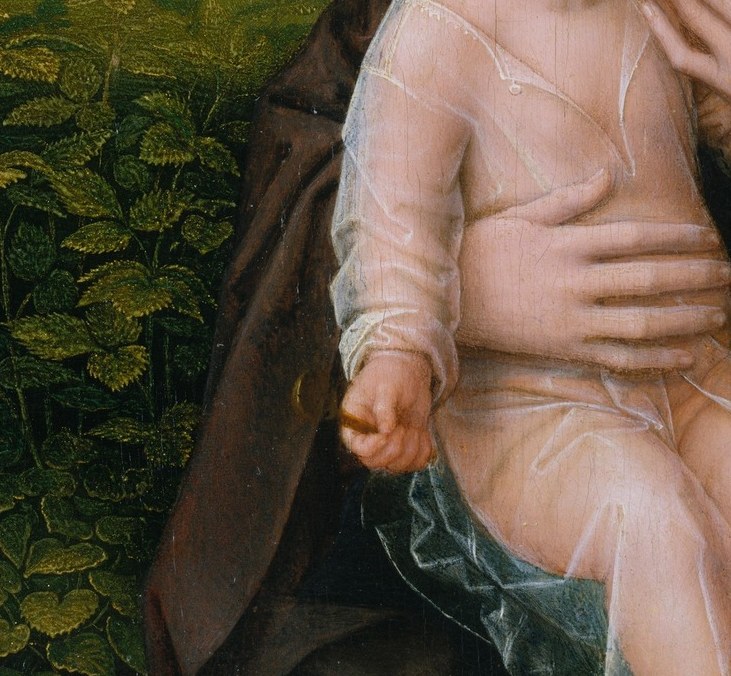
Gossaert was among the first Flemish painters to bring the Italian Renaissance style north, but his followers kept a northern eye for intimate detail. The child's bare feet hang visibly in the foreground, a Flemish convention signaling Christ's full human incarnation. The distant valley and pale tower behind them ground a sacred scene in a specific, believable world.
A painting this quiet can be easy to scroll past. But when you stop and see the closed loop of their attention, it becomes something rare: a theology made of eye contact.
Details
Transcript
She looks down. He looks up. This silent exchange is the heart of the painting. Her loose golden hair was an unusual choice for a Madonna. It signals purity, but also something more human. His bare feet, deliberately visible, are a Flemish symbol. They remind us this child is fully human, fully earthly. His hand reaches up, for a blessing, or for his mother. Divine and human nature, held in one small gesture.