The Good Shepherd by Tanner, Henry Ossawa
Henry Ossawa Tanner painted "The Good Shepherd" around 1918, late in a career that had already made him a legend. He was the first African American painter to achieve international fame, spending most of his life in France and earning the Legion of Honor in 1923. His works hang in the Musée d'Orsay and the White House, but this humble, powerful scene is built on a simple piece of particle board.
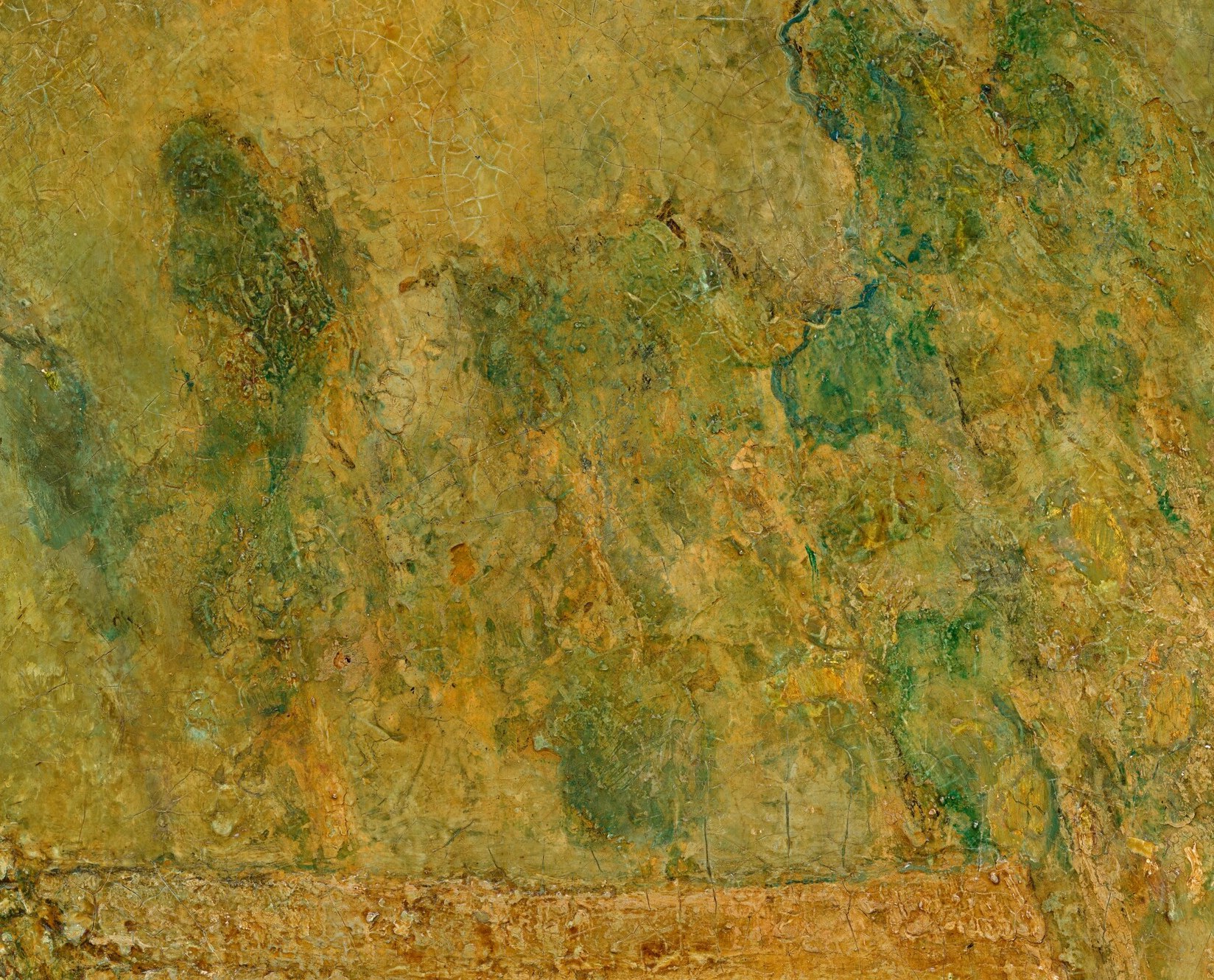
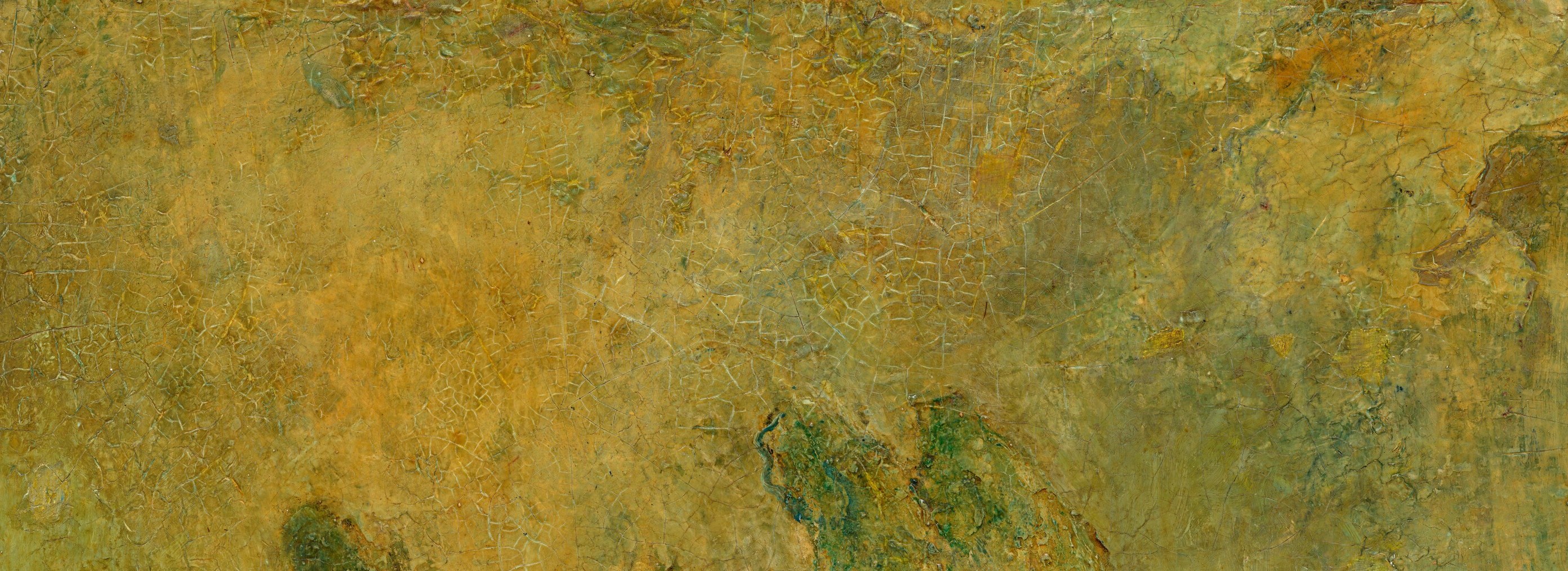
Tanner’s magic is in the paint itself. He never lets us forget we are looking at a physical object. The foliage in the upper register isn’t just green; it’s a thick, sculpted layer of impasto applied with a palette knife. He scraped and scratched the sky to let the under-paint breathe through, turning a muted day into a vibrating, atmospheric field.
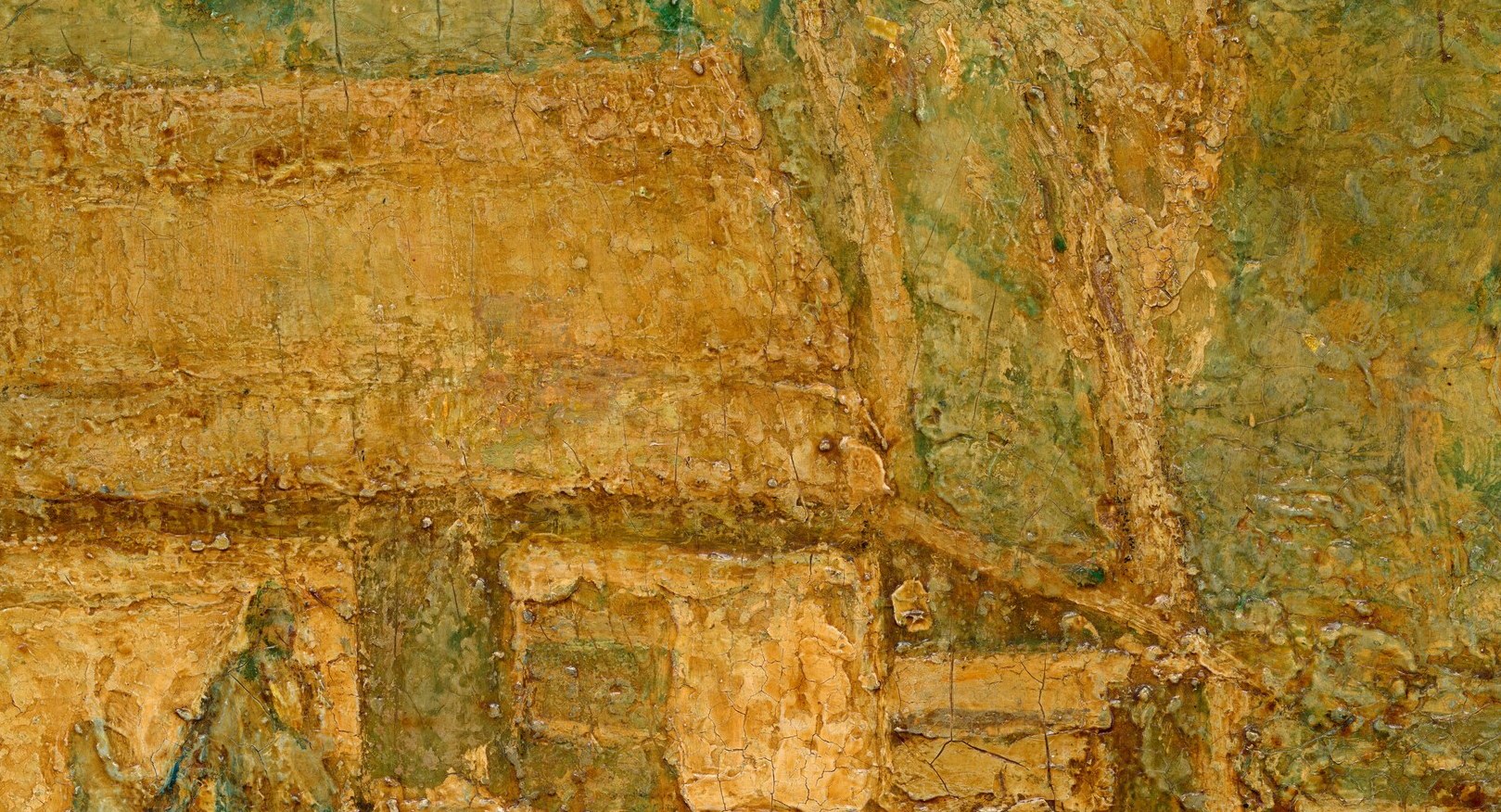
This is a spiritual image rooted in physical reality. The shepherd stands as a figure of quiet protection, but Tanner grounds the scene with a low stone wall, a shadow cutting across the building, and a rough, textured ground you can almost feel. The sheep are a soft, vulnerable mass, not individual heroes.
Next time you see a Tanner, step closer. The emotion isn't just in the story, it's in the surface.
Details
Transcript
At first glance, a quiet field. A shepherd stands with his flock. Simple. But the real action is in the paint itself. Look at the foliage. It is built with a palette knife. Tanner scraped and scratched the surface to find the light. He trained in Paris and became the first internationally acclaimed African American painter. He even hid his signature in the rough ground.