Still Life: Fruit, Bird, and Dwarf Pear Tree by Bond, Charles V.
Charles V. Bond painted Still Life: Fruit, Bird, and Dwarf Pear Tree in 1856, the same year he was born and died. It is his only known work, and it holds an encoded message about abundance and transience that rewards a close look.
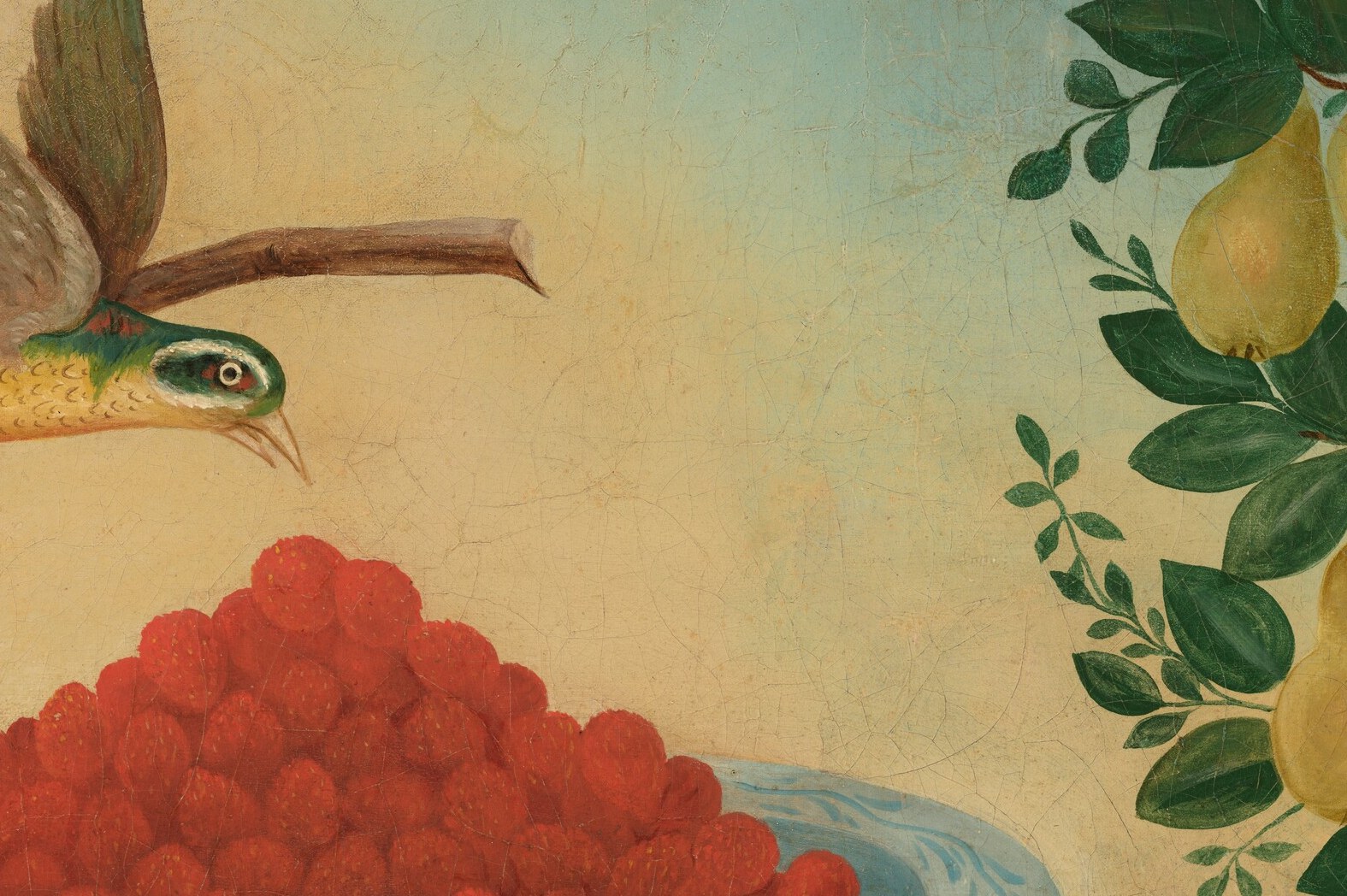
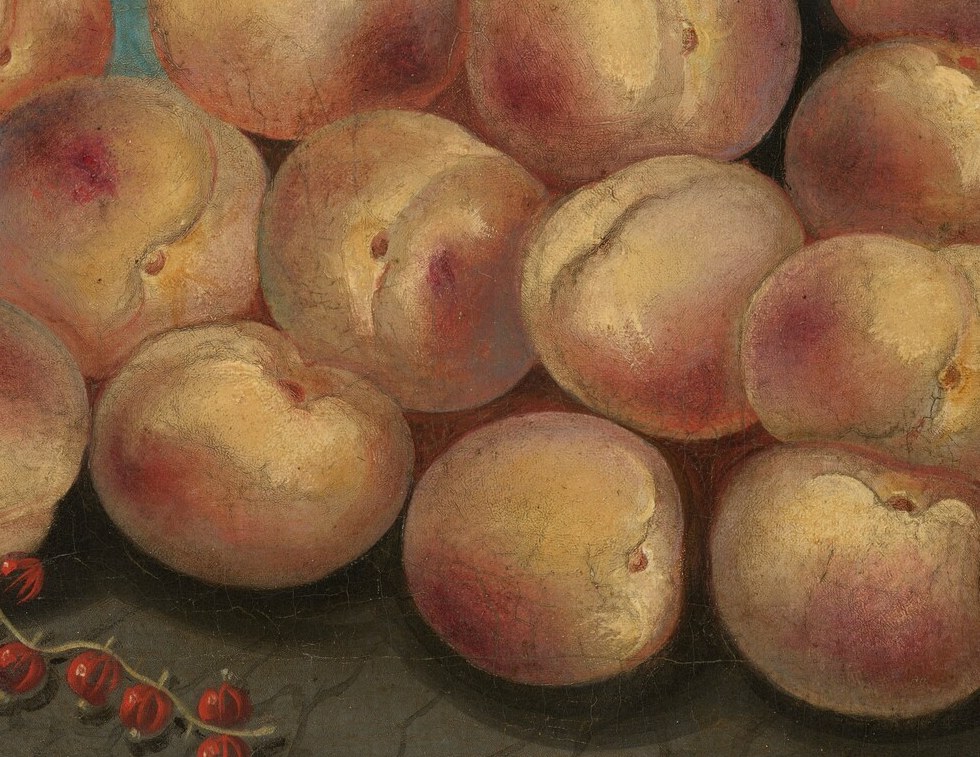
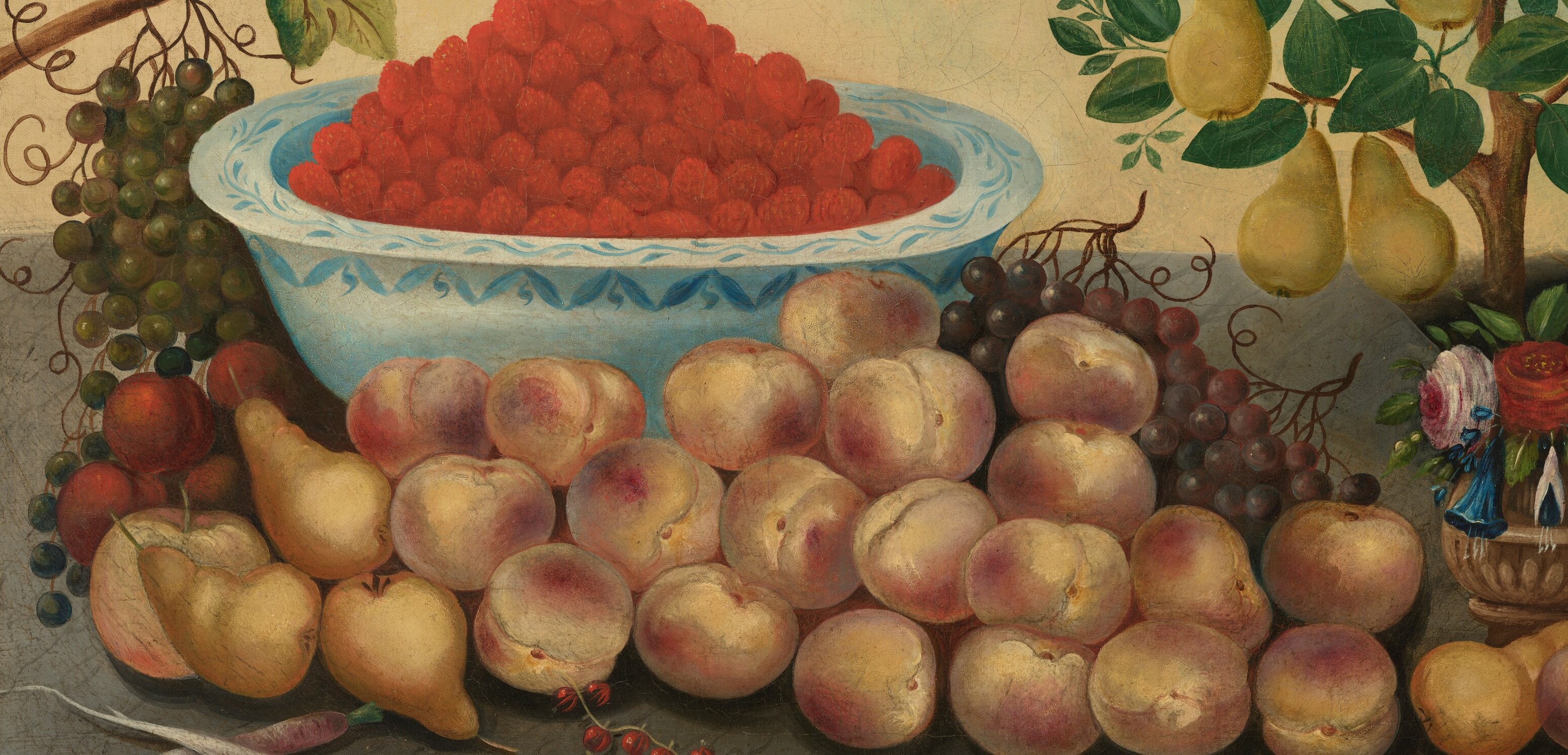
Start with the porcelain bowl. The bold blue-and-white pattern signals the mid-19th-century American taste for imported Chinese ceramics, a luxury object on a domestic table. Then find the halved pear near the table's edge. In the still-life tradition, a cut fruit is never accidental: it exposes the interior, signaling ripeness on the verge of decay, a vanitas device borrowed from 17th-century Dutch painting.
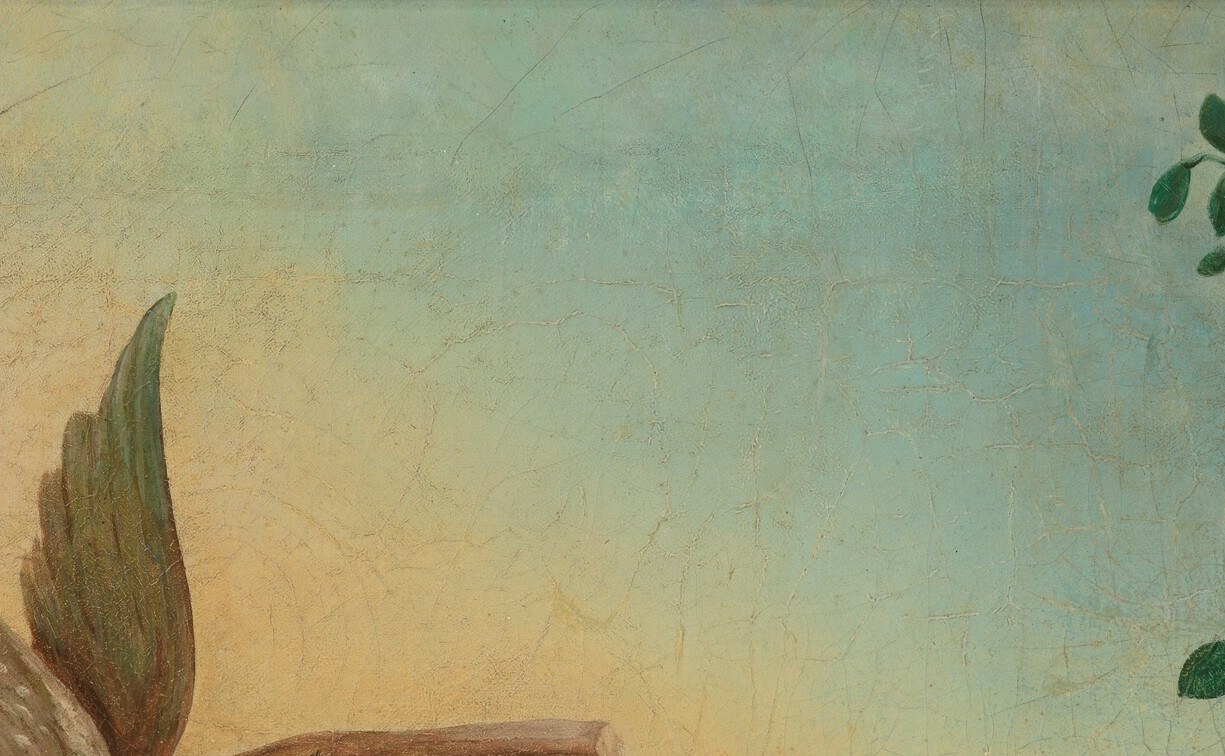
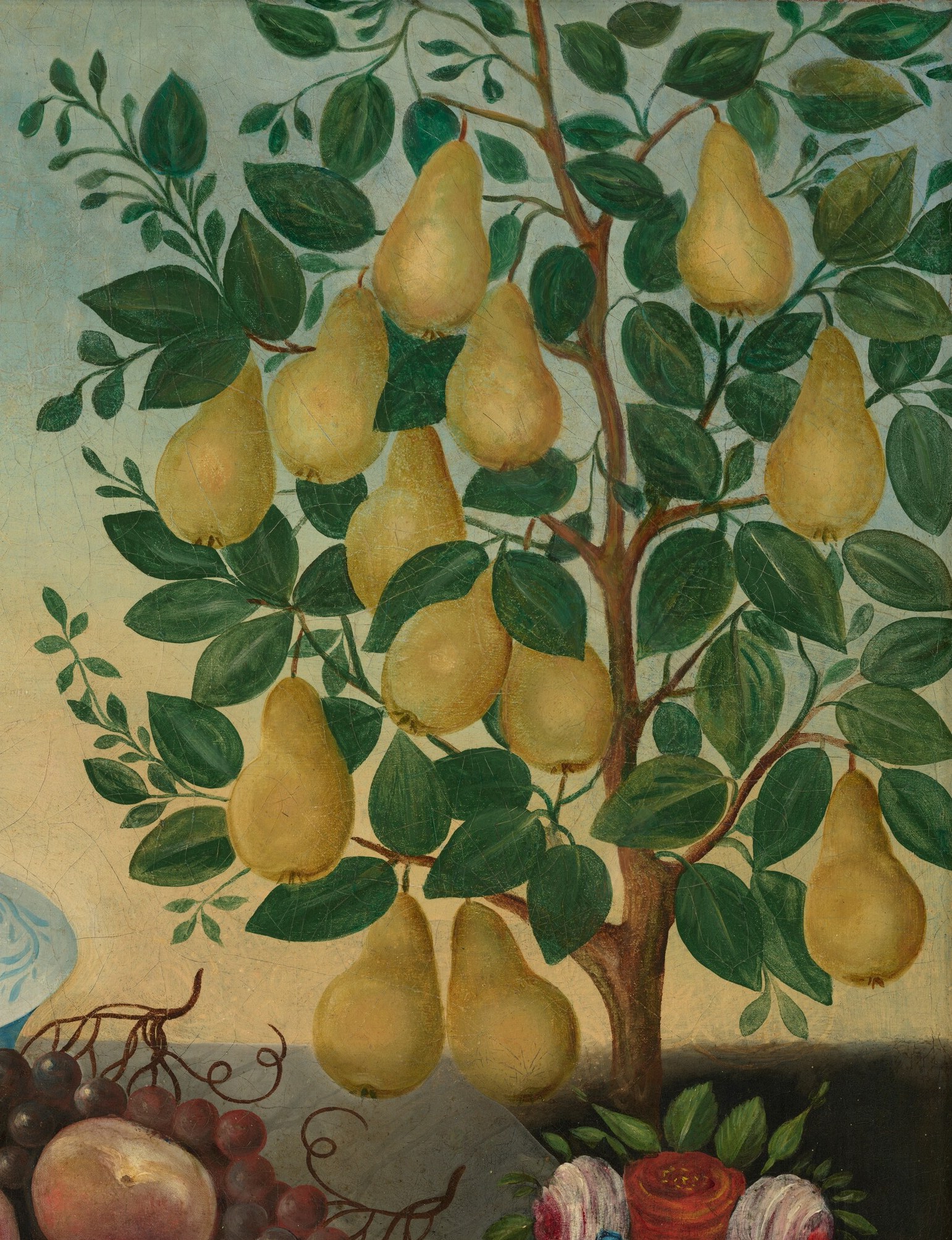
But Bond undercuts the melancholy with the dwarf pear tree growing from a pot in the center of the composition. It bridges the table of cut fruit to the hummingbird hovering above, the painting's only living, moving creature. The cycle reads upward: fruit harvested, fruit cut, a living tree, a bird in flight.
The painting belongs to a distinctly American still-life tradition that used abundance to argue for national promise, even as the vanitas details acknowledged that promise is fleeting. Bond made that argument in one painting, in one year.
Details
Transcript
A hummingbird hovers. Nothing else moves. In 1856, this porcelain bowl meant trade with China. Now look at the single cut pear. An opened fruit is a vanitas signal. Ripeness about to fade. But a living tree grows from the center of this table. It bridges the cut fruit below to the living bird above. Charles V. Bond painted this the only year of his life.