Narcisa Barañana de Goicoechea by Francisco Goya
View the artwork: Narcisa Barañana de Goicoechea →
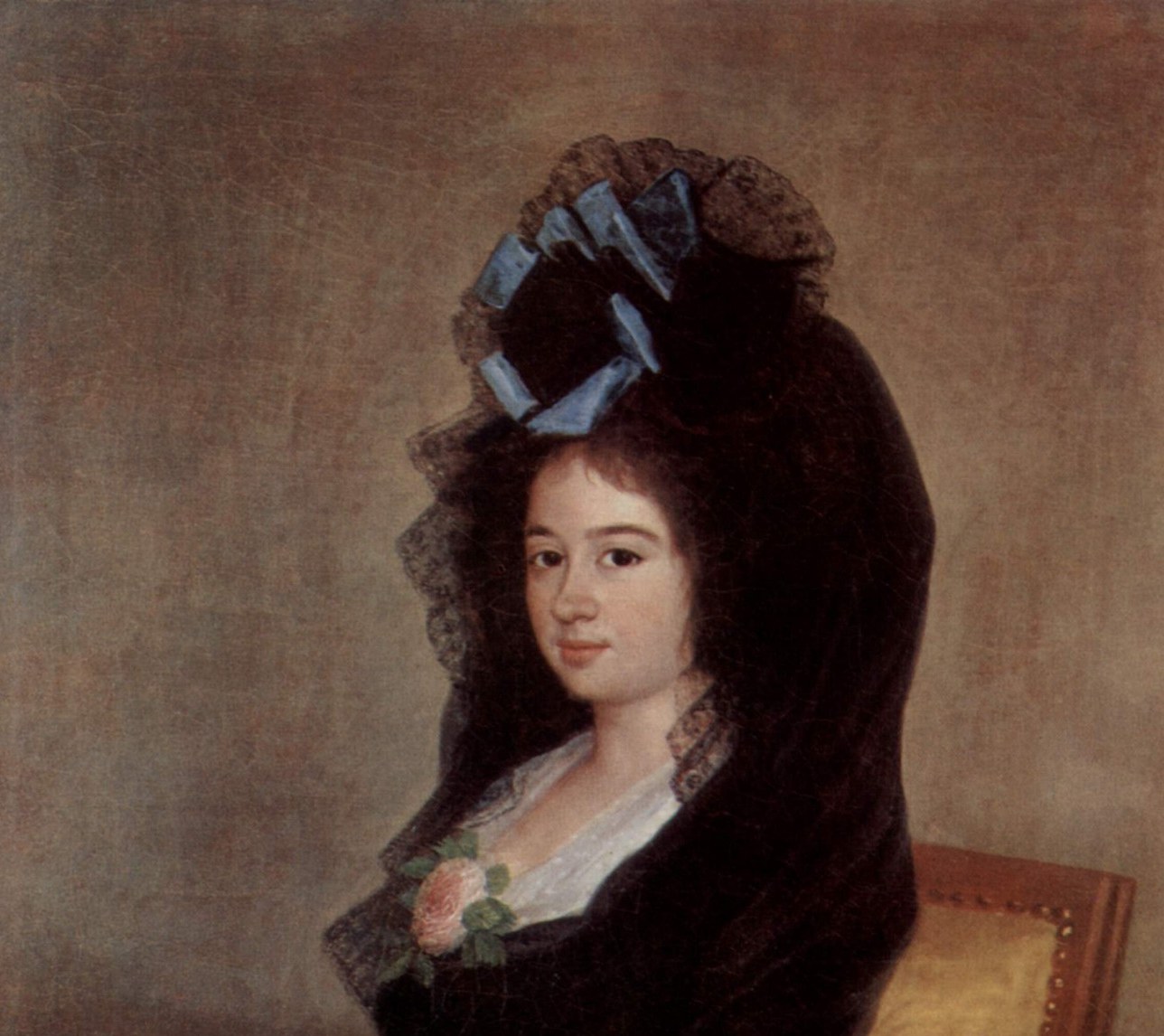
This is Narcisa Barañana de Goicoechea, painted by Francisco Goya in 1815. It is housed at the Metropolitan Museum of Art. Goya was 69 years old, profoundly deaf, and increasingly isolated from the Spanish court when he painted this portrait of a prosperous married woman from a prominent Basque-Madrid family.
Notice the contrast between the official symbols and the unguarded face. The black lace mantilla, the fur-trimmed bodice, and the pink rose all perform the role of a respectable Spanish wife. The rose specifically signals conjugal affection. And a simple ring on her finger confirms her married identity. These details tell you what her world expected of her.
But Goya's real interest is in her eyes. He had been deaf since a severe illness in 1793. For over twenty years he had lived in a world without sound, watching faces with an intensity that hearing people rarely sustain. In this portrait he gives Narcisa's gaze a startling directness, a composed surface with an interior life that feels private and unreachable.
The painting descends from Velázquez in its dark, sculptural background, but Goya pushes it into his own late manner: loose, almost impatient brushwork in the clothing, and painstaking attention reserved entirely for the face. The result is a portrait that honors social convention on its surface while quietly insisting that a person is more than their role.
#arthistory #franciscogoya #spanishart
Details




Transcript
Madrid, 1815. Goya is 69, deaf, and living in exile from the court. He paints Narcisa Barañana de Goicoechea, a woman of a prosperous Basque-Madrid family. Look at her eyes. Goya gives them a startling, direct intensity. The black lace mantilla frames her face, a marker of Spanish identity and fashion. A single pink rose rests in her hands, the symbol of conjugal affection. A simple ring anchors the portrait in a fact: she is married. Goya had been profoundly deaf for over 20 years. He watched faces with excruciating attention. Her composure is what society required. Her eyes hold something only he could see.