Seated Woman by Ribot, Augustin Théodule
This is Théodule Ribot’s "Seated Woman," painted around 1882. Ribot was a French realist who spent his career painting cooks, seamstresses, and working people with the same seriousness other artists reserved for generals and aristocrats.
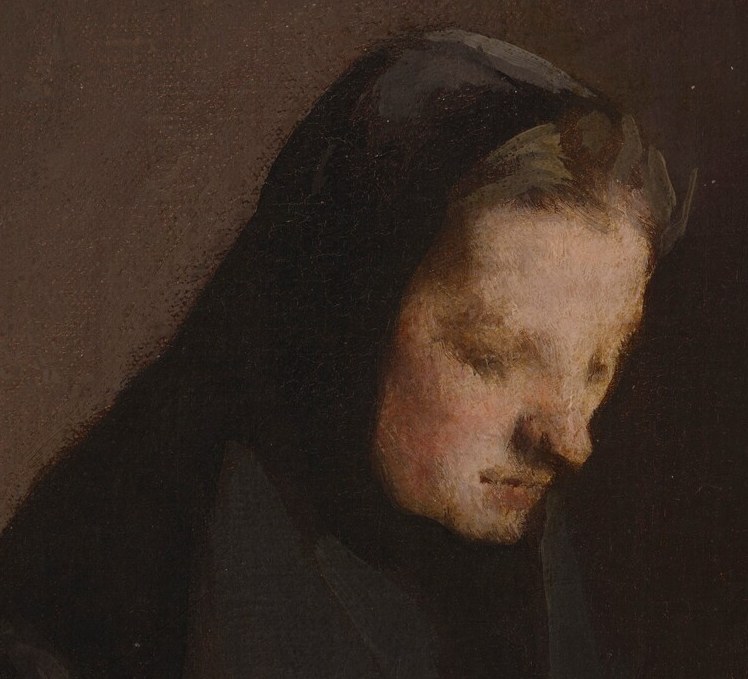
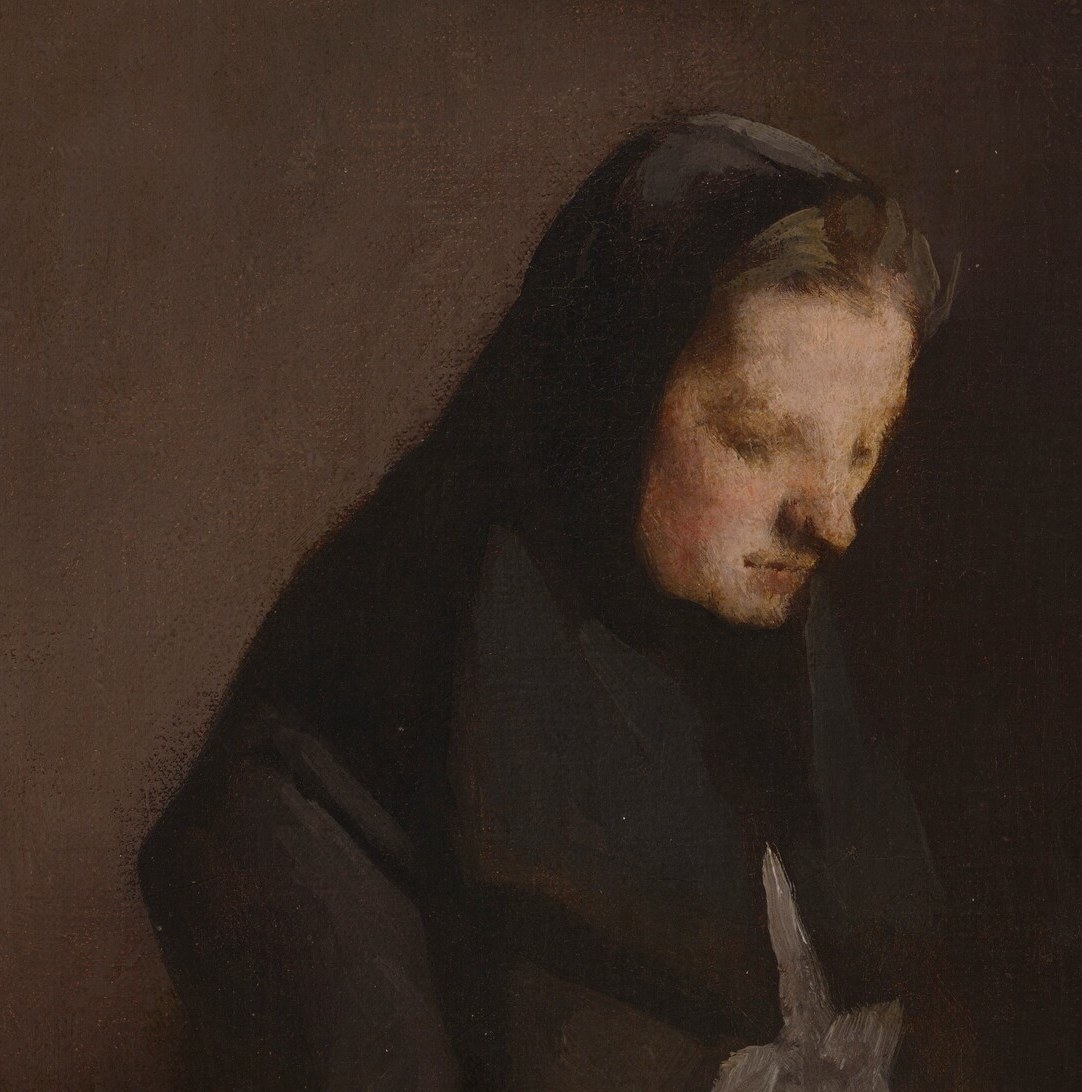
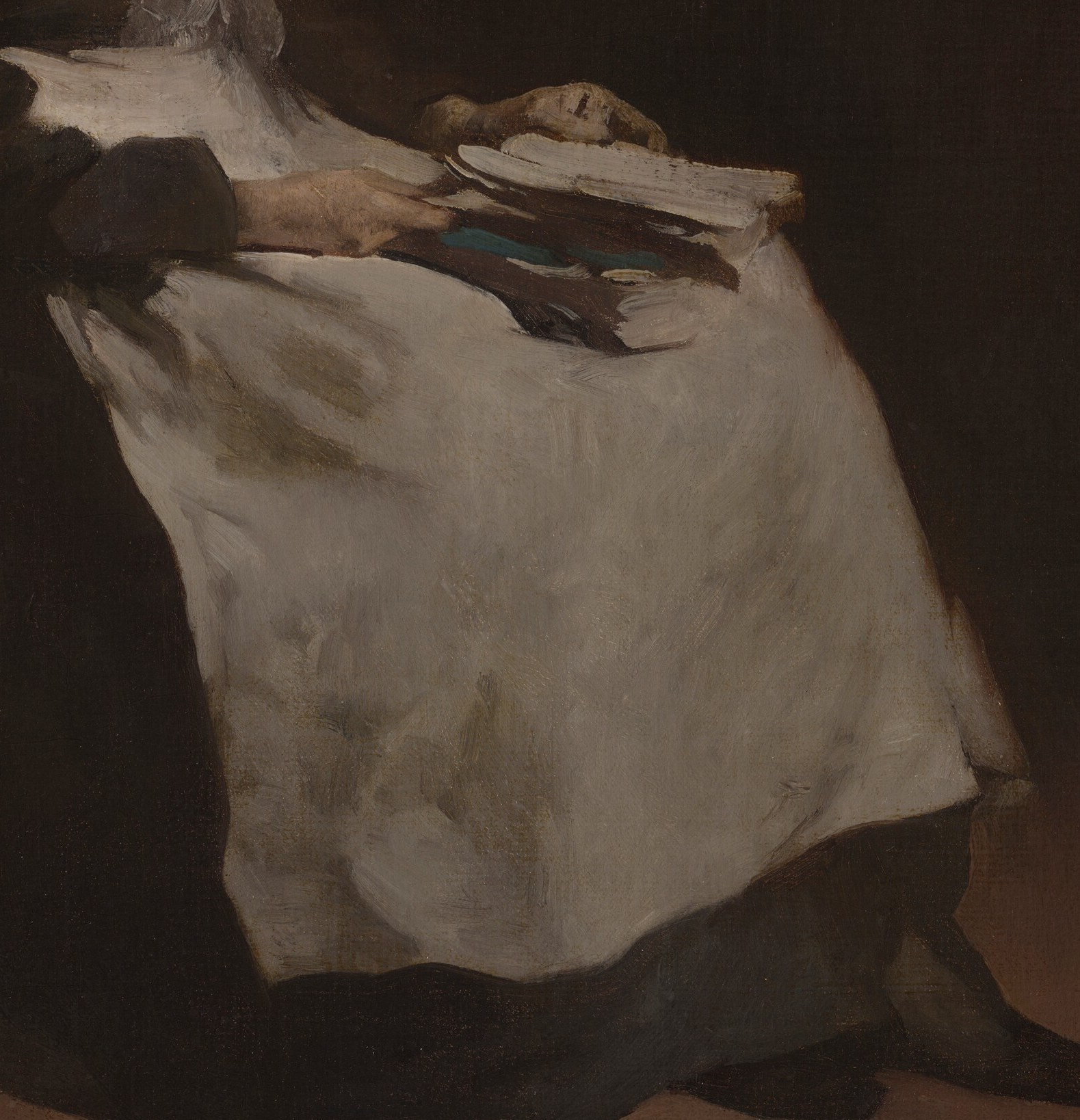
The woman sits on a simple stool, her head covered, her eyes on the needle. Every element, the dark dress, the white apron, the deep shadows on the wall, is built from a deliberately narrow range of color. Ribot doesn't need spectacle; he gives her concentration and quietness instead.
By 1882, the French Third Republic was still young, and realist painters were making a case that the lives of ordinary people belonged in museums. This work, modest in size, spare in palette, held today in a private collection, is exactly that case, made in oil and canvas.
Look at her hands, paused in mid-motion, and the soft shadow that isolates her from everything else. What do you notice about the way she's sitting?
Details
Transcript
France, the early 1880s. The Third Republic is just settling in. A woman sits alone, absorbed in mending. Her head covering and dark dress mark her as a woman of the working household. Realist painters argued that a life like hers was worth the same canvas as a queen's. Ribot built this entire scene from a few quiet tones, browns, blacks, and the single white apron. He painted it near the end of his life, still insisting that dignity lives in ordinary rooms.