The Crucifixion by Daddi, Bernardo
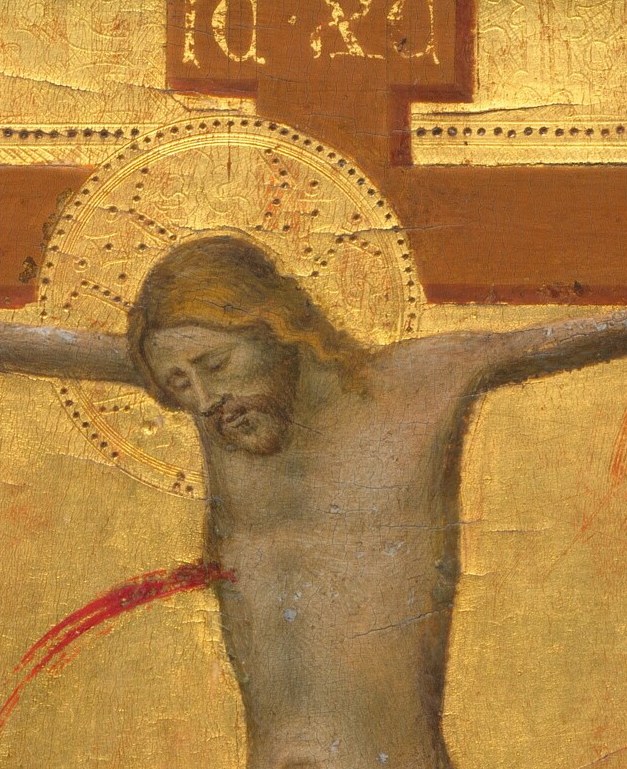
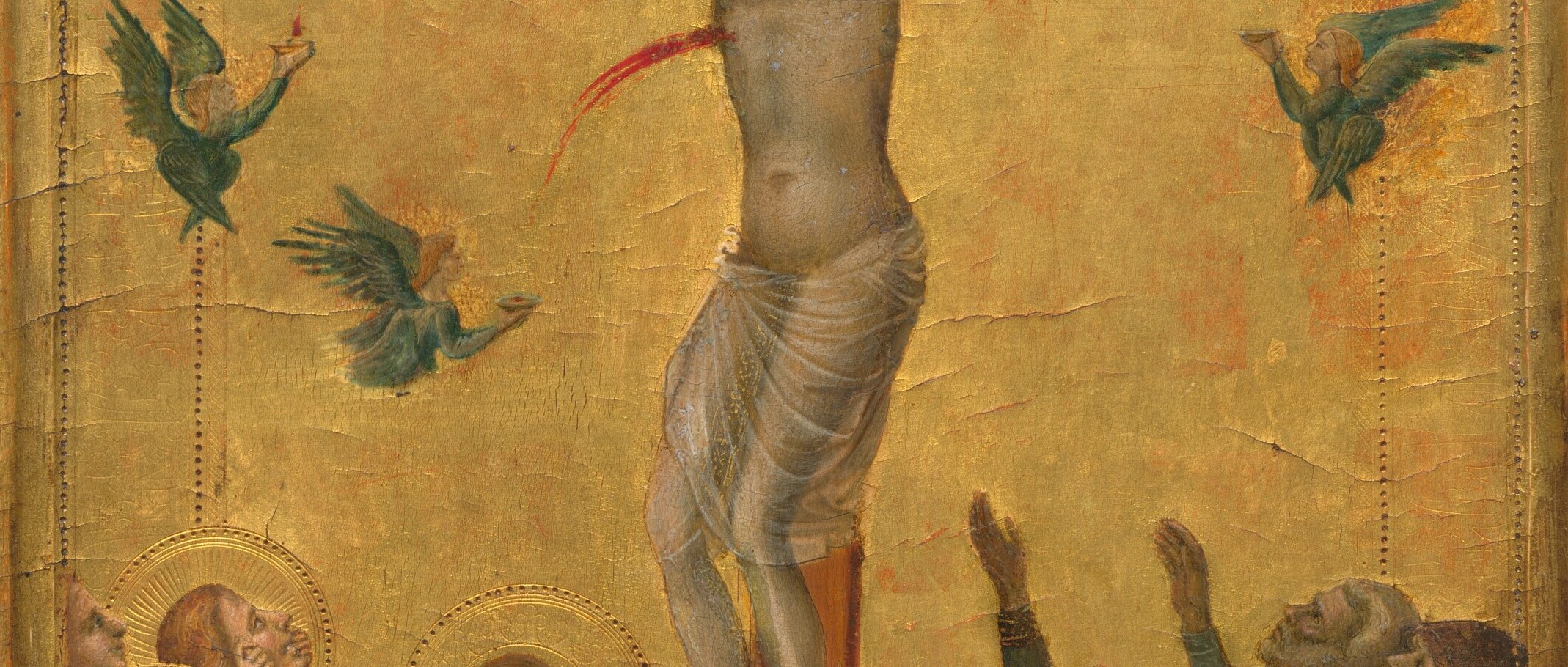
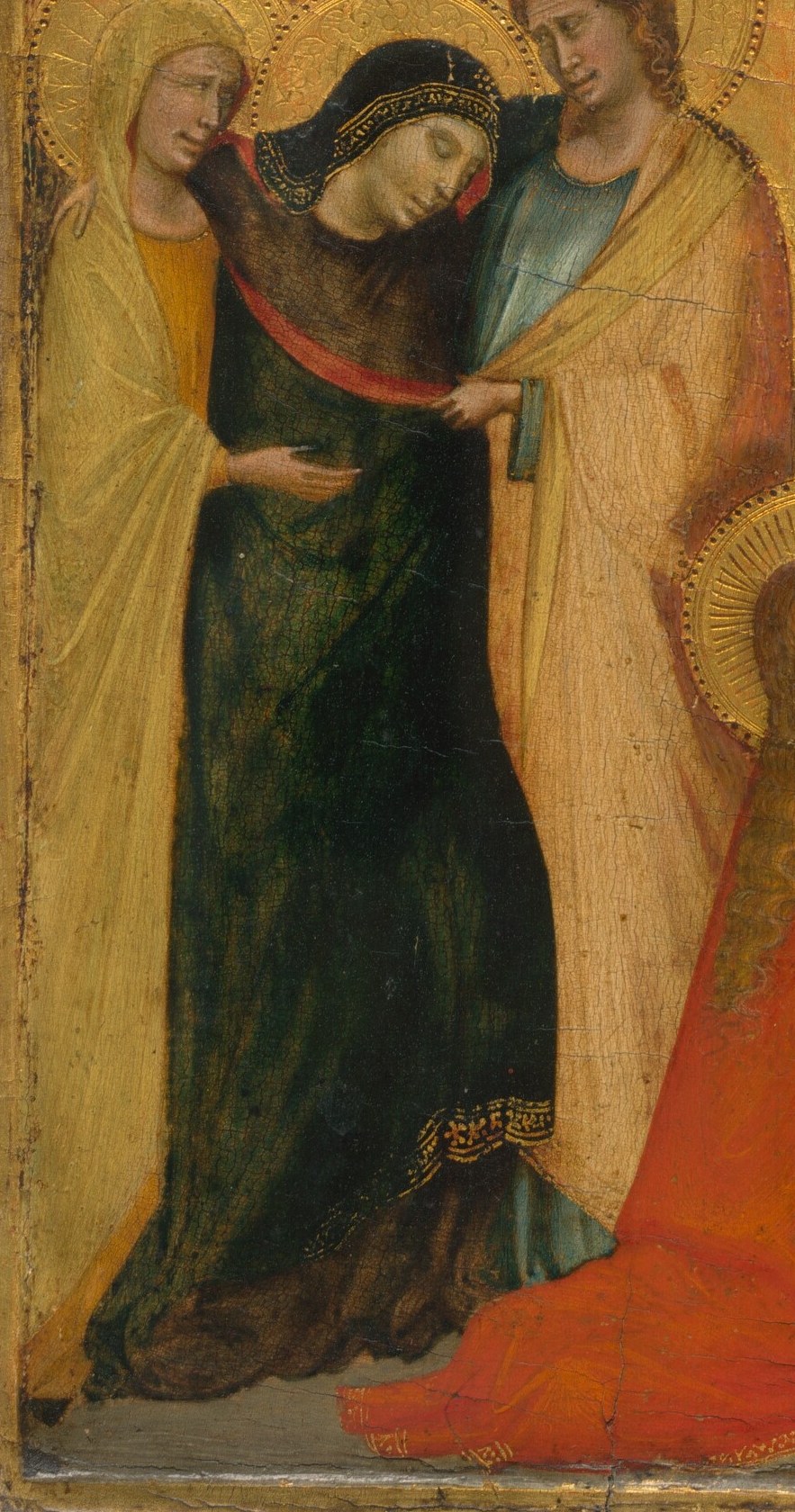
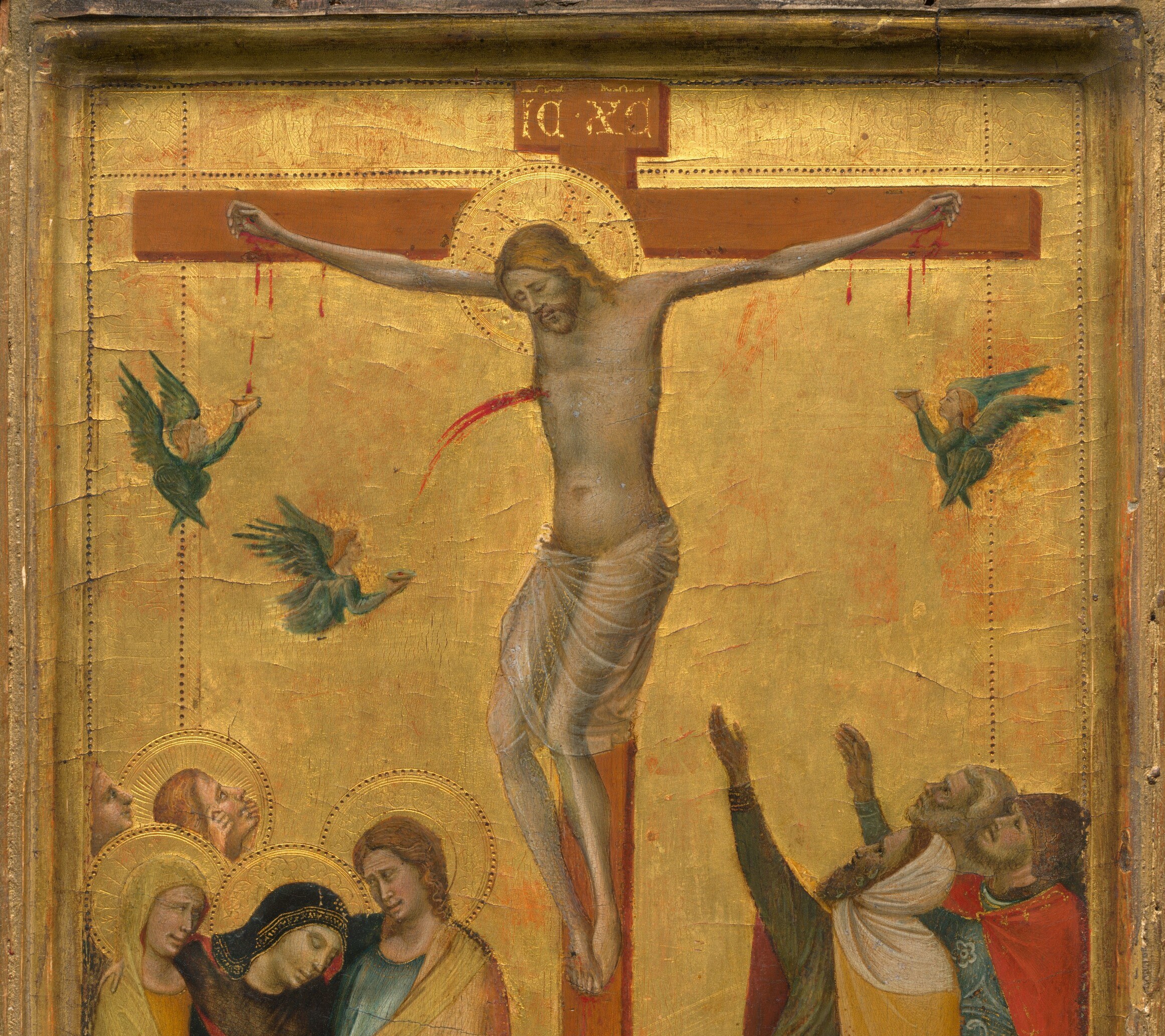
This is The Crucifixion by Bernardo Daddi, painted around 1320 to 1325 in Florence. It is one of the earliest known Italian panel paintings to treat the Crucifixion as a fully human event: Christ's body hangs with a gentle, natural curve, and the Virgin Mary has physically collapsed into the arms of the women beside her. The painting lives at the National Gallery of Art in Washington, D.C.
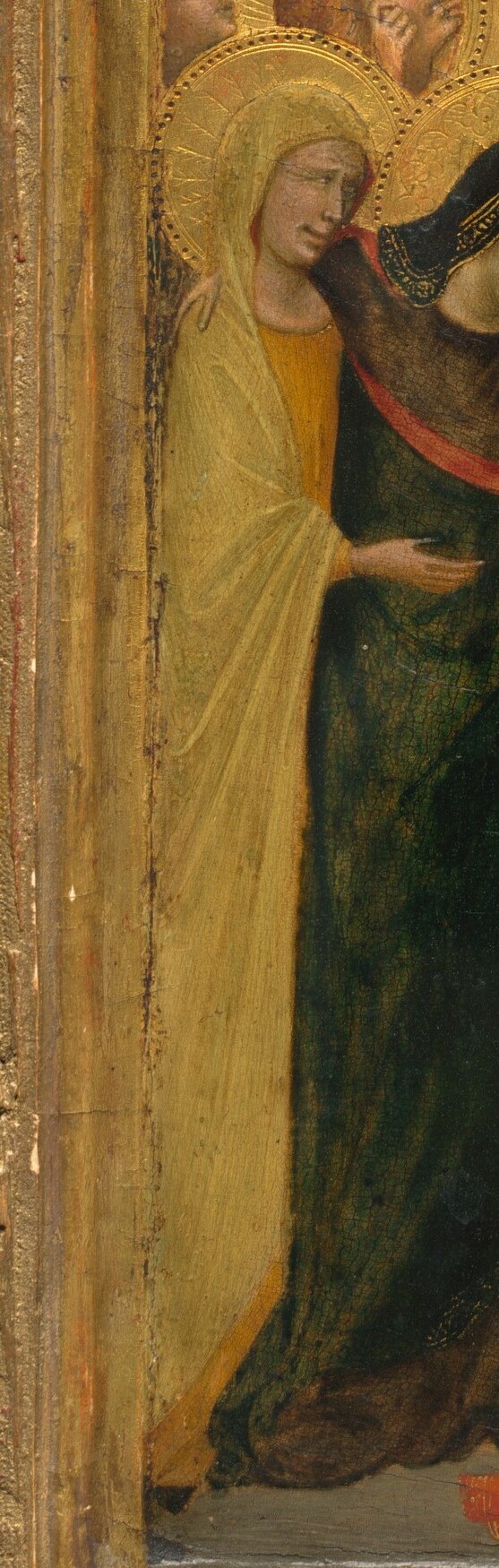
Look first at Christ's inclined head. A generation earlier, a crucified Christ was often a stiff, frontal symbol. Daddi gives him the slight, quiet tilt of someone who has just died. Then let your eye find the left side, where Mary's body is going slack. Two women hold her upright. Hands steady her; you can barely make out their faces. That is the revolution. Grief is not a mask here. It is a body that cannot stand.
Daddi is thought to have trained under Giotto, the artist who broke Italian painting out of its Byzantine stiffness. By the time Daddi painted this panel, he was likely in his late twenties or early thirties, running a workshop that would make him Florence's leading painter after Giotto's death. His gift was for blending Giotto's sculptural weight with the sweeter color and line of Sienese art. This panel shows that blend in its most serious form.
We know almost nothing about who commissioned it or where it hung. But seven centuries later, the gold still glows. And a young Florentine's decision to paint the Virgin swooning still feels like watching a private threshold being crossed in public.
Details
Transcript
You are looking at one of the earliest Italian panel paintings of the Crucifixion. Florence, around 1322. A young painter trained by Giotto sets down a test. Christ's head inclines. Not stiff and upright. Serene acceptance. Before this generation, a Crucifixion was a symbol. Here it becomes a death. Now look to the left. Mary has physically collapsed into the arms of her companions. This is one of the first times an Italian painter renders the Virgin's body giving out from sorrow. Daddi's master Giotto died in 1337. After that, Daddi became Florence's leading painter. But here he is barely thirty, deciding grief deserves a body as real as the one it mourns.