Bayside, New Rochelle, New York by David Johnson (American, 1827–1908)
View the artwork: Bayside, New Rochelle, New York →
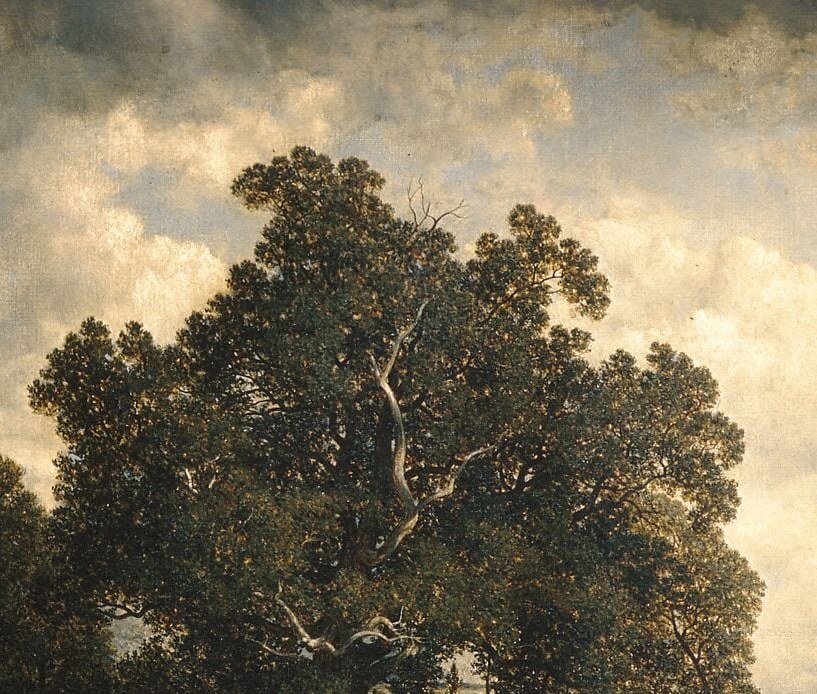
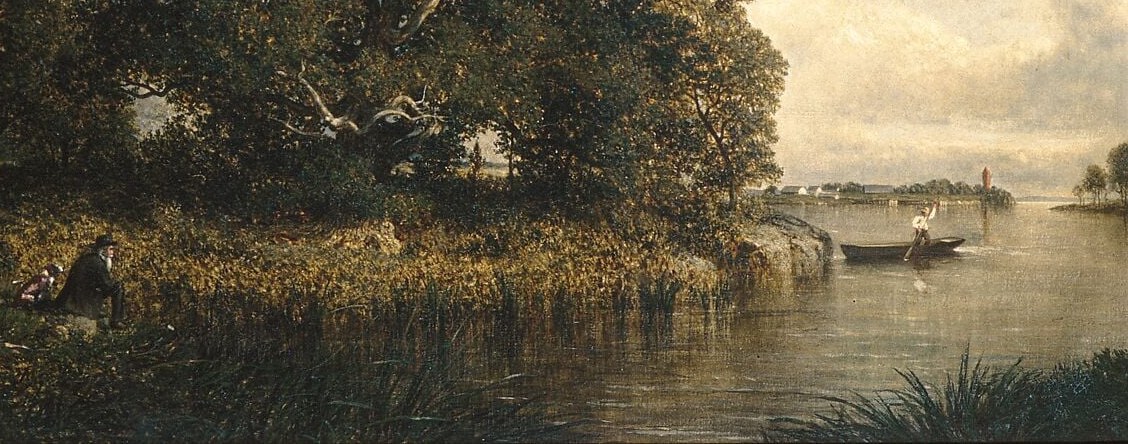
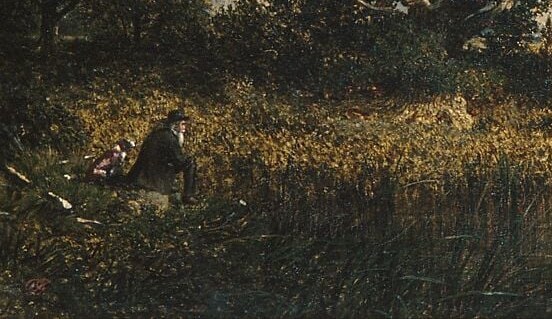
David Johnson's "Bayside, New Rochelle, New York" (1886) is a painting about a place that no longer exists. The large oak, the calm inlet, the tiny figures by the water: all of it was drawn from a graphite sketch Johnson made two years earlier. He returned to the spot to paint it in oil, and within months of finishing, a new amusement park opened on that same shore. The quiet retreat became a summer destination for thousands of Manhattan visitors, and the landscape Johnson recorded was gone for good.
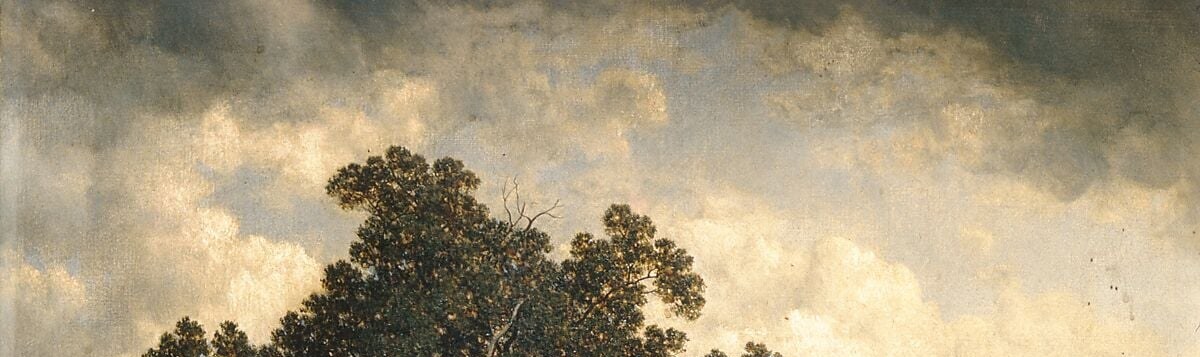
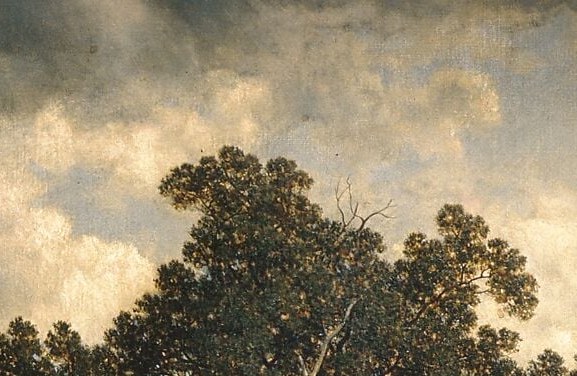
Look at the water. Johnson's reflections are broken and luminous, a technique he absorbed from the French Barbizon painters. Their influence pulled him away from the grand, theatrical vistas of the Hudson River School and toward this: a private, contained moment. The sky is active, the oak's bare branches are graphic and precise, and the tiny sailboats on the right confirm this was a working waterway, not an empty wilderness. The white building barely visible through the trees behind the oak is the quietest possible proof that people lived here.
The painting entered the Metropolitan Museum of Art in 1914 as part of the Maria DeWitt Jesup bequest, from the collection of her husband Morris K. Jesup, a railroad financier whose philanthropy helped build the Met's American holdings. It is catalogued as object 15.30.65.
A painting is sometimes a memorial by accident. Johnson set out to paint an oak and a bay. He ended up freezing a shoreline the moment before the crowd arrived.
#arthistory #americanart #hudsonriverschool
Details
Transcript
It looks like a quiet study of an old oak. A calm bay. A few sailboats. Empty shore. The painter scouted this spot for two years before he touched canvas. He finished in 1886. And within months, everything here vanished. A new amusement park opened. Thousands poured in from the city every weekend. This painting is the last record of a shore that was already disappearing.