Artwork
Bayside, New Rochelle, New York
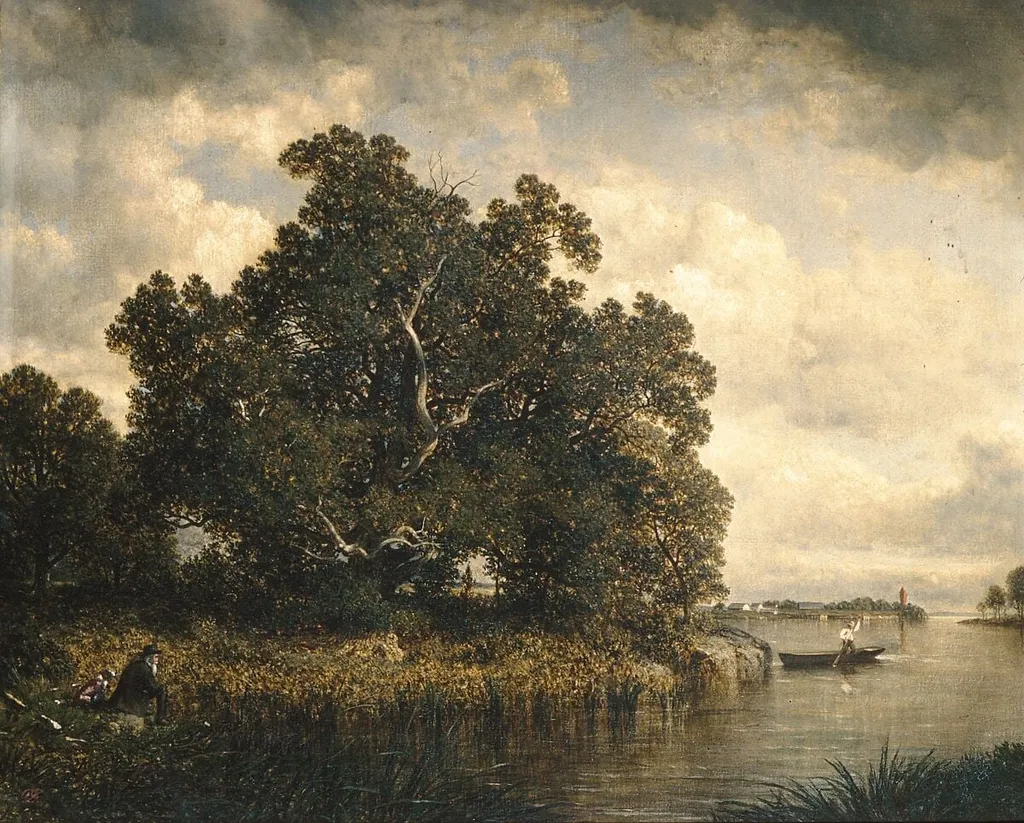
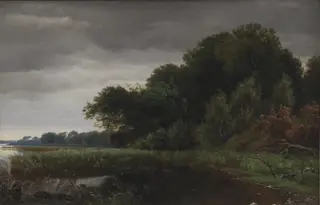
Bayside, New Rochelle, New York is an oil painting by the American Impressionist artist David Johnson. It dates from 1886 and is held in the collection of the Metropolitan Museum of Art.
- Accession no.
- 15.30.65
- Credit line
- Bequest of Maria DeWitt Jesup, from the collection of her husband, Morris K. Jesup, 1914
About this work
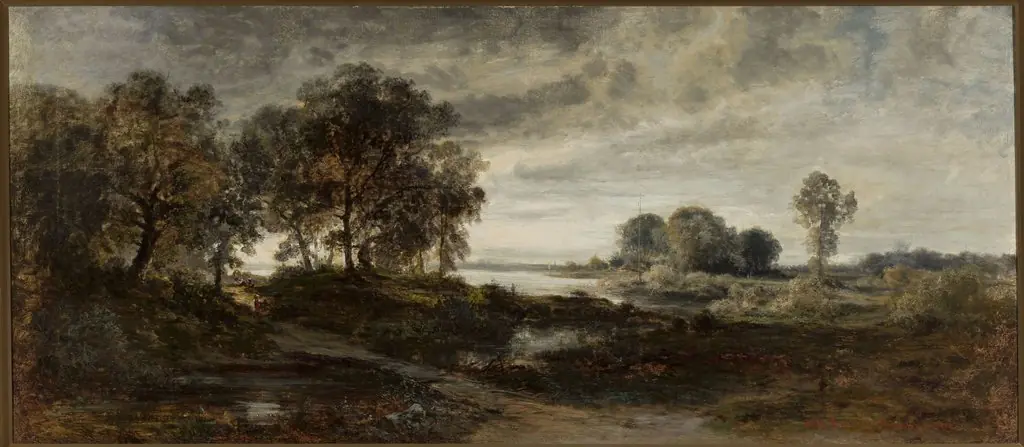
A large oak dominates this 1886 view of an inlet off Long Island Sound, its branches set against a cloudy sky while small figures linger at the water's edge. David Johnson worked from a graphite sketch he had made two years earlier in New Rochelle, a quiet retreat north of New York City. The painting reflects his late turn toward intimate, tonal landscapes inspired by the Barbizon School.
Overview
A prominent oak tree dominates the foreground, its branches silhouetted against a cloudy sky, while small figures observe the water.
David Johnson's 1886 oil painting, Bayside, New Rochelle, New York, captures a tranquil inlet off Long Island Sound. A prominent oak tree dominates the foreground, its branches silhouetted against a cloudy sky, while small figures observe the water. This work exemplifies Johnson's mature style, marking a departure from the grand, expansive vistas of his earlier Hudson River School associations towards more personal and contained natural settings.
Subject & Meaning
The painting depicts a quiet moment along the New Rochelle shoreline, with a large oak anchoring the composition in the foreground. Its gnarled branches frame the distant water, where small figures are subtly integrated into the landscape. Johnson developed this specific view from an earlier graphite sketch, Landscape and Lagoon, New Rochelle, created two years prior. This focus on a localized, domesticated riparian scene reflects the artist's preference for intimate natural subjects.
Technique & Style
Johnson's artistic approach in this period diverged significantly from the dramatic, sweeping landscapes characteristic of the Hudson River School, with which he began his career. By the 1880s, he embraced a more subdued and intimate aesthetic. This shift was partly informed by the French Barbizon painters, whose emphasis on tonal qualities and direct observation of nature resonated with American collectors and artists, leading Johnson to favor less monumental, more introspective views.
Context
When Johnson painted this scene in 1886, New Rochelle still functioned as a peaceful, refined escape from the bustling urban environment of nearby New York City. However, this tranquility was soon to be transformed. Within months of the painting's completion, a new amusement park opened along the shore, attracting numerous summer visitors from Manhattan and fundamentally altering the formerly genteel character of the area.
History & Provenance
Bayside, New Rochelle, New York became part of the Metropolitan Museum of Art's collection in 1914. The painting was a bequest from Maria DeWitt Jesup, who gifted it from the extensive collection assembled by her husband, Morris K. Jesup. Morris Jesup was a notable railroad financier and philanthropist whose contributions significantly enriched the museum's holdings. The artwork is catalogued under the object number 15.30.65.
Artist & collection
Artist
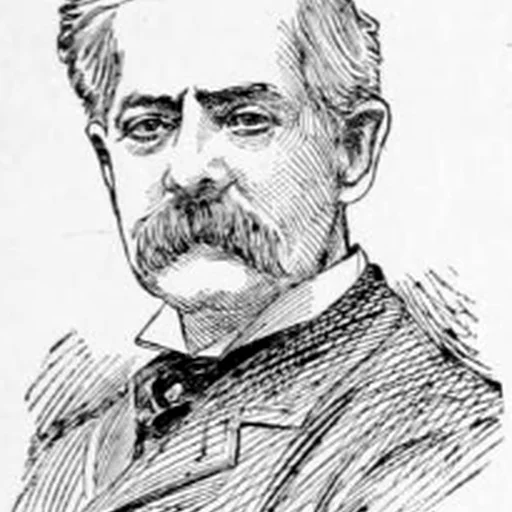
David Johnson (May 10, 1827 – January 30, 1908) was an American painter, a member of the second generation of Hudson River School painters.