Don Gaspar de Guzmán (1587–1645), Count-Duke of Olivares by Juan Bautista Martínez del Mazo
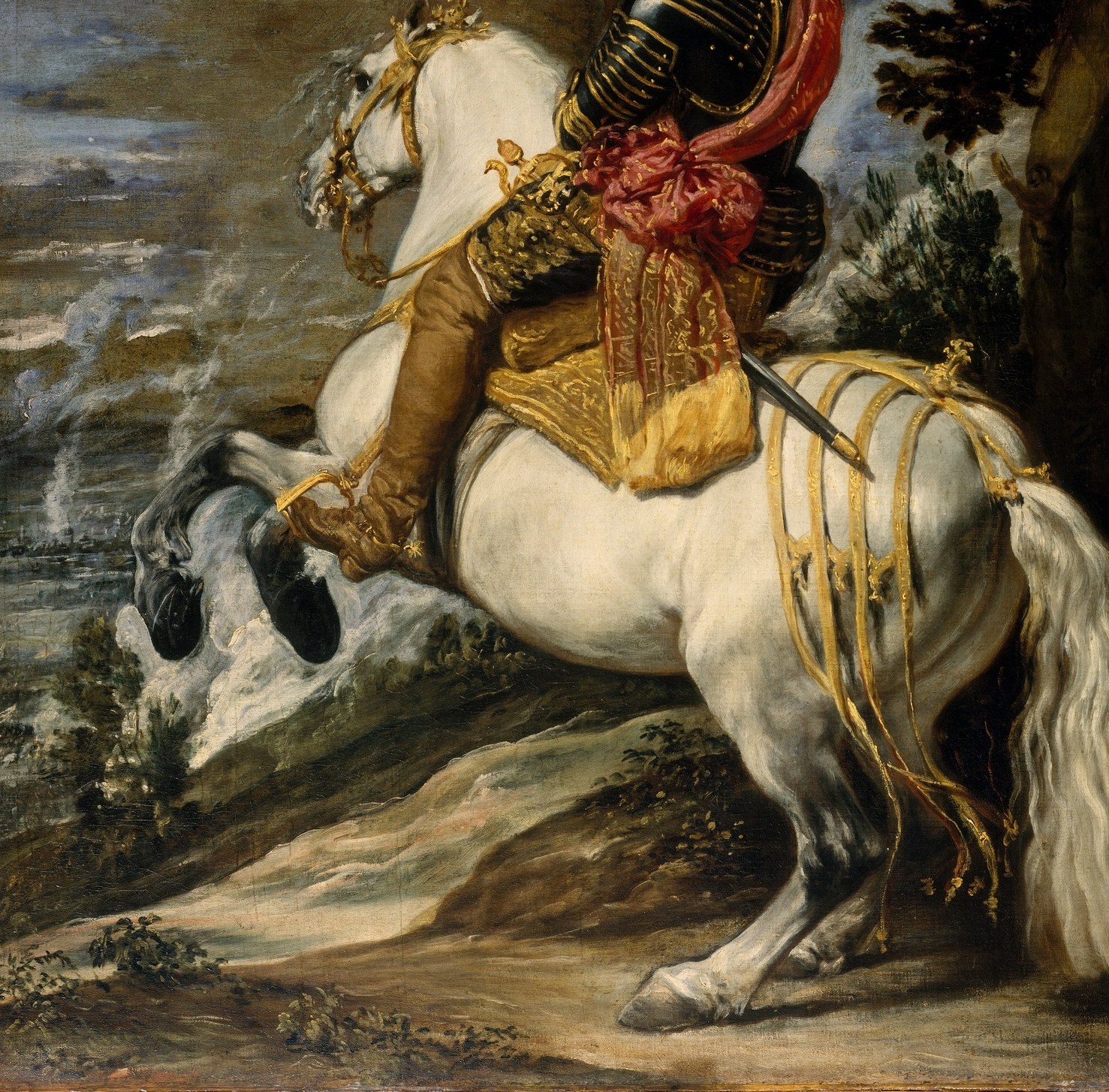
This is Don Gaspar de Guzmán, the Count-Duke of Olivares, painted by Juan Bautista Martínez del Mazo in 1636. It lives at the Museo del Prado in Madrid.
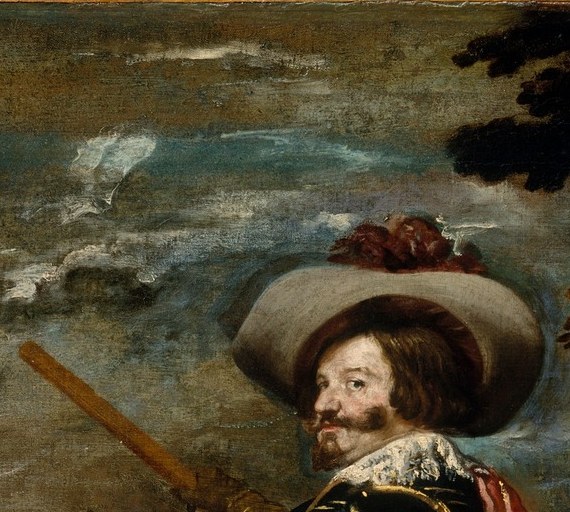
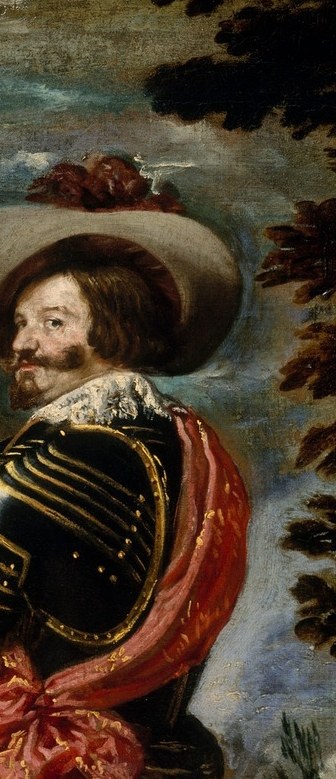
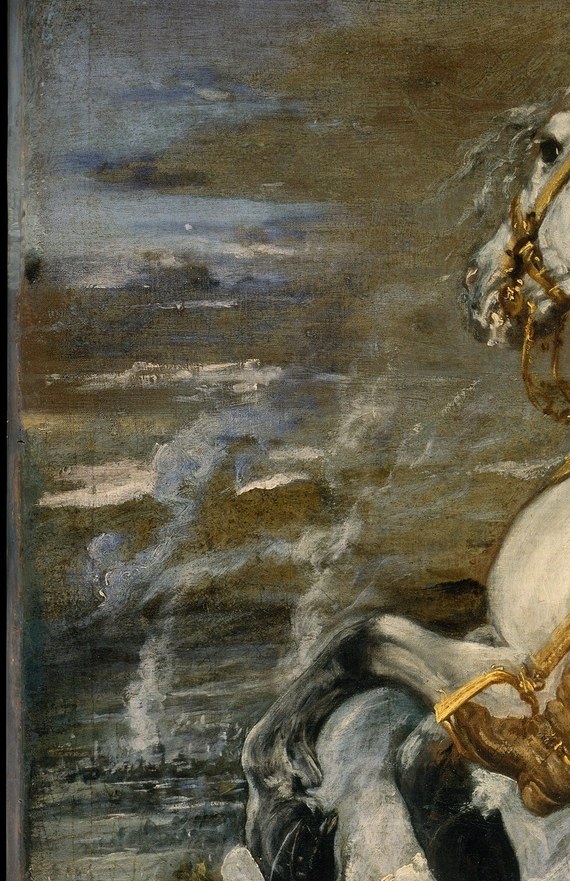
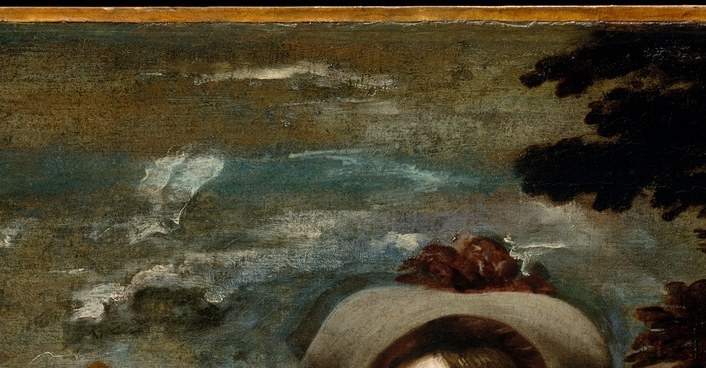
Mazo was the son-in-law and most devoted follower of Velázquez. He imitated his father-in-law's style so closely that many of his works were for centuries attributed to the master himself. Here he gives Olivares the full Baroque treatment: a rearing white horse, a storm-torn sky, armor chased in black and gold, and a marshal's baton raised skyward like a Roman conqueror's.
Olivares was the prime minister and chief favorite of Philip IV, making him the effective ruler of Spain for over two decades. He commissioned this portrait at the height of his power in the 1630s, while prosecuting the Thirty Years' War and draining the Spanish treasury to fund it. The theatrical confidence on display was propaganda in oil.
Eight years after this portrait was painted, the disasters he had set in motion caught up with him. Philip IV dismissed him in 1643, and Olivares died in exile two years later. The storm behind him was not just a painterly effect. What do you notice first when you look at his face?
Details
Transcript
He was the most powerful man in Spain, second only to the king. Look at what he holds above the horse. A marshal's baton. Symbol of supreme military command. He used that power to launch decades of ruinous war across Europe. This is not a battlefield painting. No one is dying here. He commissioned this portrait in 1636. The worst was still ahead. By 1643, the king dismissed him in disgrace. He died in exile.