A Miracle of Saint Joseph of Cupertino (1603–1663) by Placido Costanzi
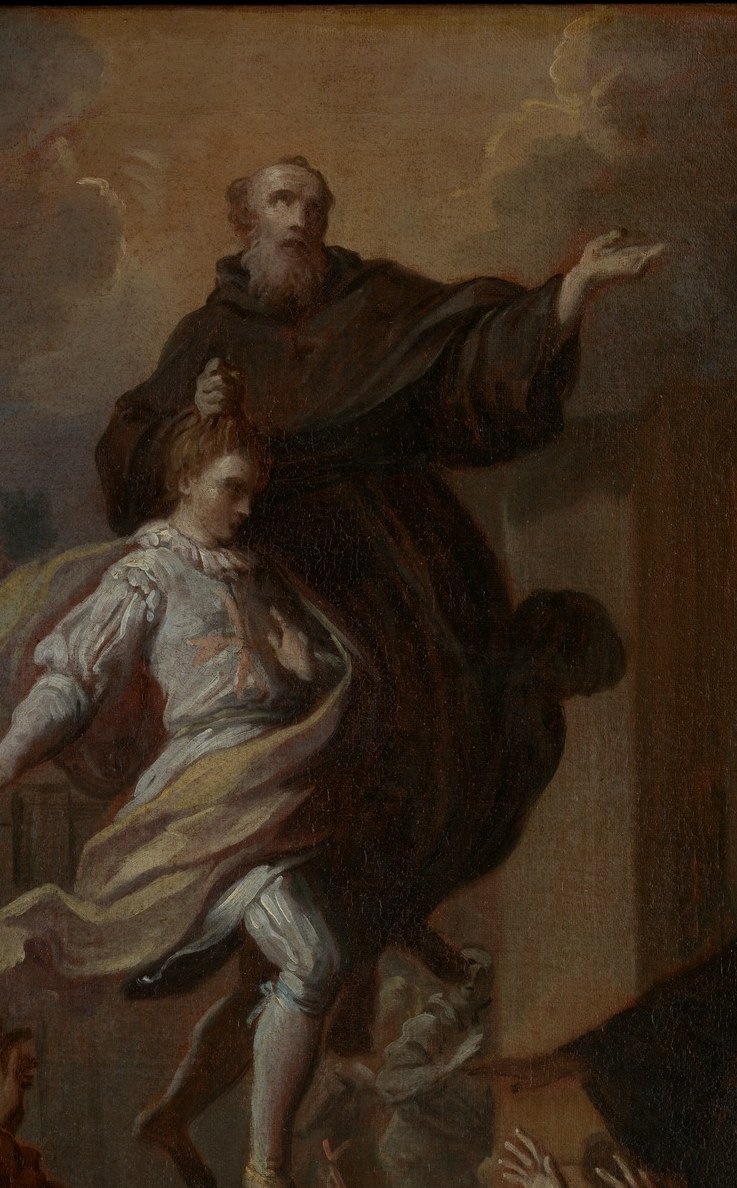
Placido Costanzi's "A Miracle of Saint Joseph of Cupertino," painted around 1750, captures a pivotal moment in the life of the Franciscan friar, now a saint, known for his ecstatic levitations. This oil painting, held at The Metropolitan Museum of Art, illustrates one of the many miraculous flights that were documented during his lifetime.
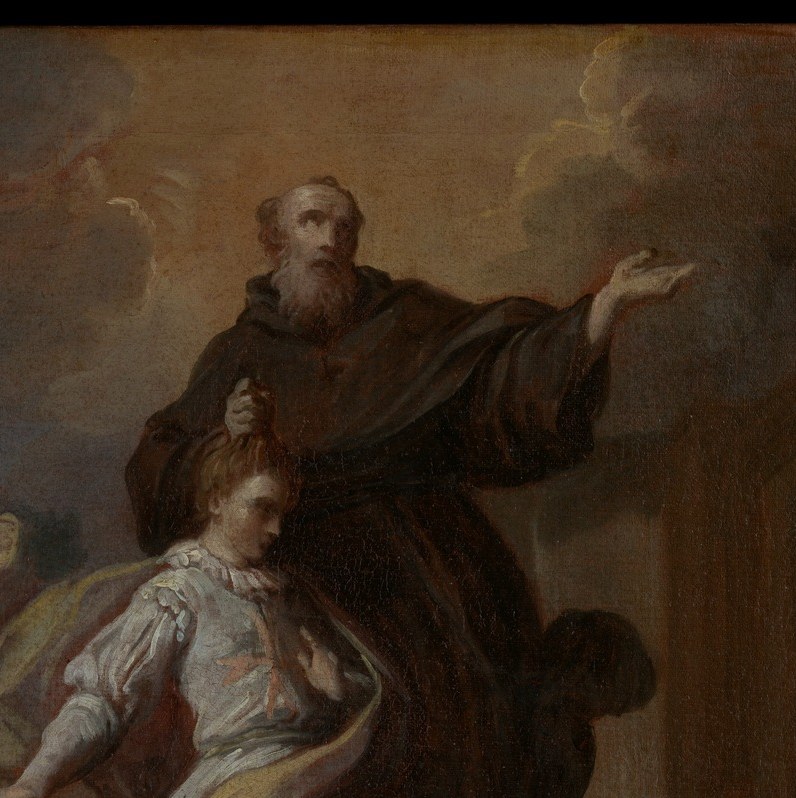
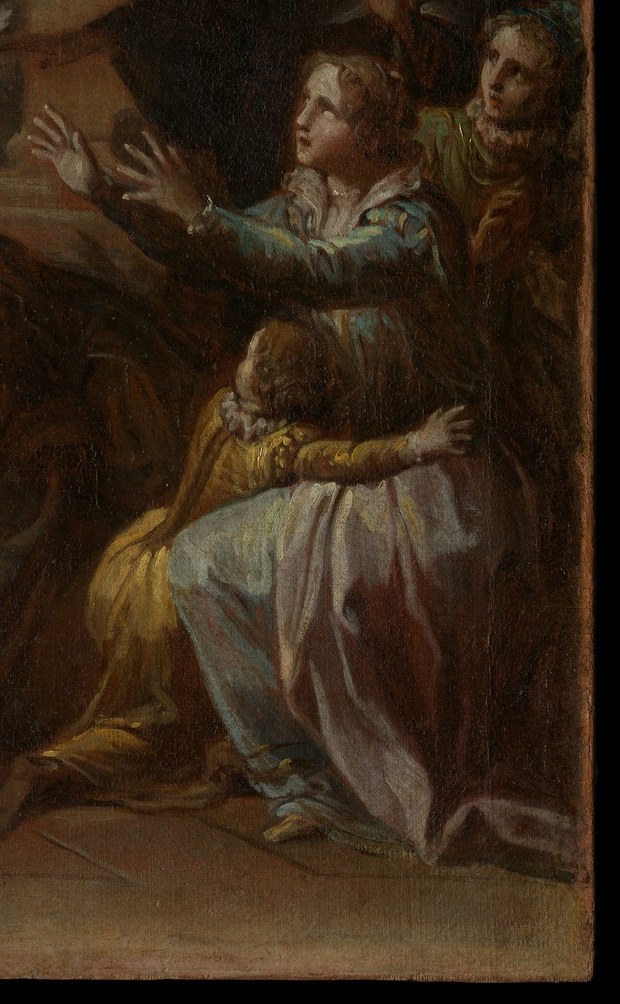
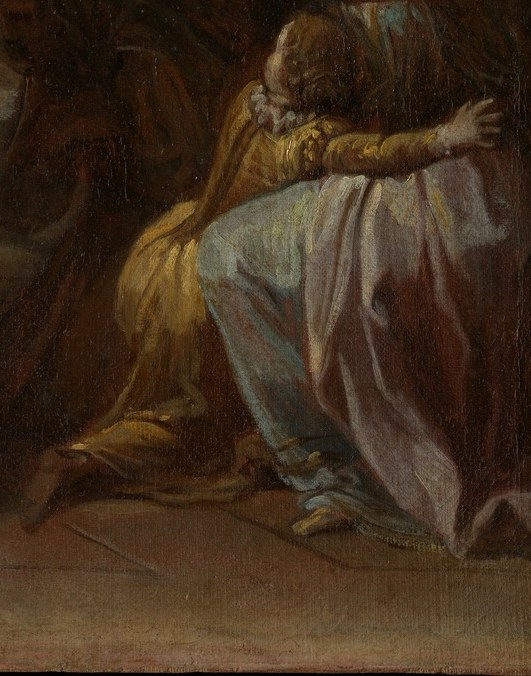
Look closely at the saint's upward gaze and the golden light surrounding him; Costanzi uses these details to convey divine presence and effortless rapture. The kneeling woman and the child imply a petition for healing, a common scenario in the accounts of Joseph's miracles.
These public ecstasies and levitations were not merely lore; they were attested by witnesses and became crucial evidence in the rigorous process leading to Joseph of Cupertino's canonization in 1767. Costanzi, a prominent Italian painter in Rome, specialized in such religious commissions, bringing these spiritual events to vivid life on canvas.
The painting thus serves as a visual record of a documented historical and religious phenomenon. What do you notice about the reactions of the witnesses in the painting?
Details

Transcript
This shows a Franciscan friar, Joseph of Cupertino, levitating. His ecstasies and flights were widely witnessed and documented. Such miracles were evidence in his 1767 canonization as a saint. This woman's plea is central to the painting's emotional weight. She likely petitions for the child nearby, as accounts describe. Costanzi, a known painter of religious works, made this in 1750.