Saint Catherine of Siena Beseeching Christ to Resuscitate Her Mother by Giovanni di Paolo
This is Saint Catherine of Siena Beseeching Christ to Resuscitate Her Mother, painted around 1450 by the Sienese master Giovanni di Paolo. It is a small, portable altarpiece made for private devotion, meant to be held in the hands and looked at closely, not hung on a museum wall. The story it tells is drawn from the life of Catherine of Siena, a 14th-century mystic whose intercessory prayer was believed powerful enough to cross the boundary between life and death.
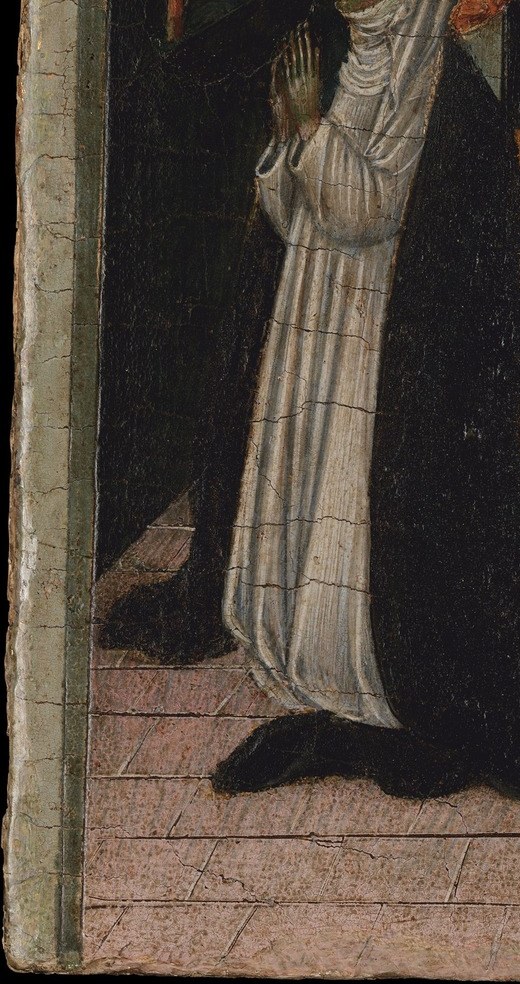
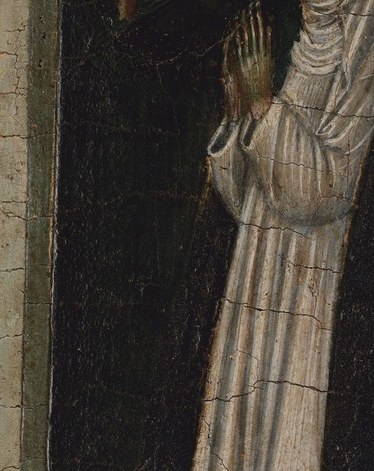
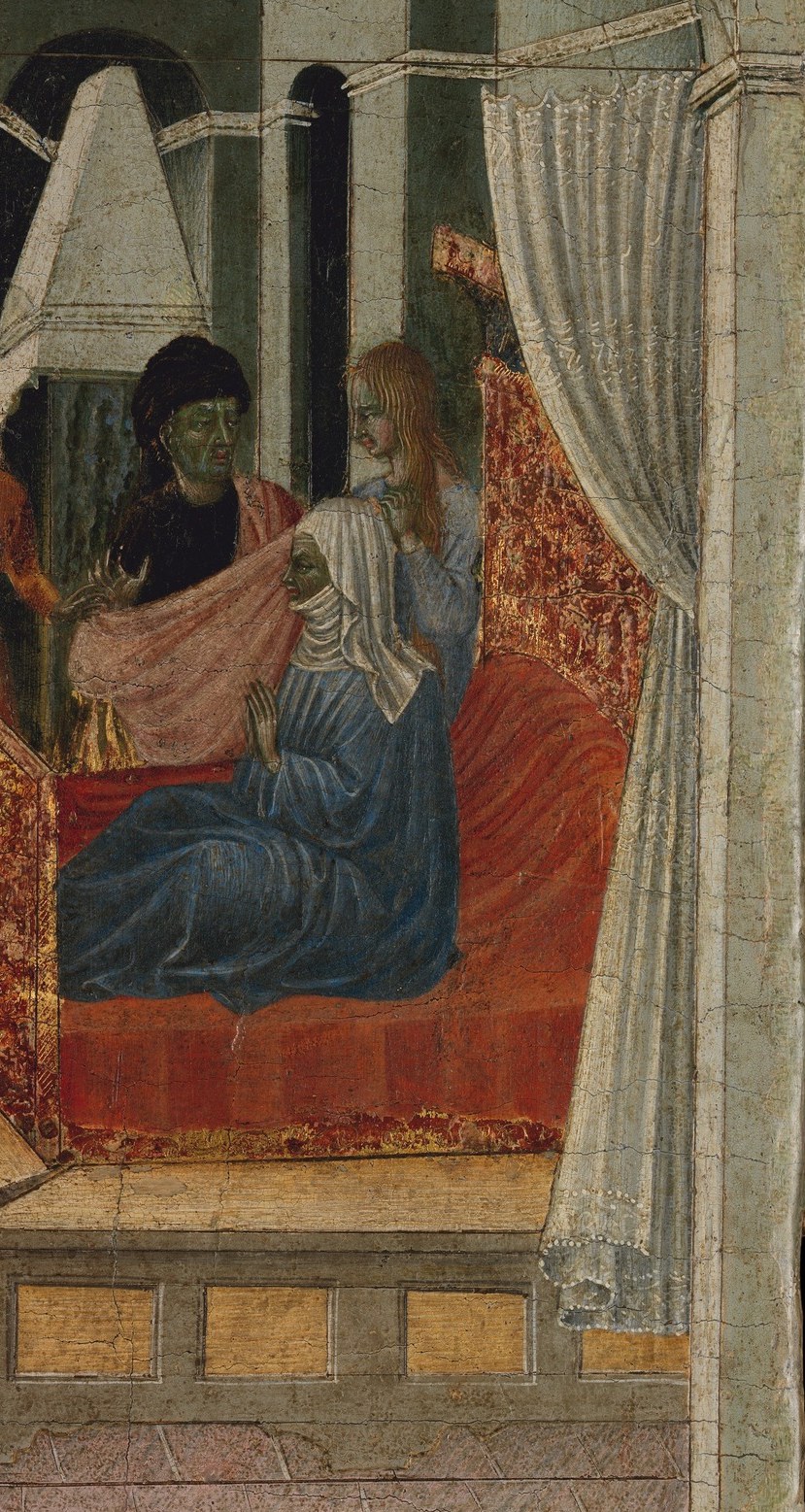
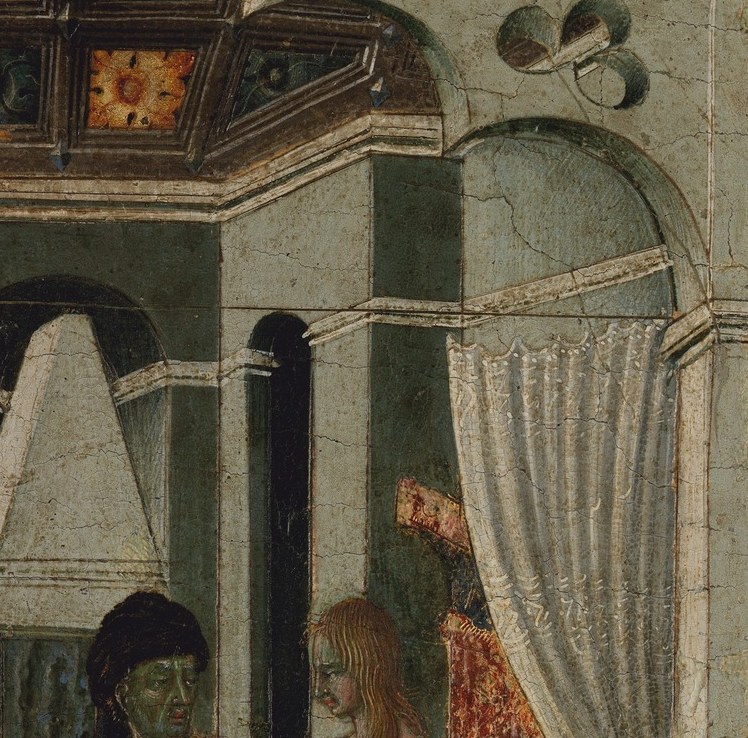
Look at the architecture. A stone doorway splits the panel in two: Catherine kneels outside in her black-and-white Dominican habit, while her mother lies on a canopied bed inside. The gap between them is the whole point. Prayer operates across physical barriers. Then look up, there are tiny angels in the Gothic lunette arch at the top, painted so small you might scroll past them. Their presence confirms what the flat gold wall of the sickroom already signals: heaven is inside this house.
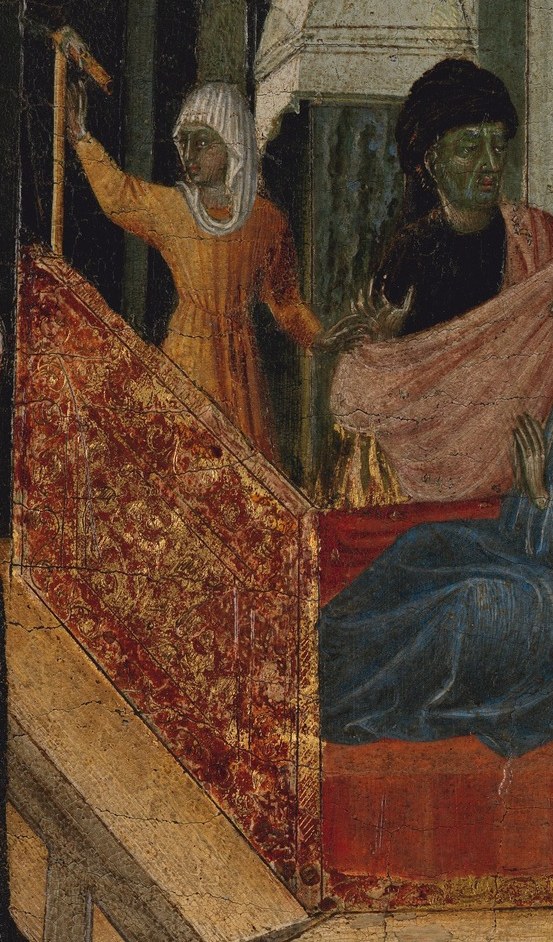
Giovanni di Paolo was one of the most important painters of the 15th-century Sienese School. His later works grew increasingly dreamlike and surreal, but this early panel shows him grounding a miracle in careful domestic observation. The red canopy bed, the clustered attendants, the tiled floor, these are recognizably a prosperous Sienese merchant interior. Catherine of Siena herself (1347-1380) was a Dominican tertiary who became a patron saint of Italy. Popular devotion to her intercessory power spread rapidly after her death, and small panels like this one met a genuine demand for images of her miracles.
This is not a painting about death. It is a painting about a daughter who refuses to accept it, and about an artist who knew that faith looks like a woman kneeling on cold stone, arguing with heaven.
Details
Transcript
A woman kneels in the street, locked out of the room where her mother lies dying. Her name is Catherine. She is negotiating with the figure in the doorway. Inside, the household is frozen between grief and impossible hope. A red canopy bed marks this as a prosperous merchant's home in 1450s Siena. The flat gold wall declares the sacred has already entered the room. Giovanni di Paolo painted portable altarpieces for private devotion, not public display.