Roman Girl at a Fountain by Léon Bonnat
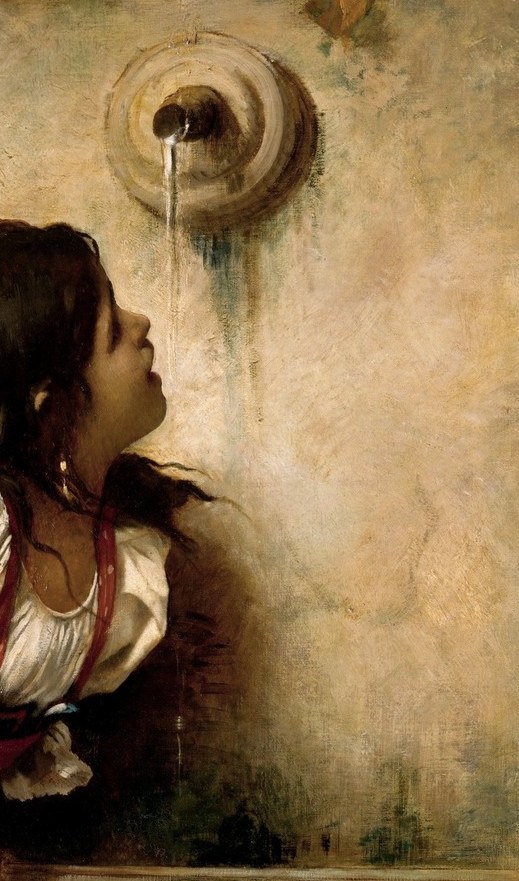
Léon Bonnat's Roman Girl at a Fountain (1875) is a masterclass in painting material weight with nothing but oil and observation. It hangs at The Metropolitan Museum of Art and comes from the moment French naturalism was quietly rejecting the drama of Romanticism in favor of something harder: the truth of ordinary things under ordinary light.
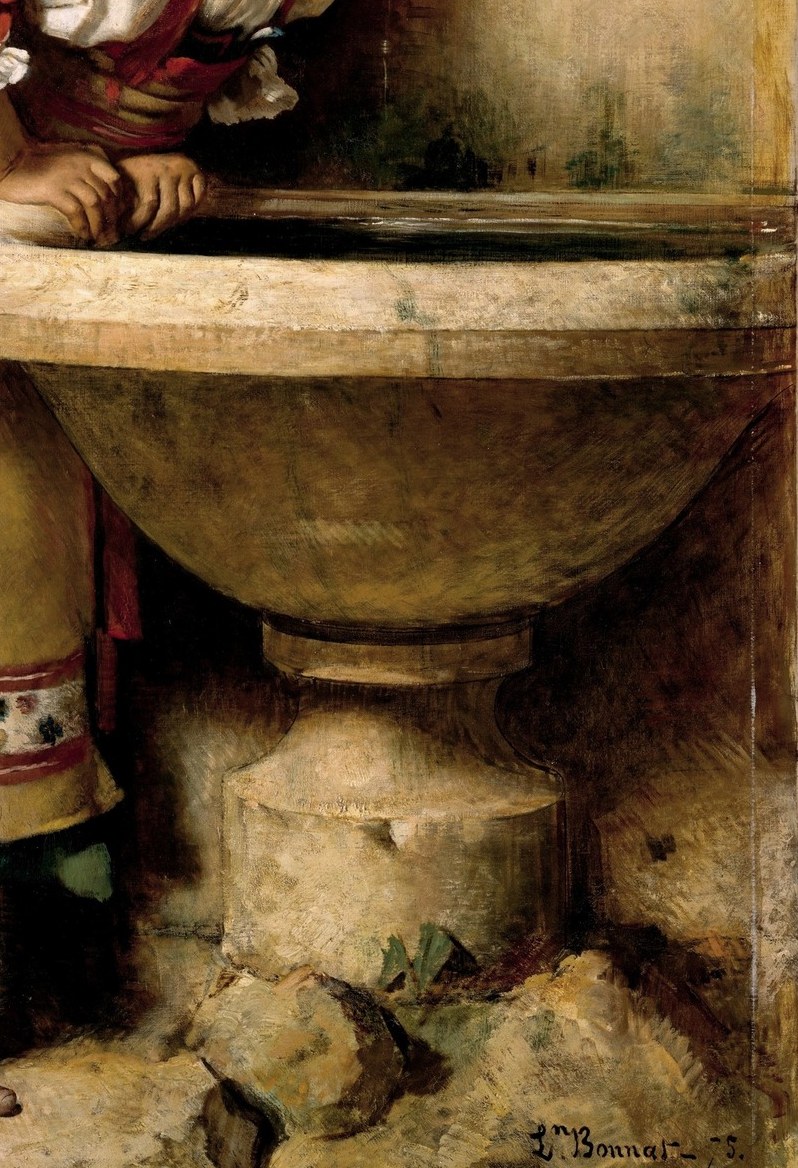
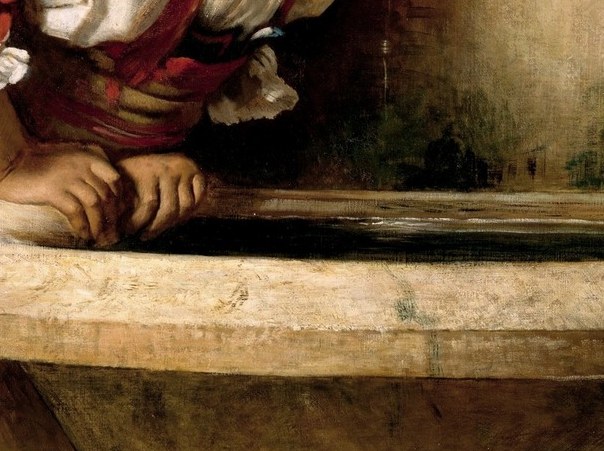
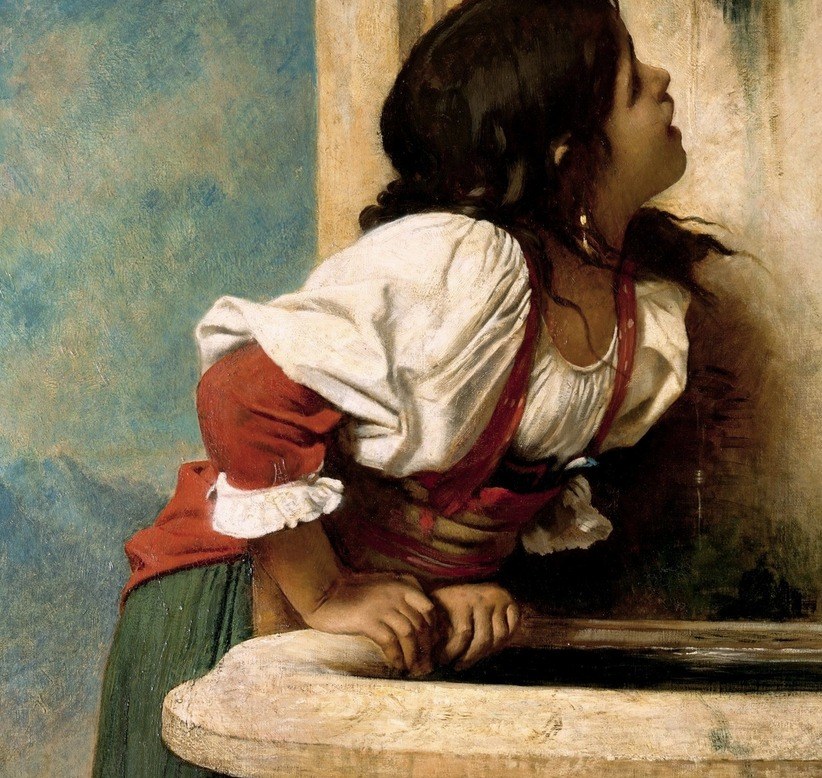
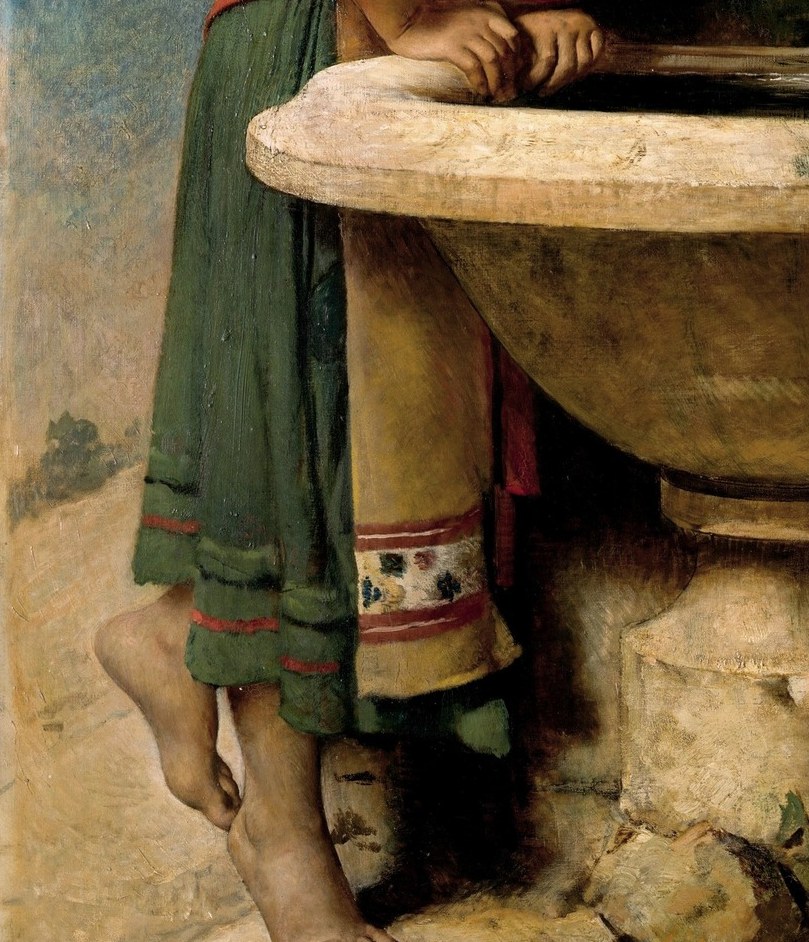
Watch how the paint changes personality across the surface. The linen blouse is laid on with a stiffer, more opaque touch, almost as if you can feel the weave. The green wool skirt drinks the light, its folds modeled with deep, soft shadow. And the stone rim of the fountain is physically granular, pitted, ancient. Bonnat varies his paint handling to trick your eye into feeling three different textures inside one unified scene.
Bonnat was a commanding figure at the École des Beaux-Arts, training a generation that included Braque and Toulouse-Lautrec. He painted this Roman girl in Ciociaro dress with ethnographic precision, placing her bare feet on the same stone worn smooth by centuries of public life. The shallow, fresco-like background wall pushes the figure right up against the picture plane, so there is nowhere to hide from the light.
Next time a painting makes you feel fabric or stone, look closer at the paint itself. That illusion is someone's whole lifetime of looking.
Details
Transcript
Three materials. One painter. No tricks. Start with the stone. Look at the rim. Worn granite, pitted by centuries of water. Now the linen. Bright white, catching full sun. Paint stiffer here. The weave almost countable. And the wool skirt: heavy, light-drinking, soft. Bonnat taught a generation of painters this discipline. One light. Three utterly different weights of paint.