The Gage Family by American 19th Century
"The Gage Family," painted around 1846 by an unknown 19th-century American artist, is a fascinating portrait that offers a glimpse into family life and social customs of the era. You can see this painting at a museum.
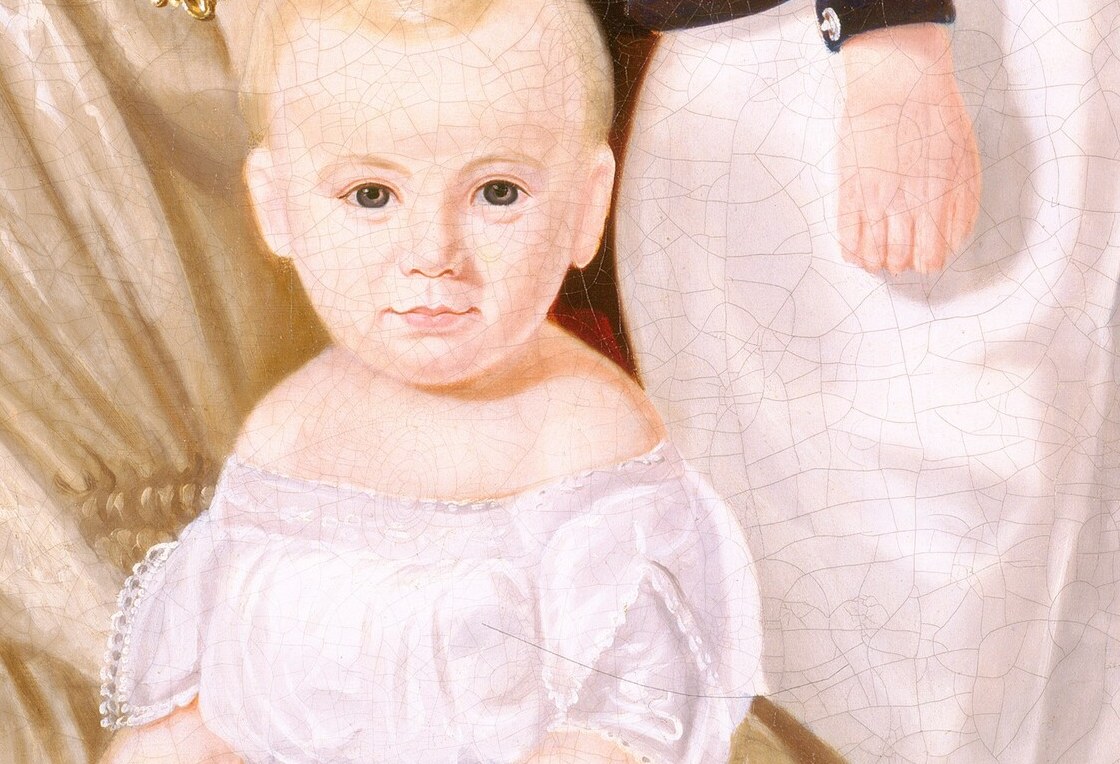
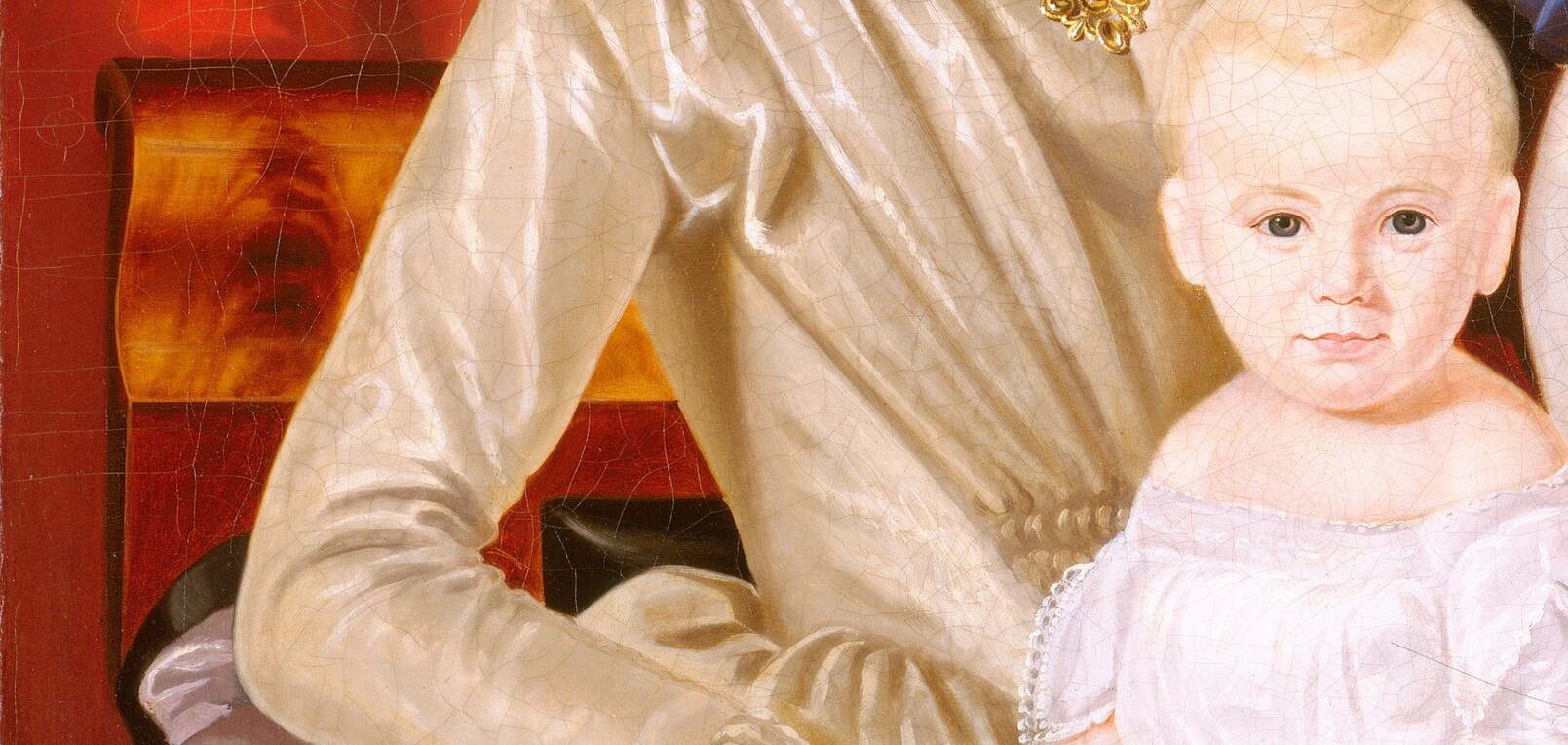
Notice the formal attire of the family members, from the father's bow tie to the boy's tailored jacket and the mother's decorative brooch. These details, along with their composed expressions, reflect the seriousness and importance placed on portraiture during this period.
Unusually, the artist chose to paint this oil portrait on bed ticking, a coarse fabric typically used for mattresses. This unconventional choice of material gives the painting a unique texture that is still visible beneath the paint layers, setting it apart from more conventional works of the time.
This painting is a quiet witness to a moment in time, showing us not just a family, but also a painter's pragmatic or aesthetic choice that gives the work its distinctive character. What do you notice most about their expressions?
Details

Transcript
This family posed for their portrait around 1846. The mother wears a decorative brooch, a subtle status symbol. Her hands tenderly cradle the infant, a universal gesture. This painter used an uncommon material for the canvas: bed ticking. The coarse fabric creates a distinct texture visible beneath the paint. The father's hand on his son's shoulder conveys paternal guidance. Their formal attire captures the solemnity of mid-19th century portraits.