Portrait of Alvise Contarini(?); (verso) A Tethered Roebuck by Jacometto Veneziano
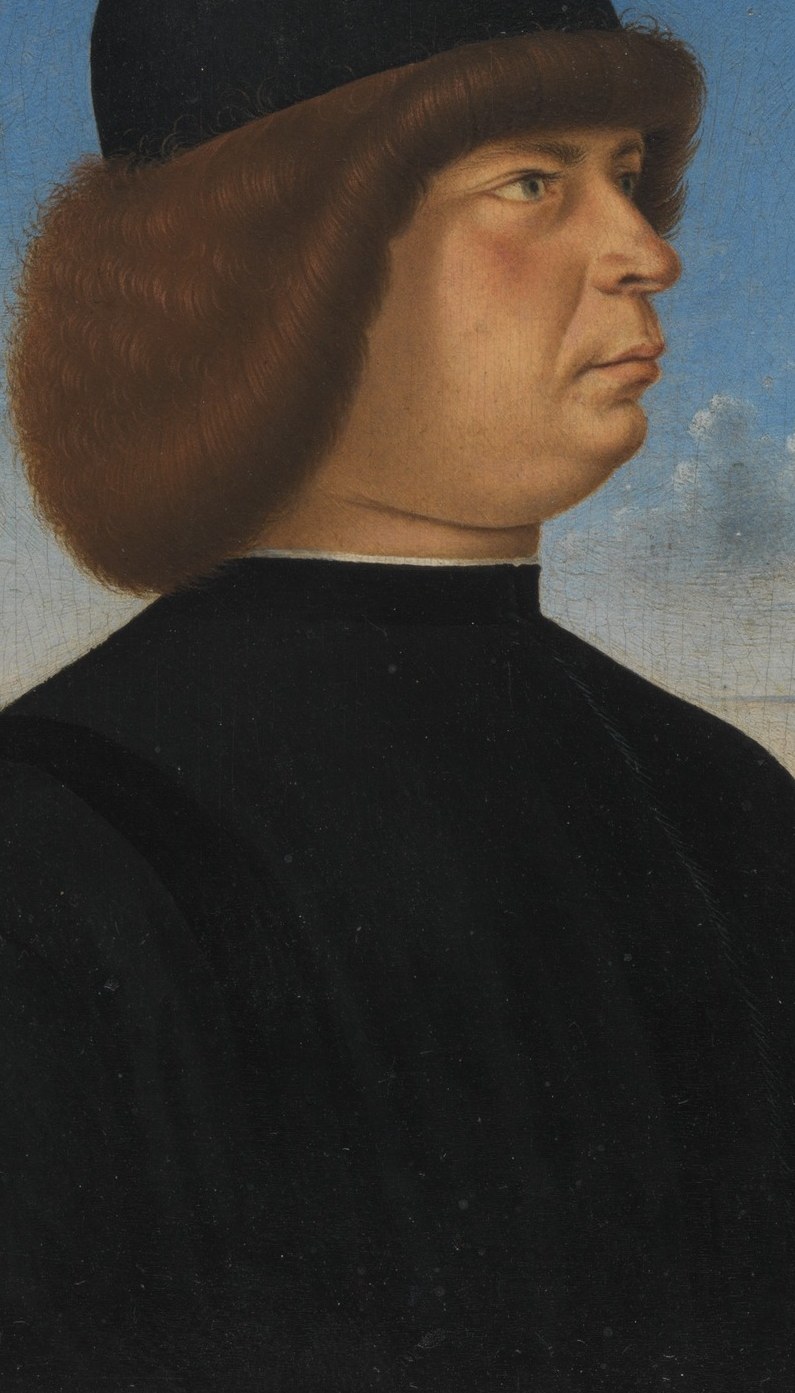
This striking "Portrait of Alvise Contarini(?)" by Jacometto Veneziano, painted around 1496 and held at The Metropolitan Museum of Art, offers a window into late 15th-century Venetian society.
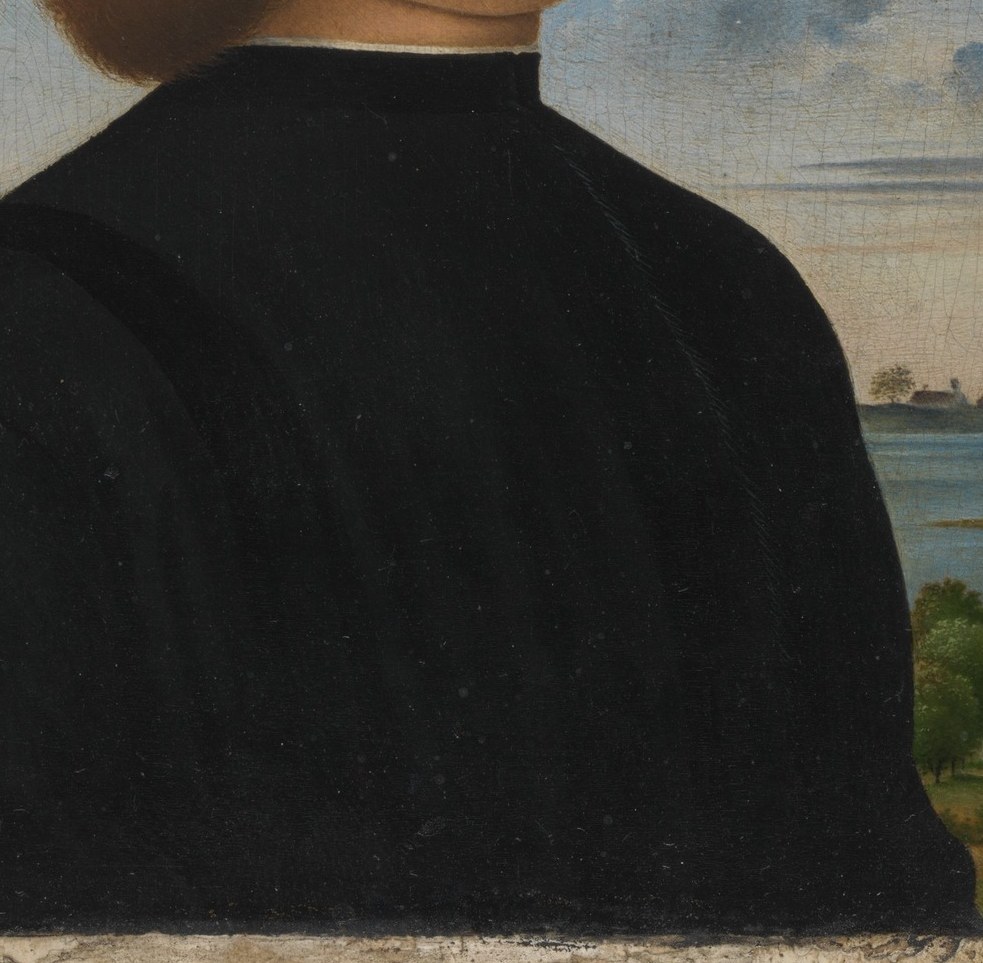
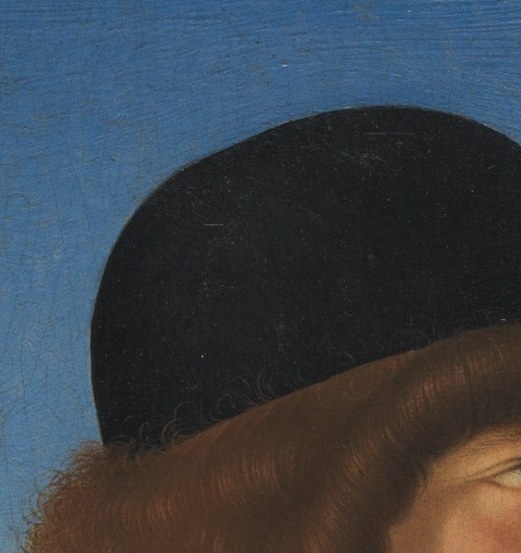
Observe the man's formal attire, a dark robe and hat, indicative of a gentleman of status. His strong jawline and contemplative expression reflect the seriousness and character valued in Venetian portraiture of the period. The subtle details in the background, like the distant ship, underscore Venice's reliance on maritime trade.
The reverse side of the panel holds another fascinating detail: a tethered roebuck. This motif often carried symbolic weight in the Renaissance, perhaps representing themes of nobility, loyalty, or restraint associated with the sitter.
The artist, Jacometto Veneziano, skillfully used smooth brushstrokes to define the figure, contrasting with the softer rendering of the background. What do you think the roebuck on the back of the portrait might have meant?
Details
Transcript
Venice, late 1400s. A time of wealth and global trade. This man's portrait captures his status and world. His dark robe and hat were formal dress for a Venetian gentleman. Notice his prominent jawline, conveying strength and resolve. The distant ship hints at Venice's vital connection to the sea. On the back of this painting, a tethered roebuck appears. A symbol, perhaps, of restraint or nobility for this man.