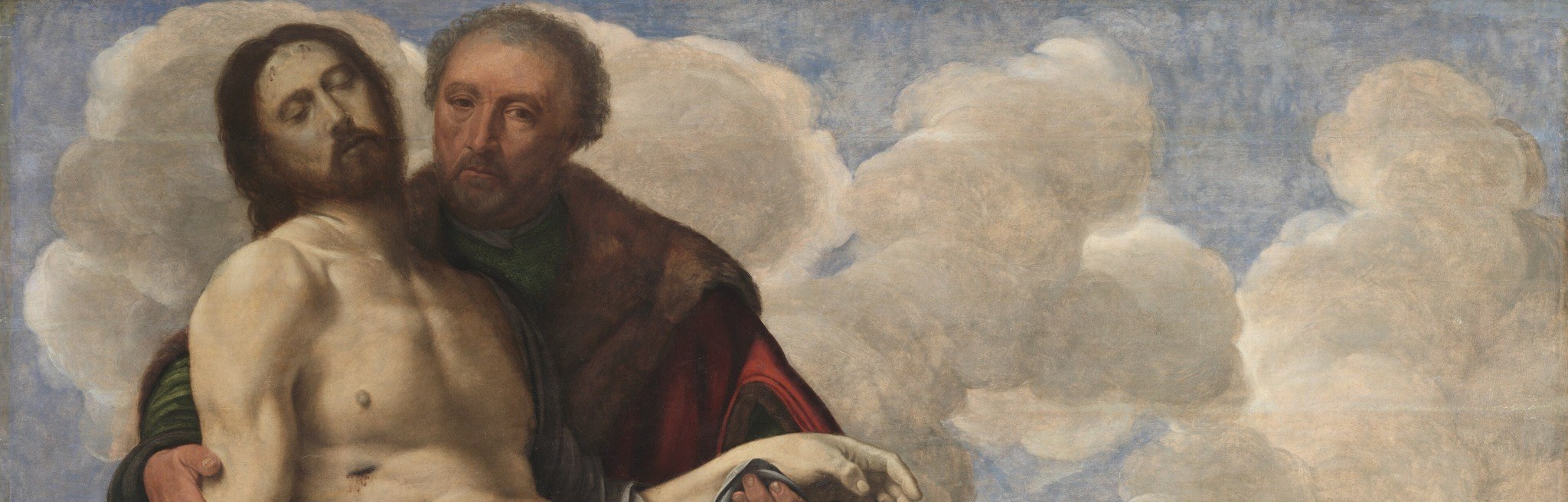
Christ with Joseph of Arimathea by Giovanni Girolamo Savoldo

Savoldo painted this around 1525, and he made a strange decision. In every other Deposition or Lamentation, Christ's body lies on a stone slab or is being lowered into a tomb. Savoldo put him on clouds.

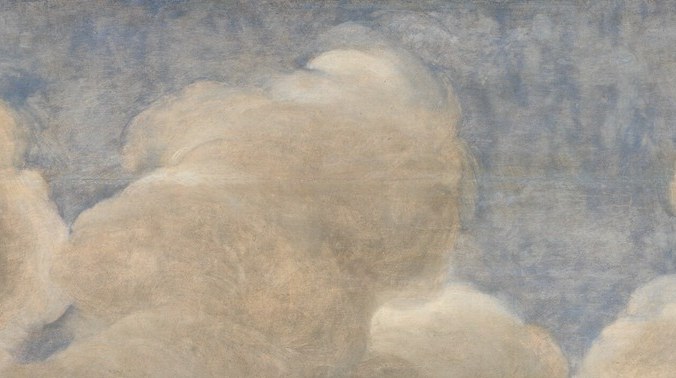
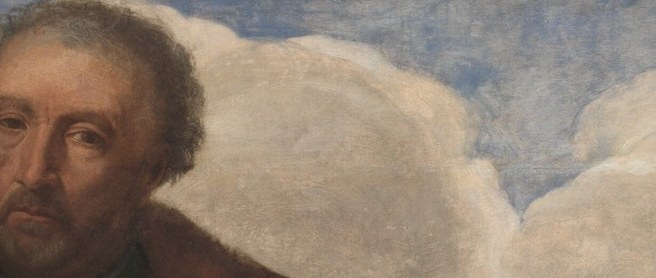
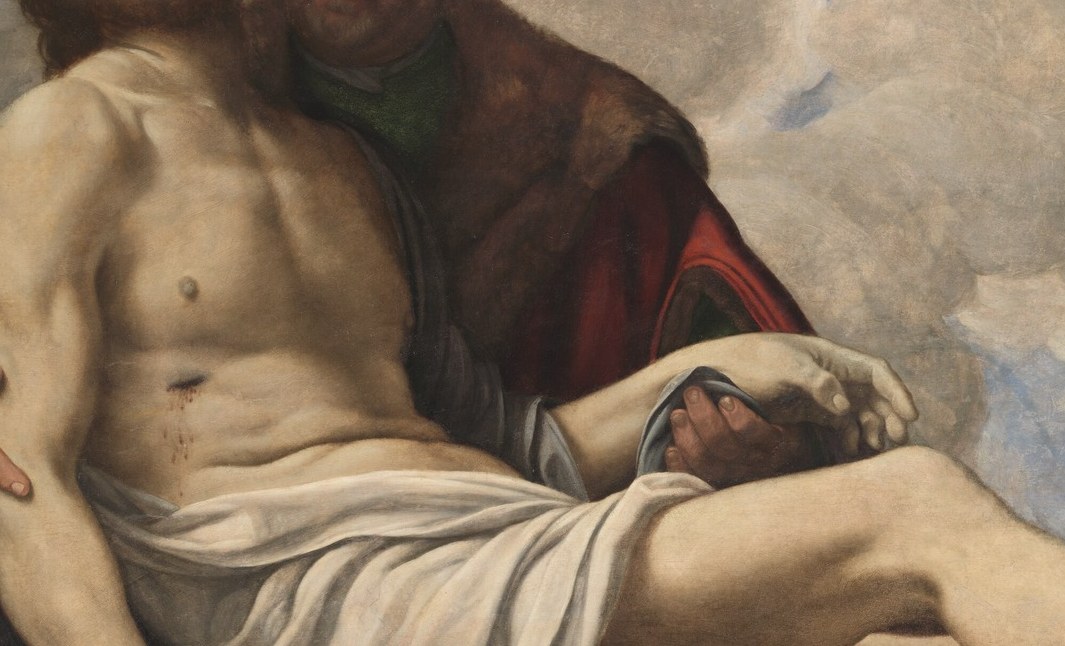
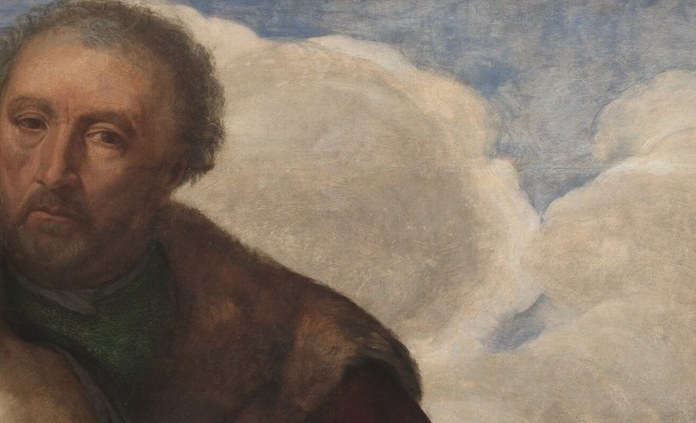
Look at the gap in the clouds at the upper left. A pale, cold sky is just visible. It is not the darkness of Good Friday, it is the first light of Easter morning, before the women arrive. Joseph's crimson robe tells you he had money (the Gospels say he bought the fine linen shroud himself). His face is grave, but the clouds and the brightening sky have already rewritten the ending of the story.

The painting lives in a collection in Boston. For centuries it was assigned to other painters, Giorgione often got the credit, and Savoldo faded from view. Only about forty of his paintings survive. He was a quiet master of light passing through shadow, and here he used it to let hope in at the edge of the frame.

The resurrection is not shown. It is simply on its way.

#arthistory #renaissancepainting #savoldo

Details
The central expressive pivot , eyes closed in death, mouth slightly open, the crown of thorns crowning a serene yet anguished countenance; distilled pathos of the entire scene
Older man leaning over Christ with a solemn, restrained expression , his gravity anchors the emotional register and contrasts with the serenity of the dead Christ
The ethereal cloud setting removes this lamentation from earthly geography, giving it a celestial, timeless quality , unusual for a Deposition scene and a Savoldo compositional choice
Identifying symbol of the Passion; the braided thorns against pale skin make the sacrificial narrative legible at a glance
The wound on Christ's side (spear mark) is visible , a key iconographic detail confirming this is the post-Crucifixion body; Savoldo's modelling of the pale flesh is technically precise
Transcript

A dead man, floating in the sky. An older man leans over him, grave and quiet. Under Christ's body: not a stone slab, not a tomb. A white shroud, and soft clouds that go on forever. This is Joseph of Arimathea, a rich man who gave his own tomb. But the painter, Savoldo, removed the tomb entirely. Now look at the upper left, at the gap in the clouds. A pale sky is breaking through. It's not night. It's dawn.