Artwork
Christ with Joseph of Arimathea
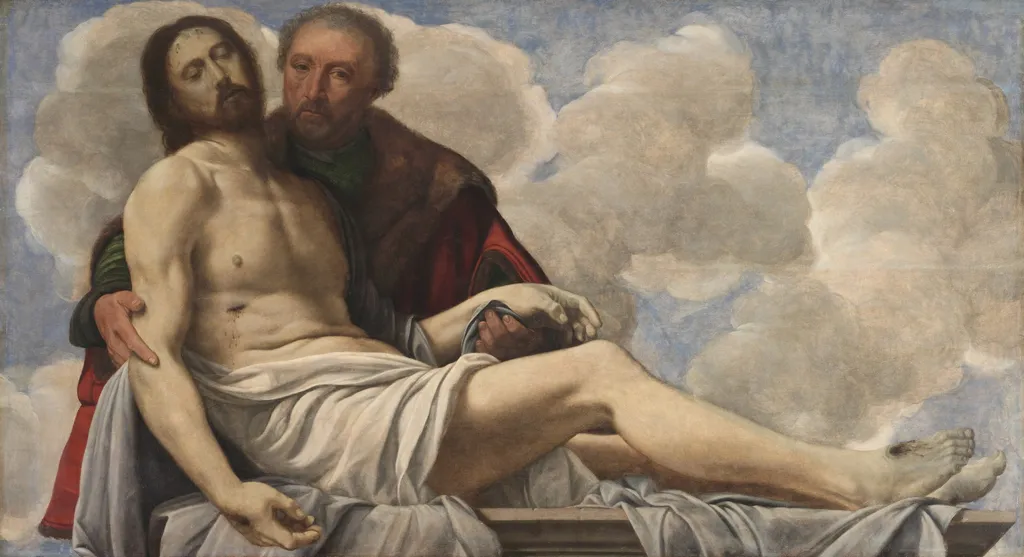
Christ with Joseph of Arimathea is an unspecified painting by the Mannerist artist Giovanni Girolamo Savoldo. It dates from 1525 and is held in the collection of the Cleveland Museum of Art. This painting depicts a poignant moment involving the figure of Christ and Joseph of Arimathea.
About this work
Subject & Meaning
Created circa 1525 by Giovanni Girolamo Savoldo, the work illustrates the moment following the Crucifixion where Joseph prepares to remove Christ's body.
The painting depicts the biblical figure Jesus Christ alongside Joseph of Arimathea, a narrative scene rooted in religious tradition. Created circa 1525 by Giovanni Girolamo Savoldo, the work illustrates the moment following the Crucifixion where Joseph prepares to remove Christ's body. The composition includes specific iconographic elements such as the shroud used for burial and a cloud in the background, which may suggest a divine or atmospheric context for the event.
The presence of the shroud serves as a central symbol of the burial process, anchoring the scene in the specific moment of preparation before interment.
History & Provenance
Christ with Joseph of Arimathea was painted by Giovanni Girolamo Savoldo circa 1525. The work entered the Cleveland Museum of Art in 1952 as accession number 1952.512, where it remains housed in Cleveland, Ohio. Savoldo, an Italian artist active between circa 1480 and after 1548, is credited with its execution.
The painting's early provenance prior to 1952 is not specified in the available sources, which confirm only its Italian origin and its acquisition by the Cleveland institution in the mid-20th century.
Overview
This painting depicts a poignant moment involving the figure of Christ and Joseph of Arimathea. The composition features two men suspended amidst soft clouds, with one figure, identifiable by a crown of thorns and wounds, resting on a white shroud. The second figure, richly robed, leans over him with a grave expression.
The artist's meticulous rendering of form and the interplay of light and shadow contribute to the work's emotional depth and visual impact.
Technique & Style
The artist demonstrates a keen understanding of human anatomy and the dramatic potential of light. Strong contrasts between illuminated forms and deep shadows create a sense of three-dimensionality and heighten the emotional intensity. This careful manipulation of light and shade renders the skin with a lifelike quality, enhancing the realism of the figures and drawing the viewer's attention to their expressions and physical presence.
Artist & collection
Artist
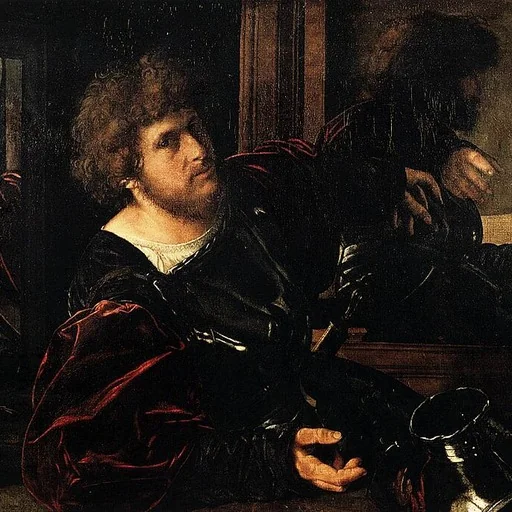
Giovanni Girolamo Savoldo, also called Girolamo da Brescia (c. 1480–1485 – after 1548), was an Italian High Renaissance painter active mostly in Venice, although he also worked in other cities in northern Italy. He is…

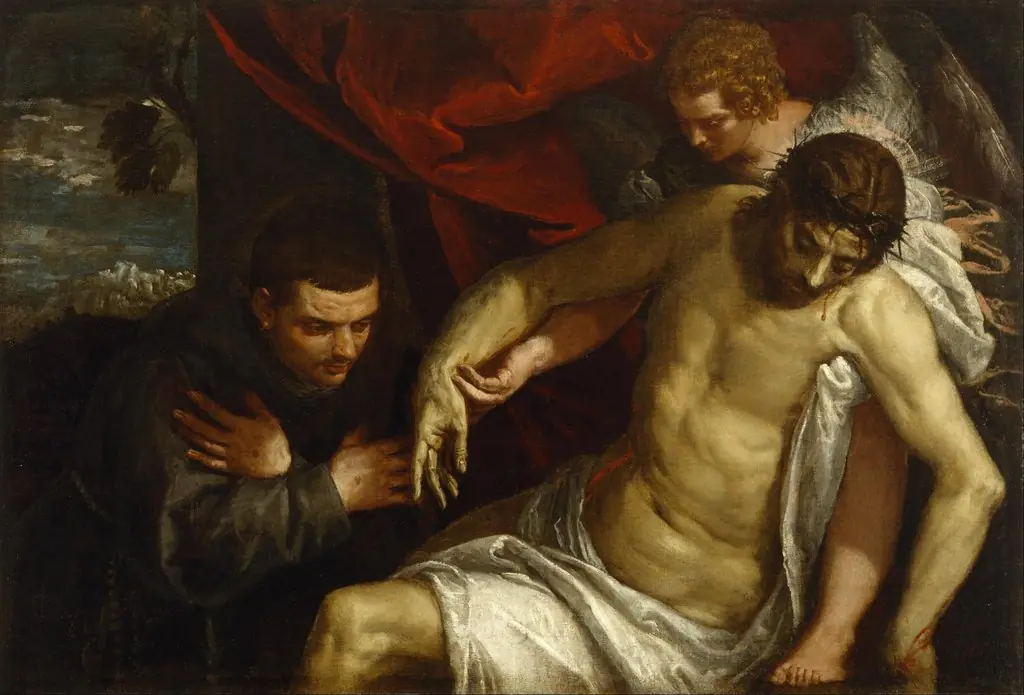 The Dead Christ Supported by an Angel and Adored by a Franciscan
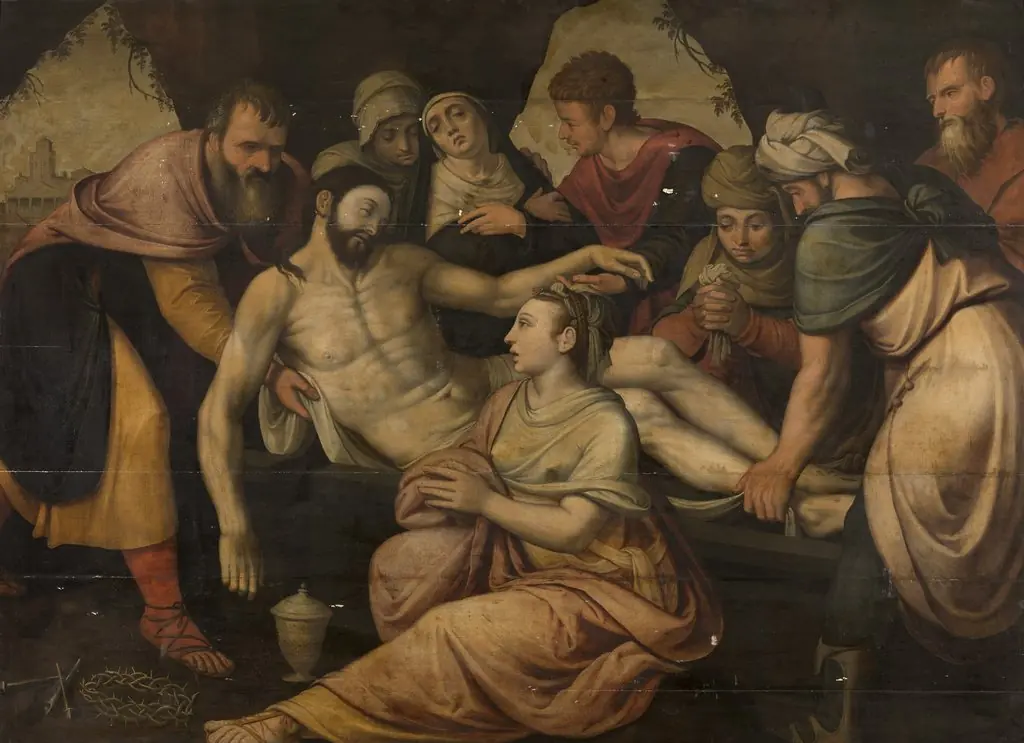 Christ's Entombment
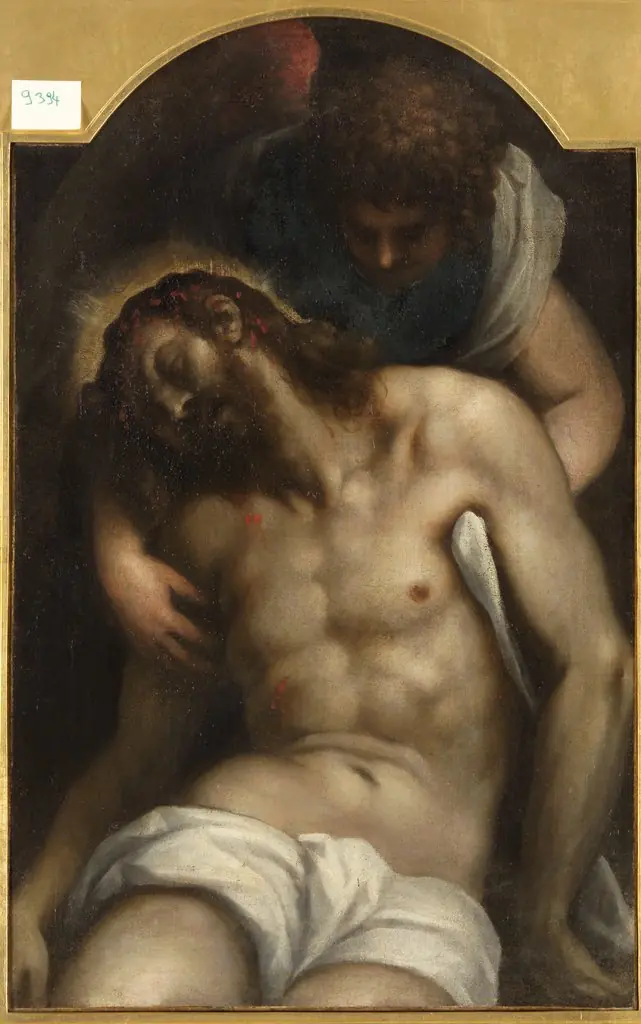 Dead Christ Supported by an Angel
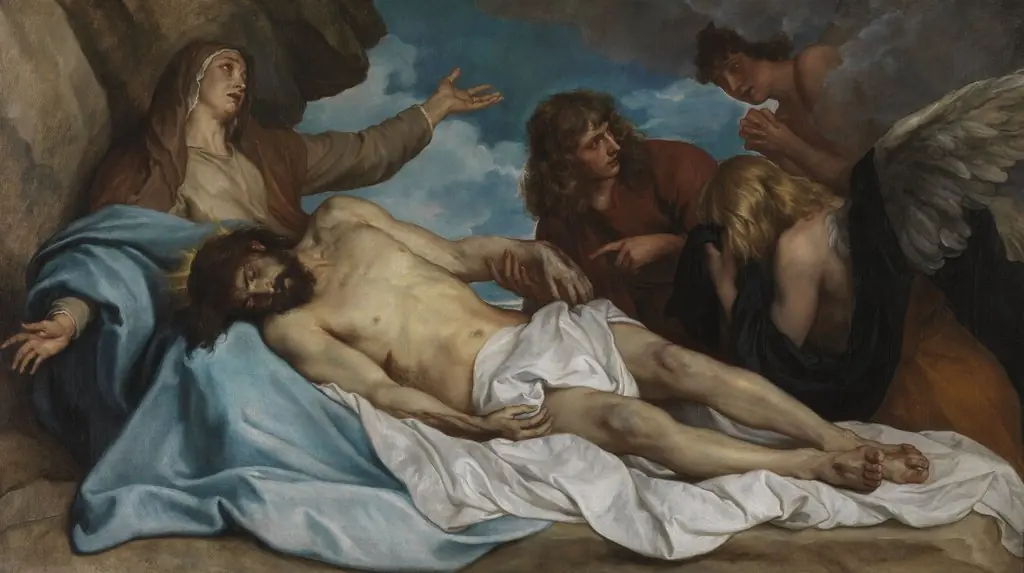 The lamentation over the dead Christ
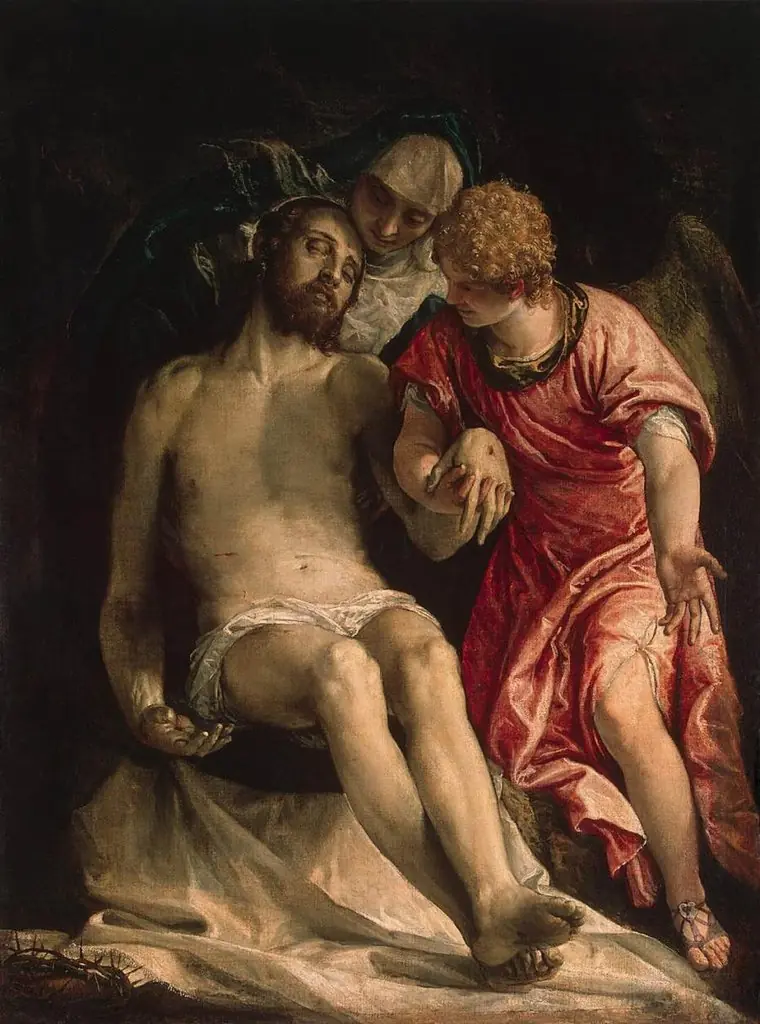 The Lamentation
 Body of Christ supported by Three Angels
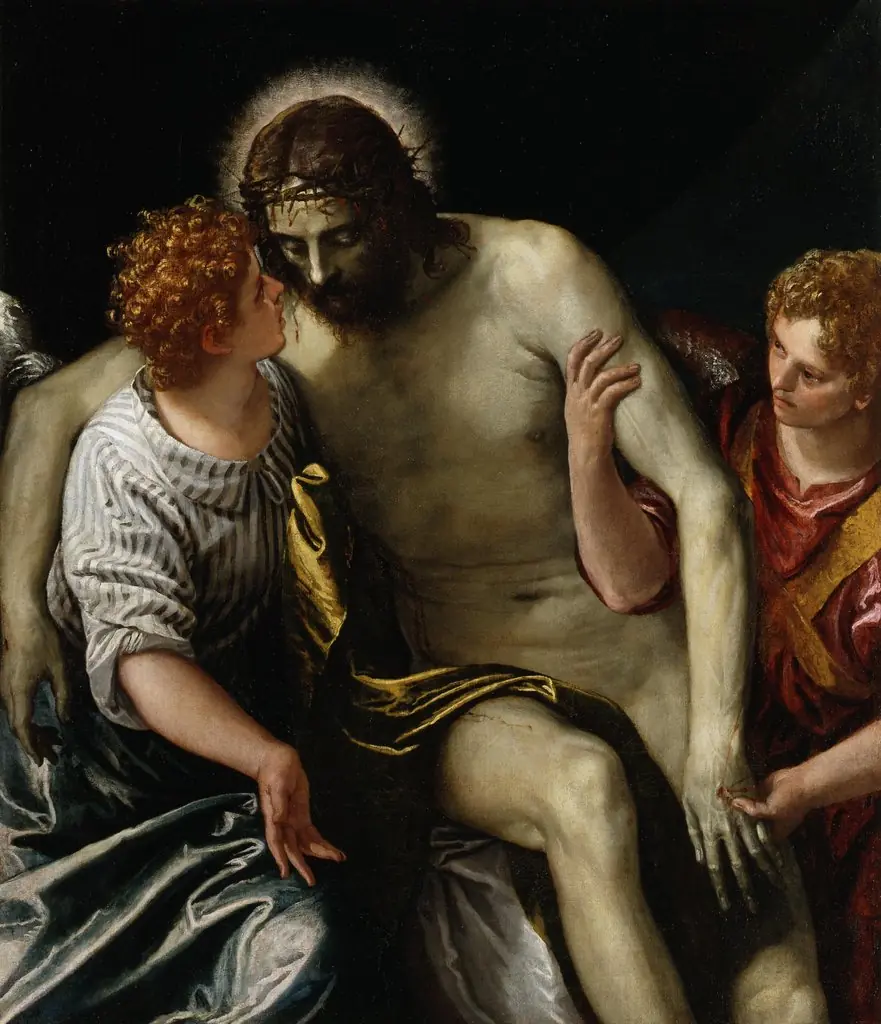 Dead Christ Supported by Two Angels
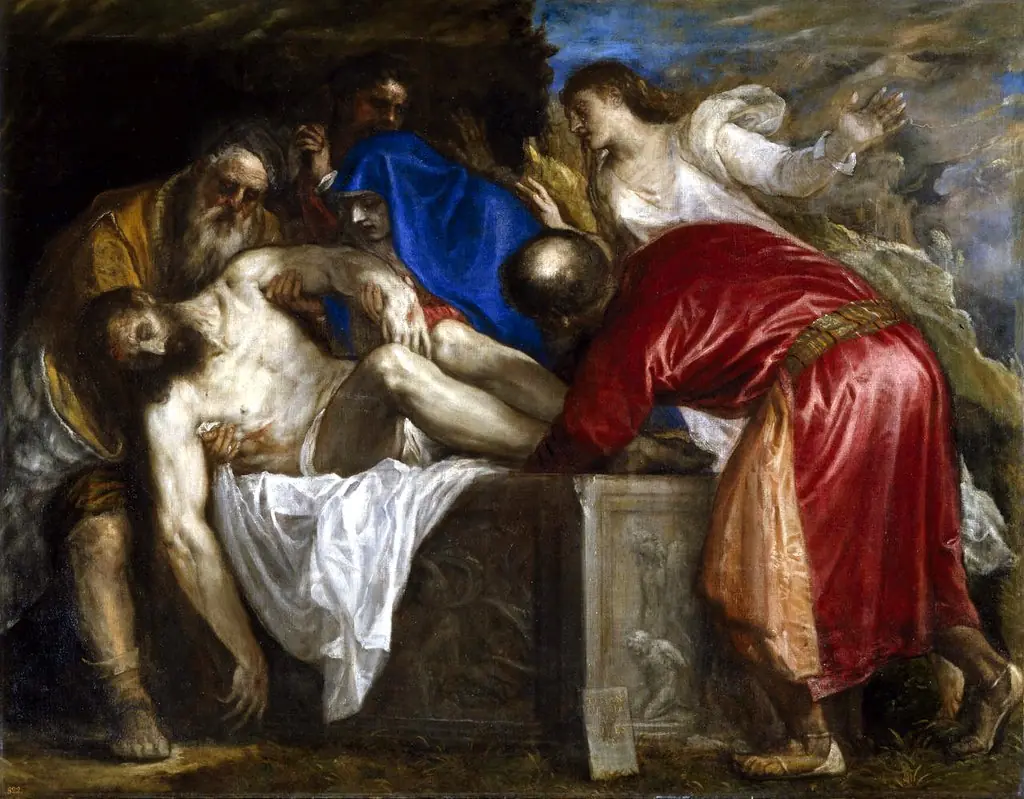 The Entombment
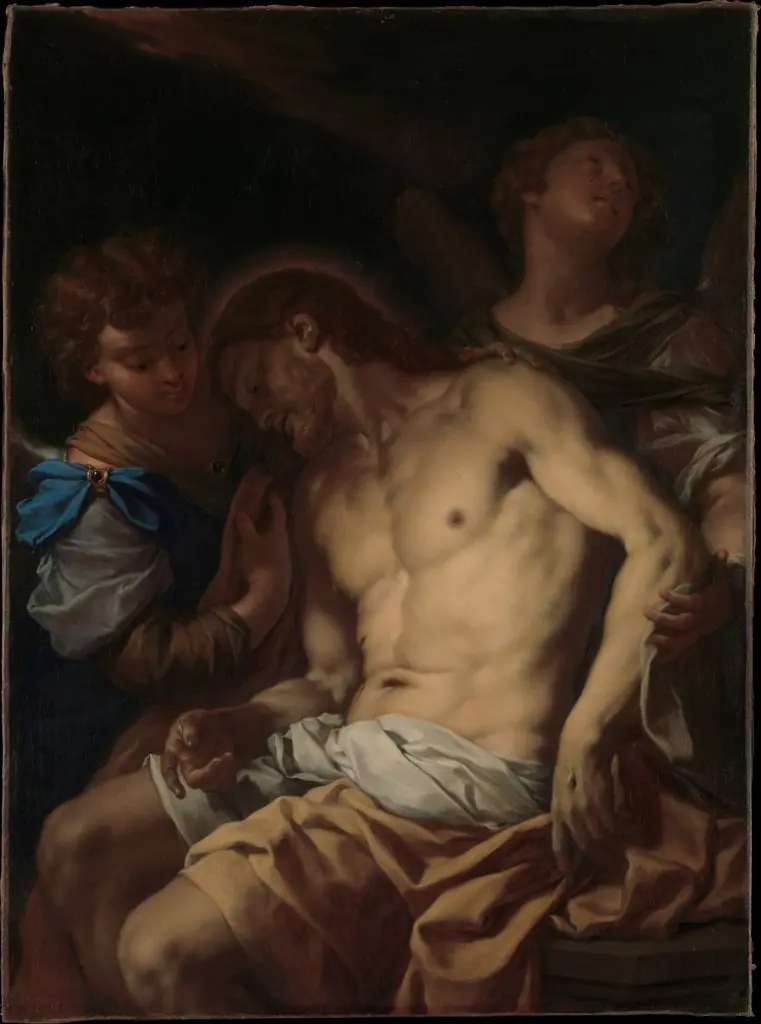 Dead Christ Supported by Angels
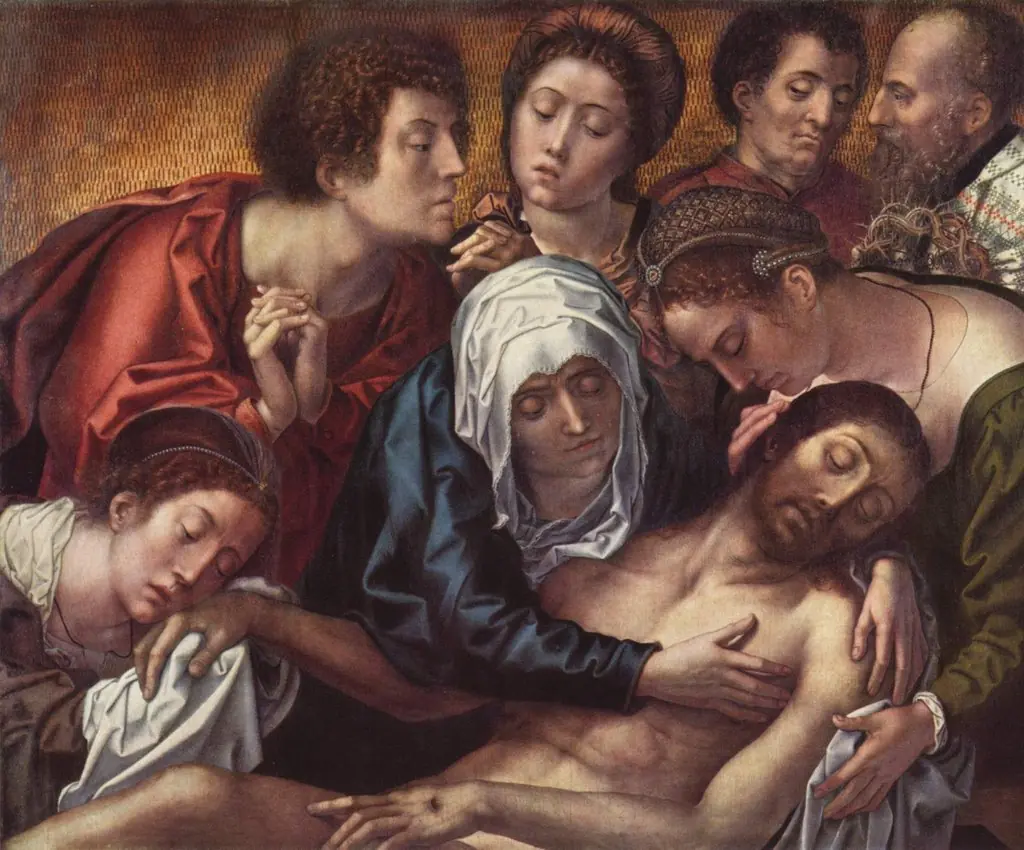 The Death of Christ
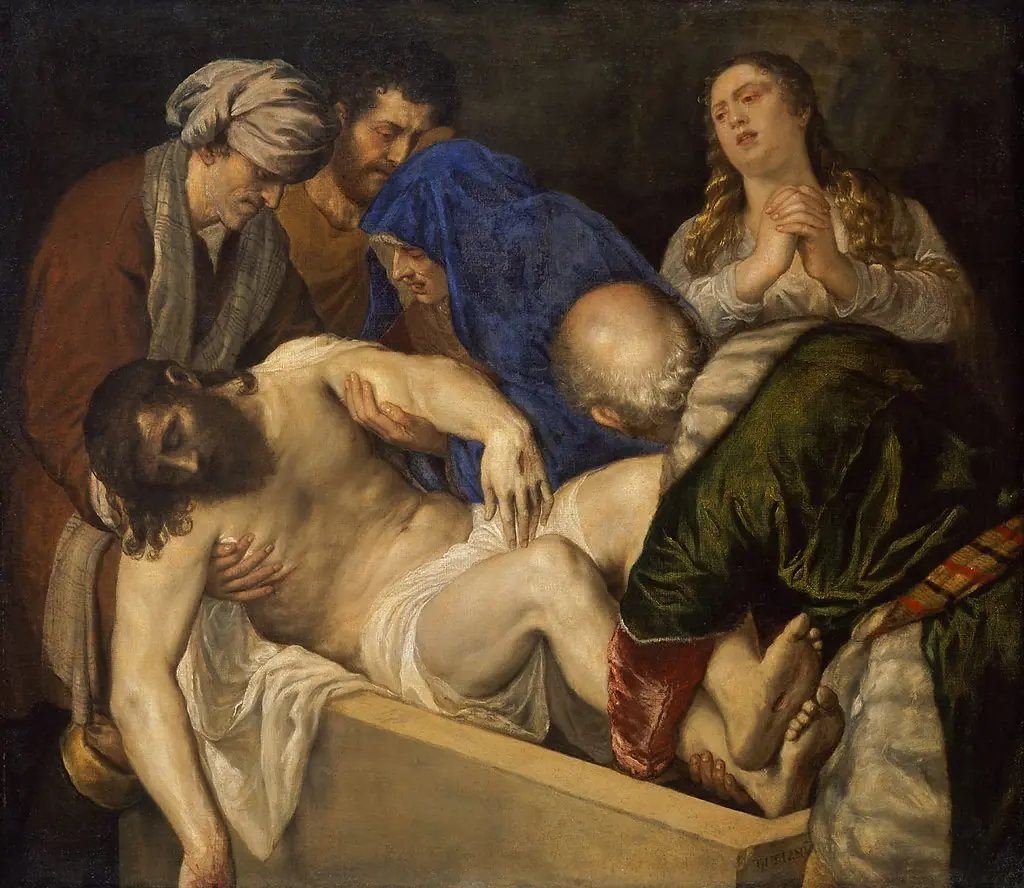 Entombment of Christ
- Christ with Joseph of Arimathea