Scene from the Gallic Wars: The Gaul Littavicus, Betraying the Roman Cause, Flees to Gergovie to Support Vercingétorix by Théodore Chassériau
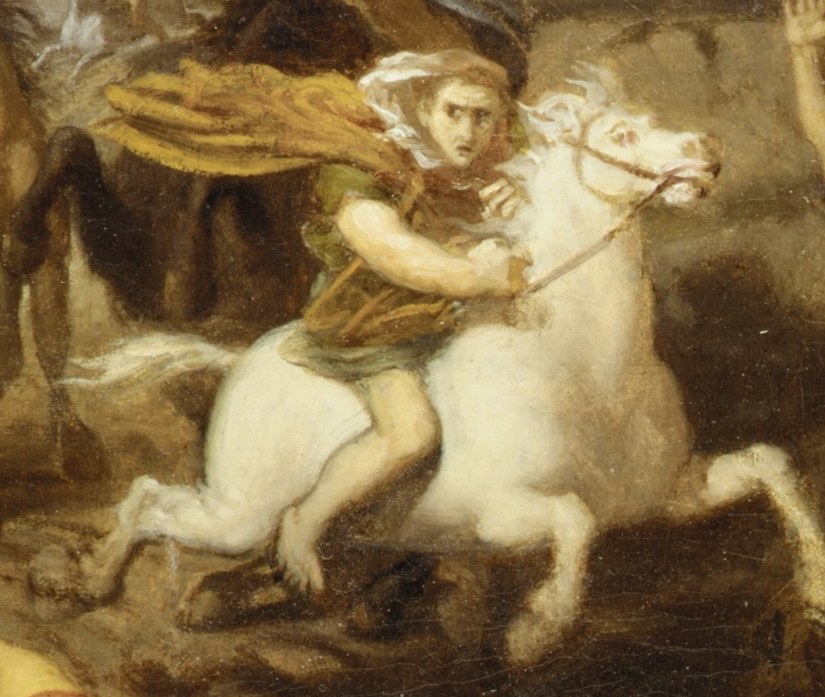
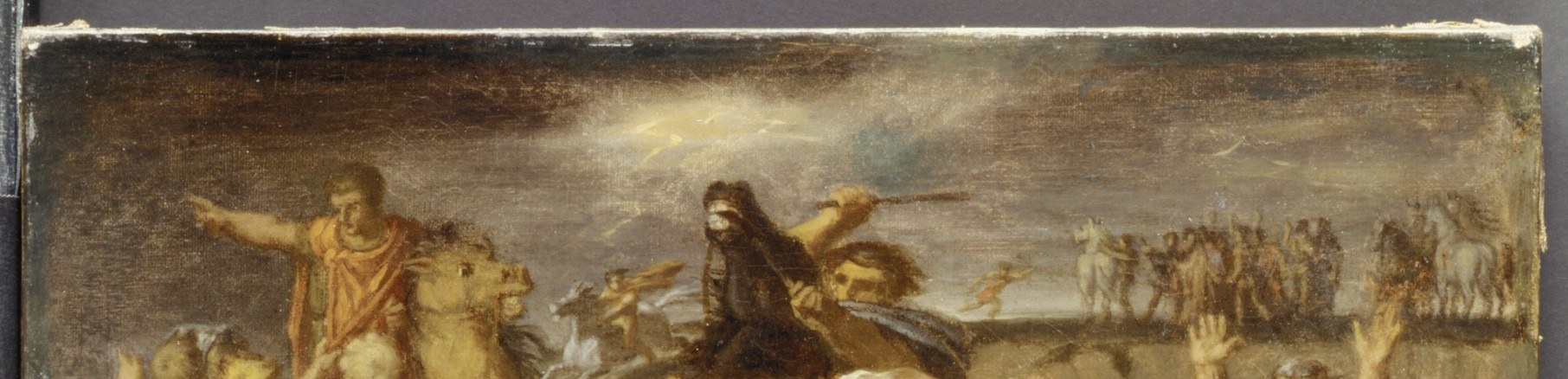
This is Théodore Chassériau's "Scene from the Gallic Wars: The Gaul Littavicus, Betraying the Roman Cause, Flees to Gergovie to Support Vercingétorix," painted in 1838 and held at The Metropolitan Museum of Art. The artwork captures a dramatic moment of betrayal and shifting loyalties during the Gallic Wars.
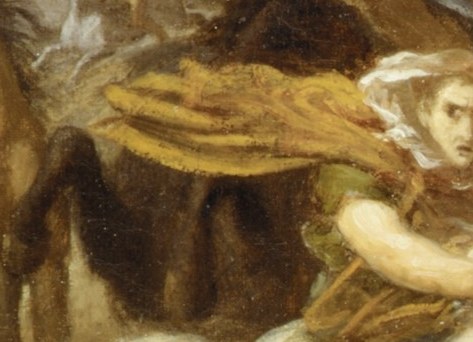
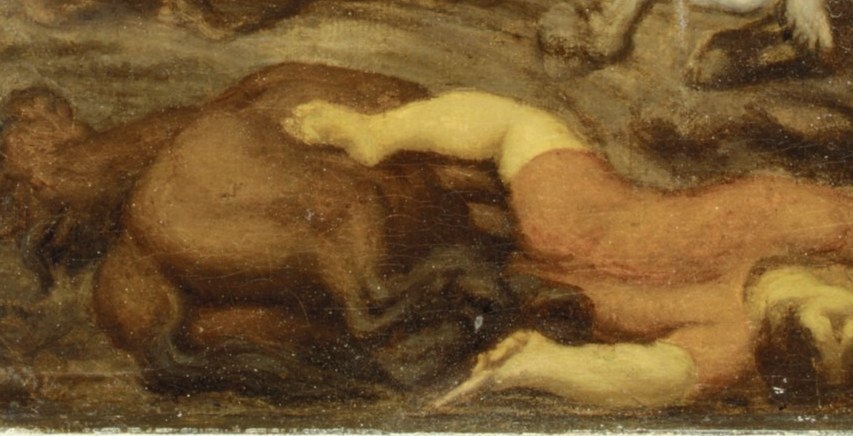
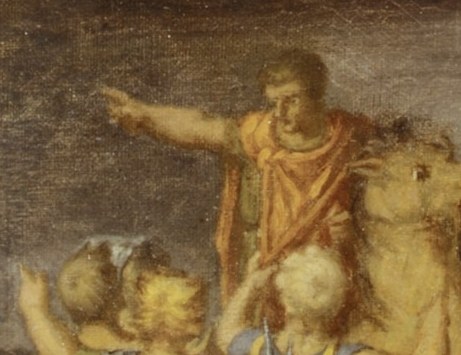
Focus on the central equestrian figure, Littavicus, fleeing with a striking yellow cloak. Notice the fallen Gaul in the foreground, symbolizing the war's grim reality, and the Roman leader pointing the direction of pursuit.
Chassériau, influenced by Neoclassicism and Romanticism, uses the tumultuous scene to explore themes of treachery. The dramatic sky amplifies the tension of this pivotal historical moment.
The painting is a powerful example of 19th-century historical art.
Details
Transcript
This rider betrays his Roman allies. He flees towards Gergovie to join Vercingétorix. Look at his flowing yellow cloak. The fallen Gaul shows the cost of war. Chassériau painted this in 1838. His style mixes Neoclassicism and Romanticism. The Roman leader points the way. A stormy sky enhances the turmoil.