El rey don Rodrigo arengando a los jefes de su ejército antes de dar la batalla del Guadalete by Bernardo Blanco y Pérez
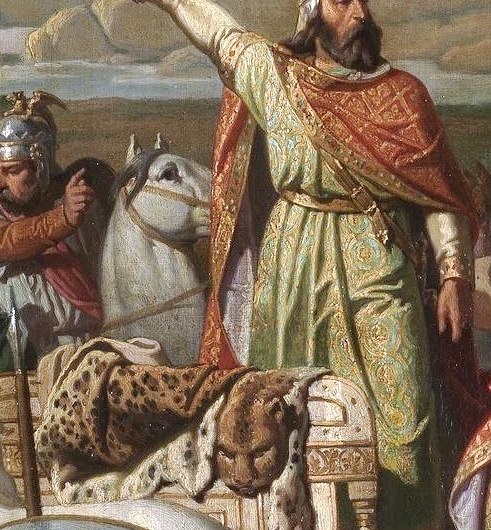
Bernardo Blanco y Pérez's 1871 painting, *El rey don Rodrigo arengando a los jefes de su ejército antes de dar la batalla del Guadalete*, at the Museo del Prado, depicts the legendary King Rodrigo, the last Visigothic ruler of Hispania.
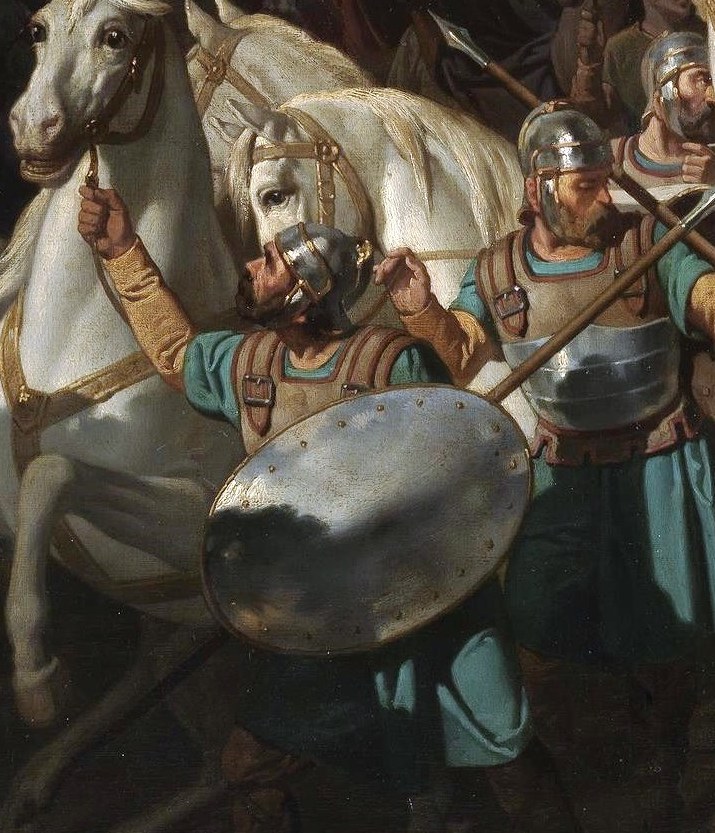
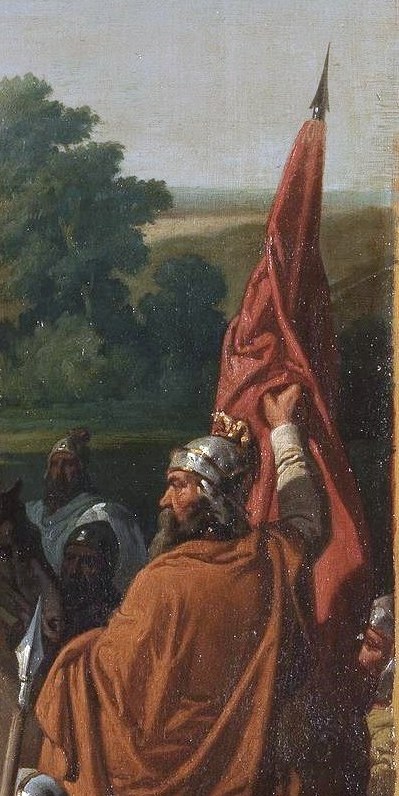
The artwork captures King Rodrigo in a vibrant red mantle, gesturing with command as he rallies his troops. Look closely at the armored soldier in the foreground, whose determined expression reflects the gravity of the impending conflict. The distant mountains hint at the location of the fateful Battle of Guadalete.
This battle, fought in 711 CE, marked a turning point, leading to the end of Visigothic rule and ushering in Moorish rule in the Iberian Peninsula. The painting, created in the 19th century, reflects a Romantic nationalist interest in Spain's early medieval past, visualizing foundational myths for a changing nation.
It’s a powerful portrayal of leadership and a pivotal historical moment, forever preserved in paint. What emotions do you see in the faces of these soldiers?
Details
Transcript
This is King Rodrigo, the last Visigothic king of Hispania. He rallies his army before the Battle of Guadalete, 711 CE. His gesture is one of command, urging his men forward. The armored soldiers behind him convey grim determination. This battle led to the end of Visigothic rule in Spain. A pivotal moment in Spanish history, captured in 1871.