Dressing for the Carnival by Winslow Homer (American, 1836–1910)
View the artwork: Dressing for the Carnival →
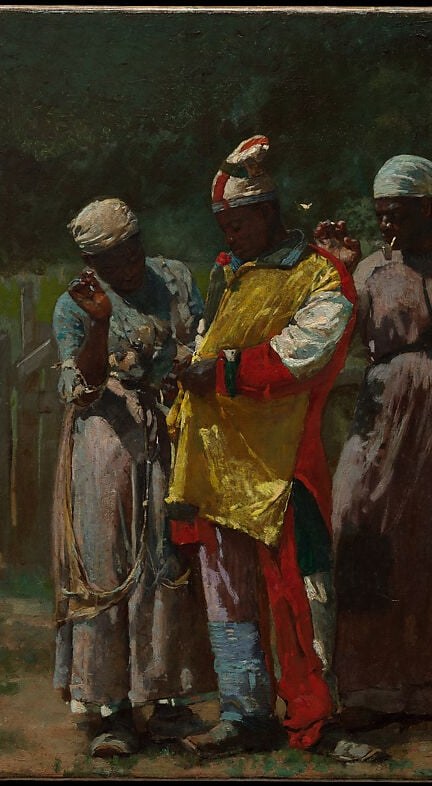
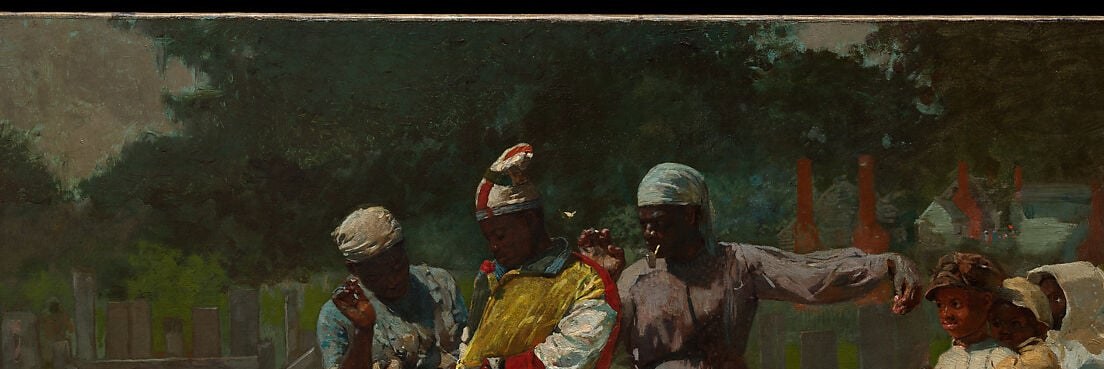
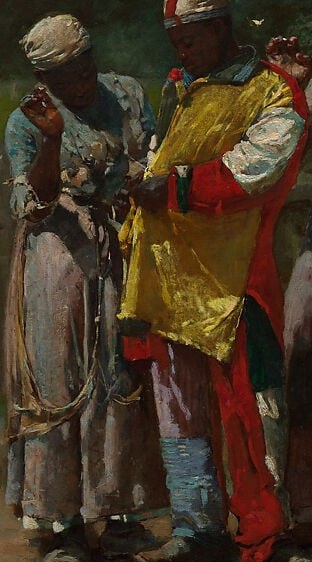
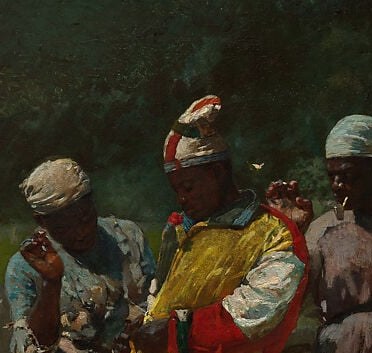
Winslow Homer's 'Dressing for the Carnival' (1877, The Met) is not a parade scene. It is the quiet moment before celebration, set during the final months of Reconstruction. Homer painted this in Virginia just as federal protections for Black Americans were being dismantled. Look closely at what the central man wears. His Phrygian cap is not mere costume whimsy; it is the ancient symbol of a freed slave, an icon of liberty Homer placed directly on a Black man's head at the precise historical moment that liberty was being extinguished.
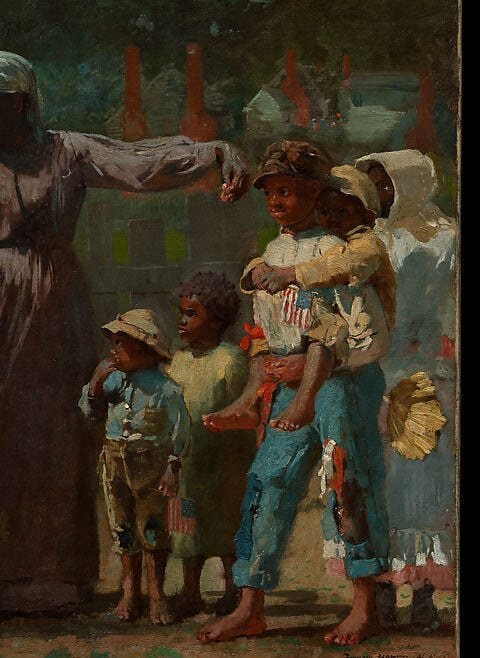
A child on the far right holds a small American flag. Together, these symbols of freedom and national belonging are not triumphant here. They are fragile. The festival tradition, Jonkonnu, was an act of cultural preservation, blending West African and European influences into a uniquely African American expression.
Notice how Homer frames the dressing not as a solo transformation but as communal work. Two women bend and reach, wrapping the man in bright red and yellow fabric strips. Their downcast gazes and careful hands transform a backyard of hard-packed dirt into hallowed ground. The children at the edge lean in, absorbing a living tradition in real time. Homer, a Northerner who had witnessed the Civil War firsthand, chose to paint Black joy not as spectacle, but as an intimate, domestic ritual requiring stillness, care, and collective effort.
The saturated red fabric against the dark Virginian woods is the painting's chromatic climax, but the emotional center is the man's horizontal arm. It is both a requirement for dressing and a subtle gesture of presentation. He is already performing for an audience he cannot see, a future that is not yet here.
#arthistory #americanart #winslowhomer
Details
Transcript
Spring, 1877. The last year of Reconstruction. Federal troops are withdrawing from the South. Here, a Black community prepares for a Jonkonnu festival. Two women dress a man with ritual care. His stillness isn't passive. It's readiness. Children watch the transformation. This is how culture survives. Winslow Homer gave him a Phrygian cap. The symbol of an emancipated slave.