Sunflowers by Vincent van Gogh
This is Vincent van Gogh's "Sunflowers," painted in 1887 and now at The Metropolitan Museum of Art. It is not the famous yellow-background series from Arles. This is a Paris painting, where he encountered the color theories and pointillist techniques that would soon make his work explode into life.
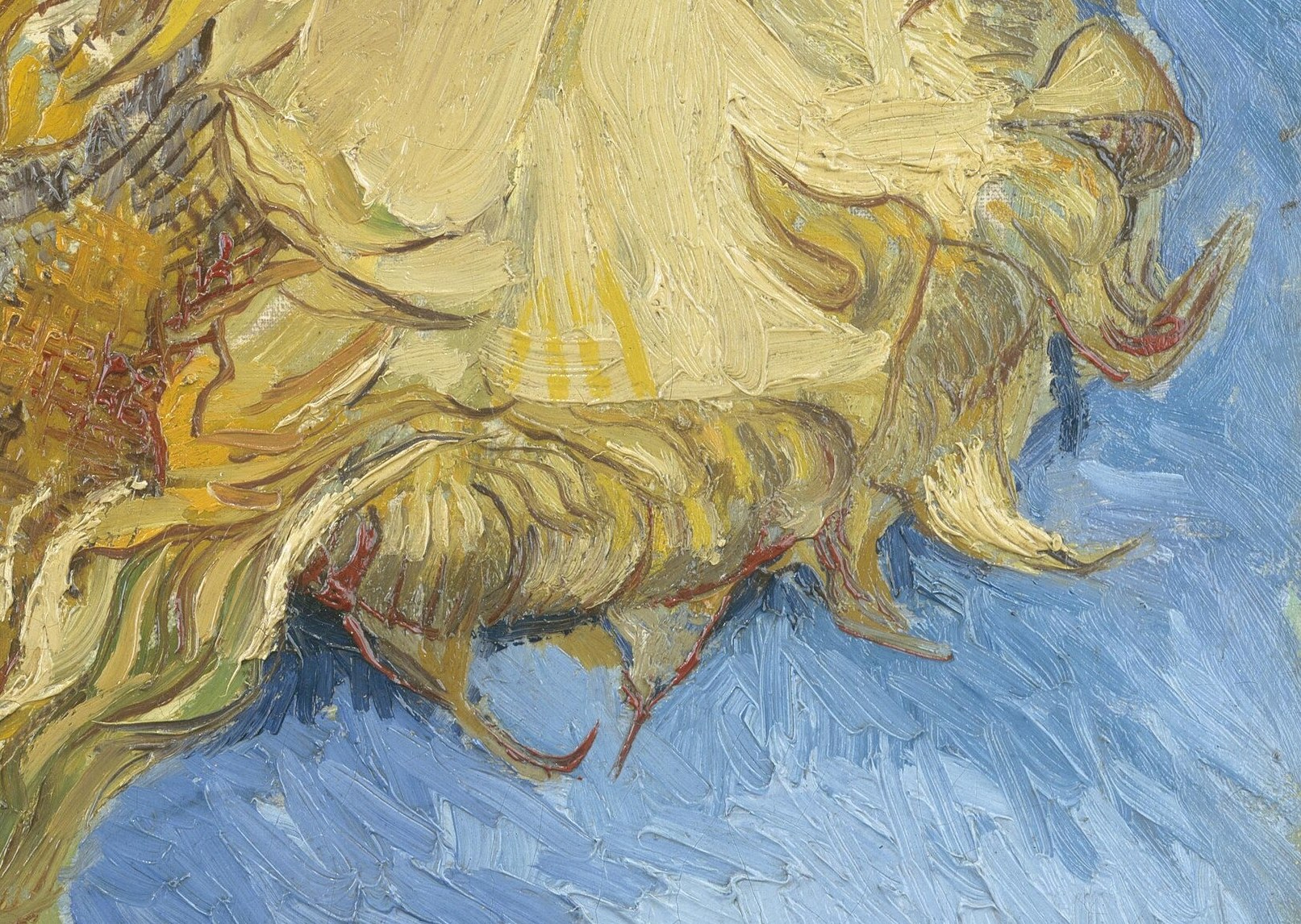
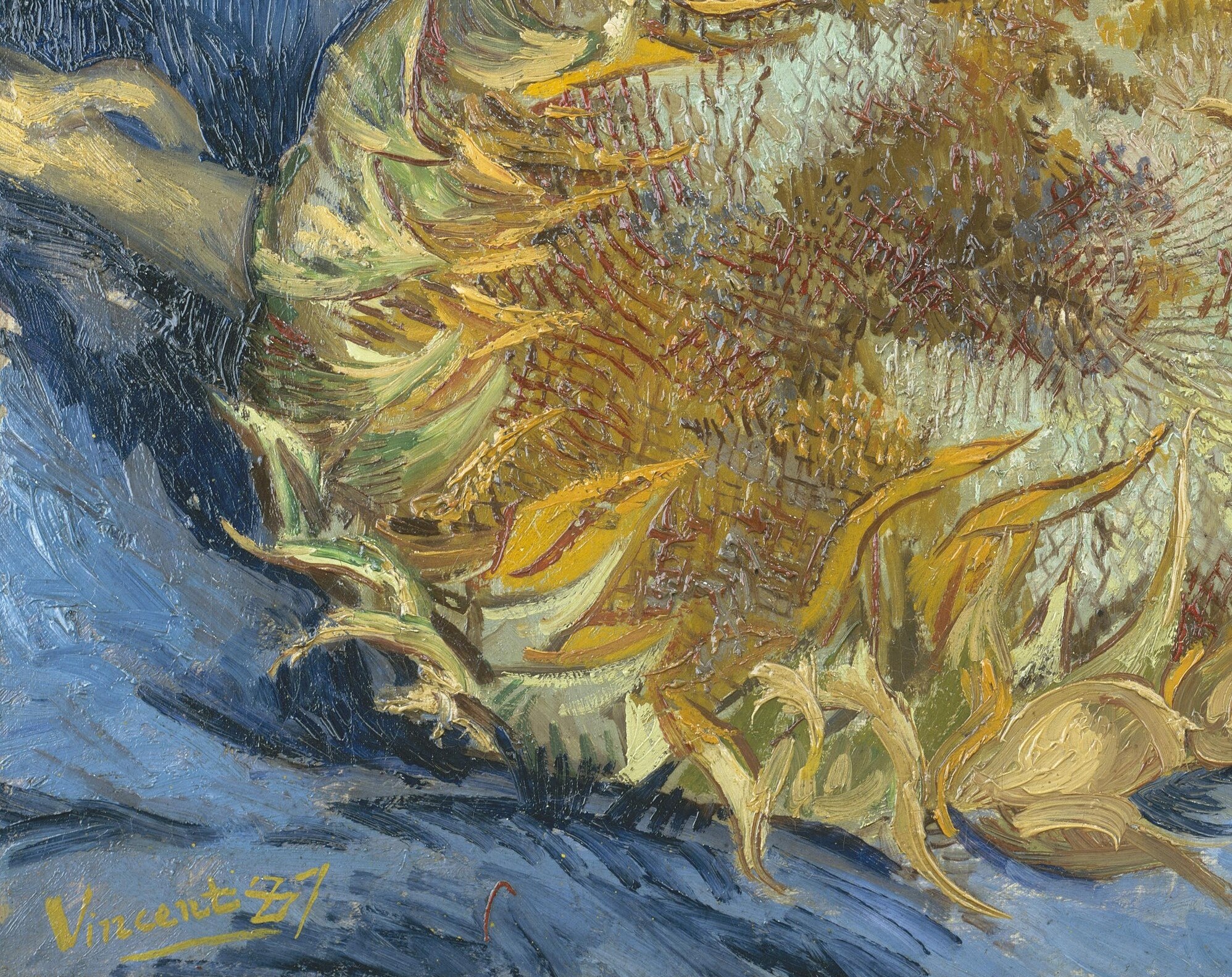
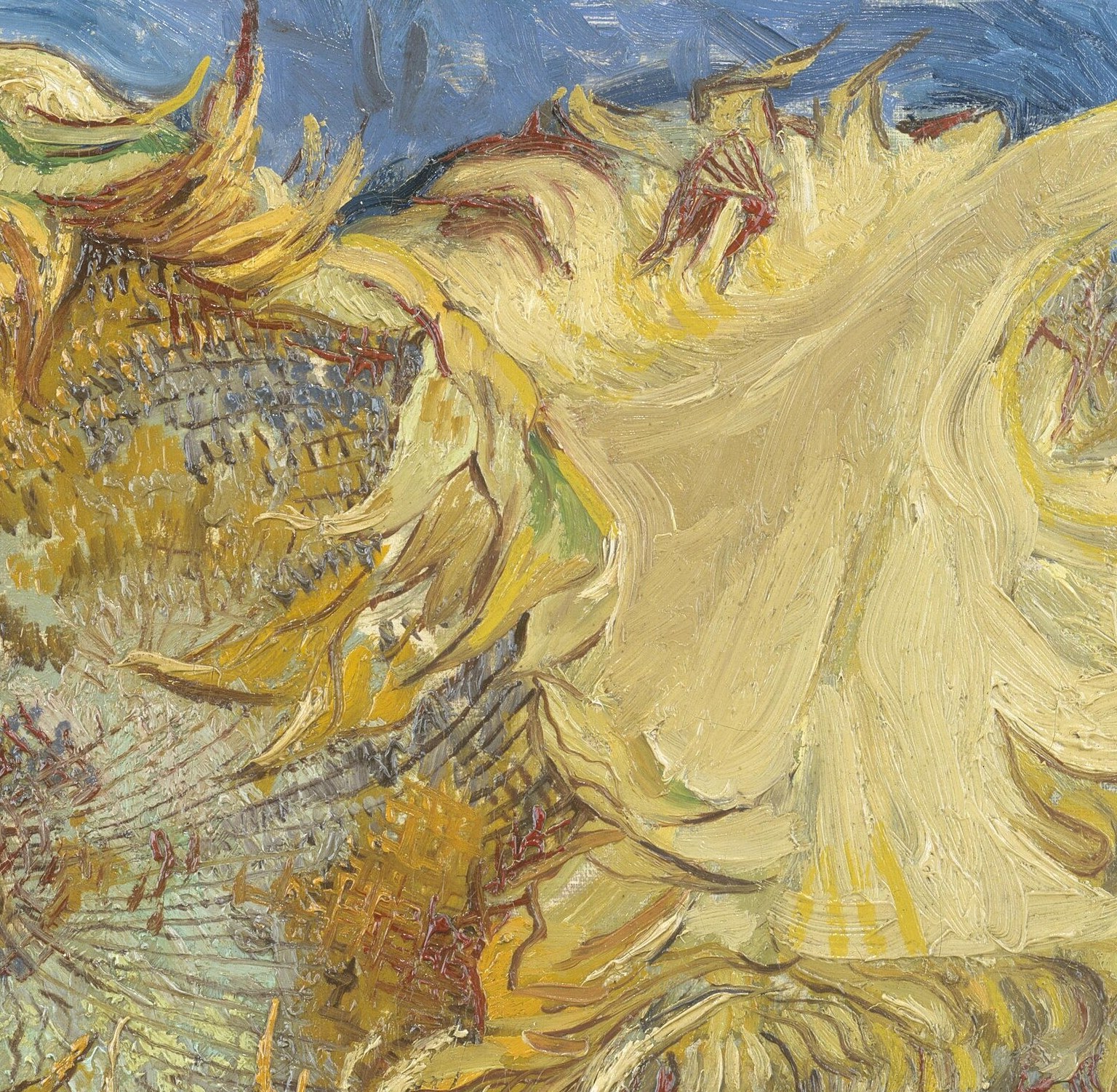
Look first at the two flower heads. One wilts, its petals drooping downward; the other still reaches outward with surprising vigor. Van Gogh is showing you a life cycle in a vase. The stems are visibly cut, making it clear these flowers will not recover. He is painting their dying days with startling honesty.
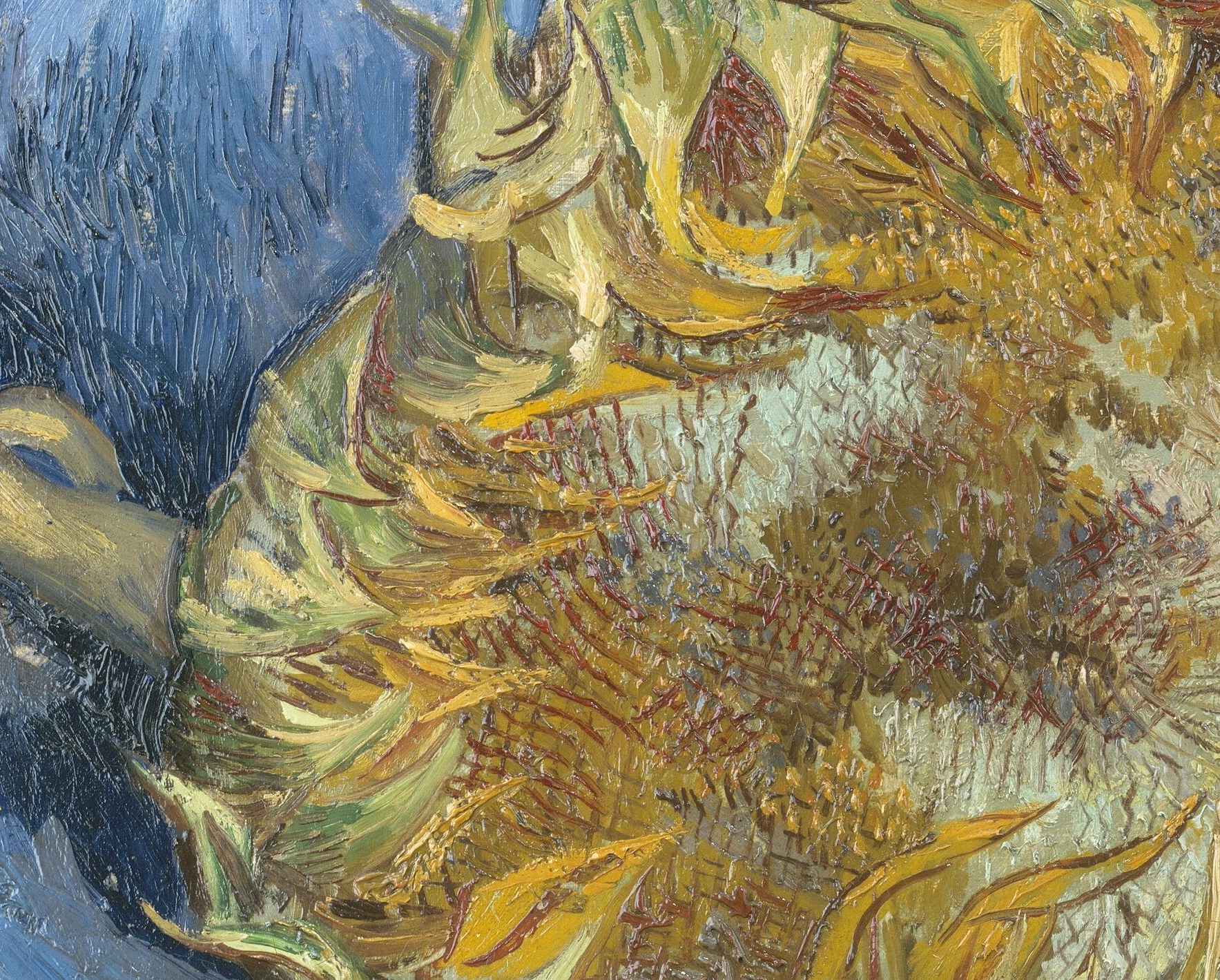
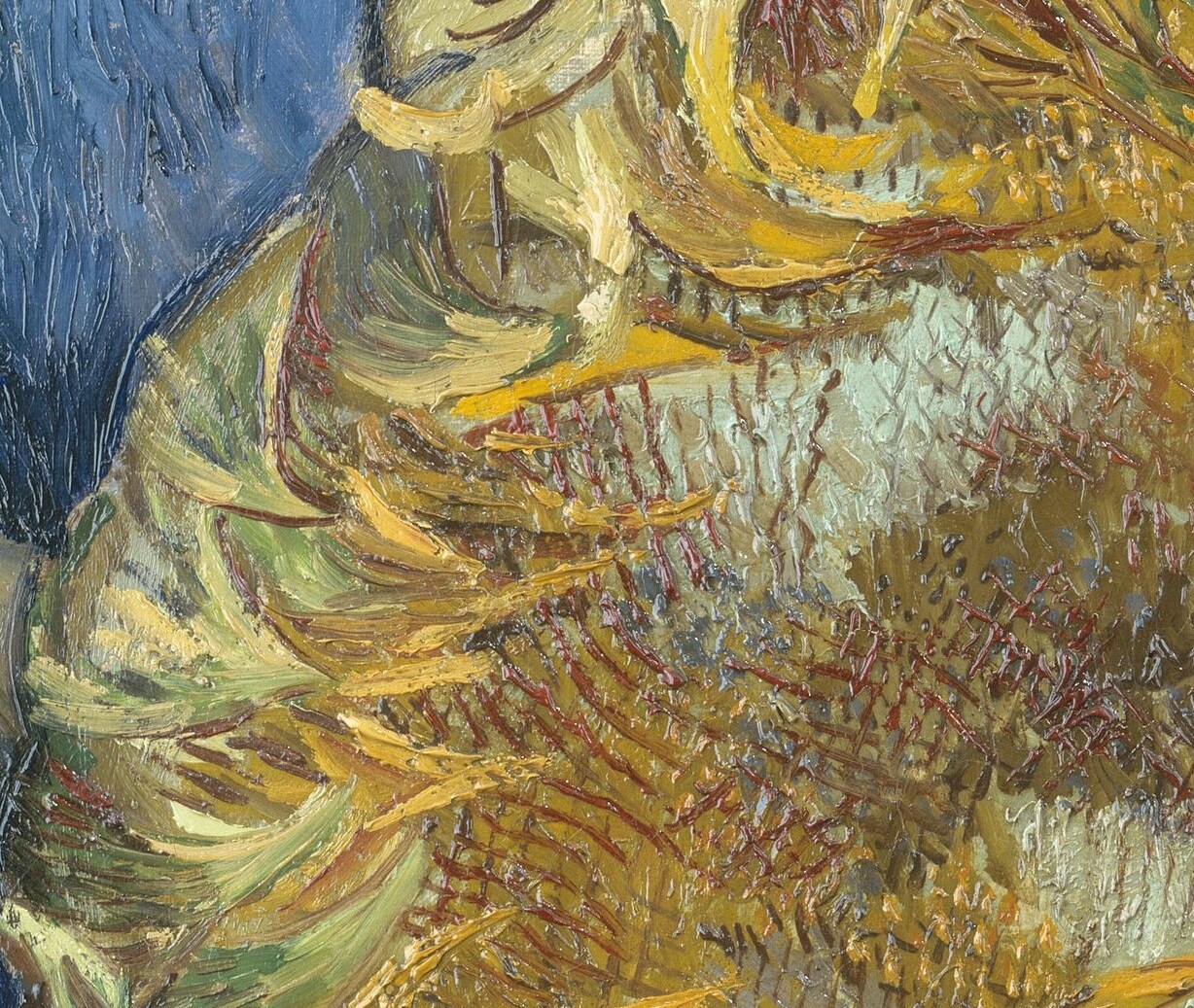
The real reward is in the dark seed disc of the left flower. What looks like a mess of brown strokes from afar is actually a dense, ordered spiral. Van Gogh, whether by obsessive observation or instinct, captured the Fibonacci phyllotaxis that governs sunflower seed growth. Beneath the impasto chaos is a hidden mathematical order.
He was 34, absorbing everything around him in Paris, and using flowers to practice the thick, directional brushwork that would make him unmistakable. This is not just a still life. It is a meditation on time, patterned into the very structure of a dying flower.
Details
Transcript
They look like a simple bunch of sunflowers. But Van Gogh painted them in 1887, at a turning point in his life. Look at their stems. They are severed, not growing. He places them in a vase to paint decay itself. Yet hidden inside the dying is a perfect, living geometry. Now zoom in on the dark center of the left flower. Those spirals are real. Sunflower seeds follow a Fibonacci sequence.