Nine Ojibbeway Indians in London by Catlin, George
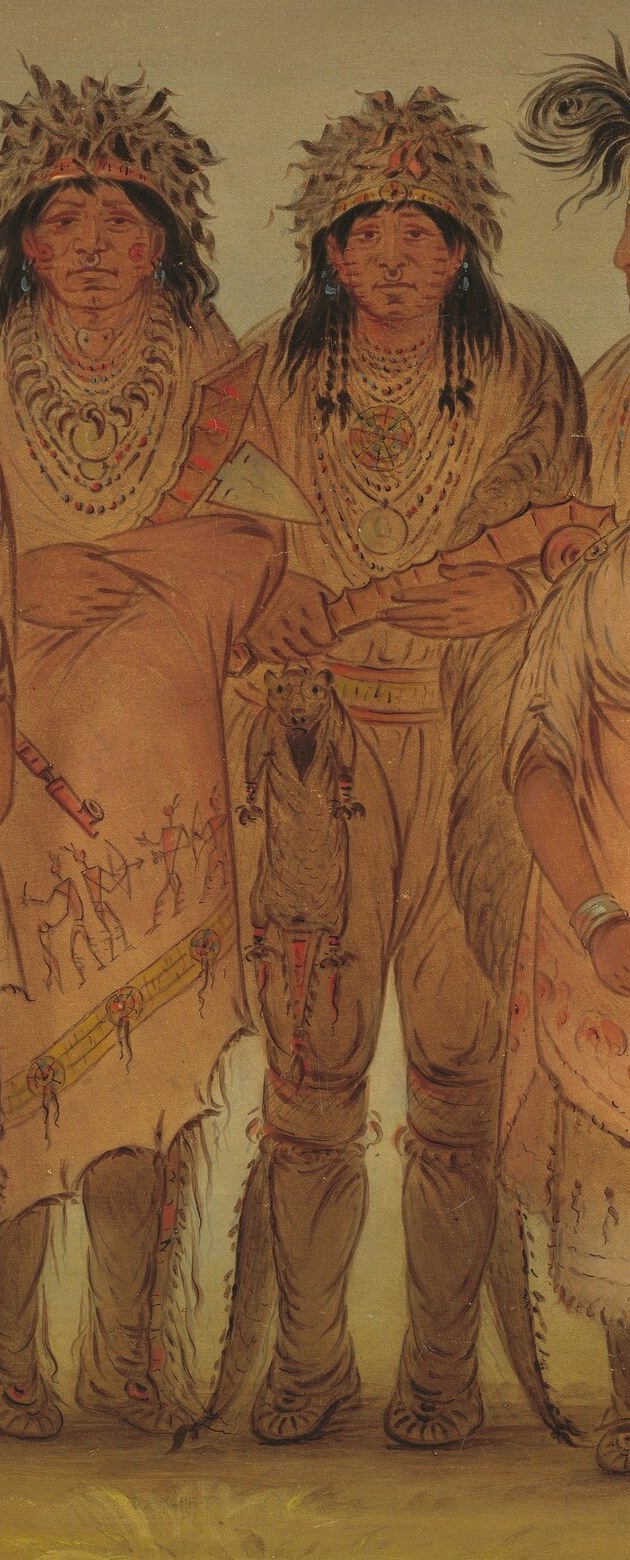
This is George Catlin's 'Nine Ojibbeway Indians in London,' painted in 1865. It is not a frontier scene but a London portrait studio, documenting a formal visit by Ojibwe delegates to the United Kingdom. Catlin, a lawyer turned painter, had spent decades traveling the American West in the 1830s, determined to record the lives of Native peoples he feared were being erased by expansion.
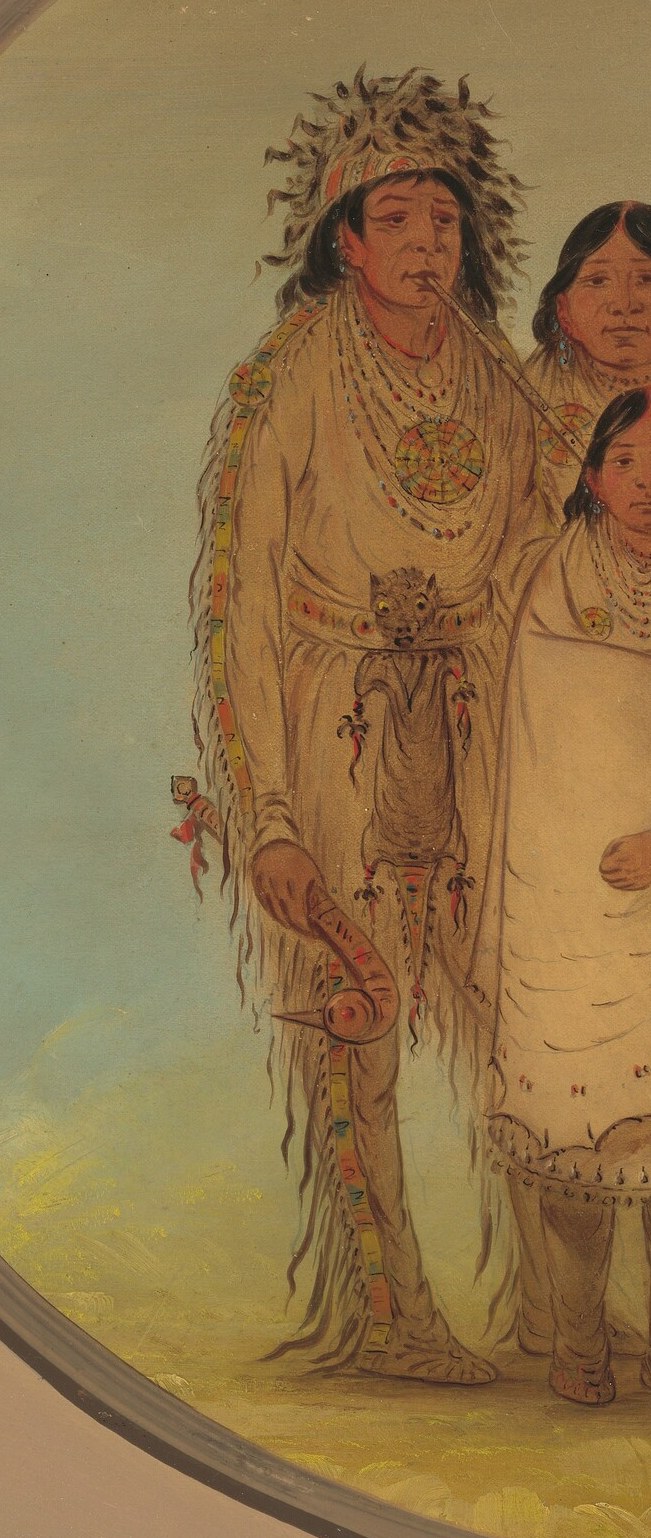
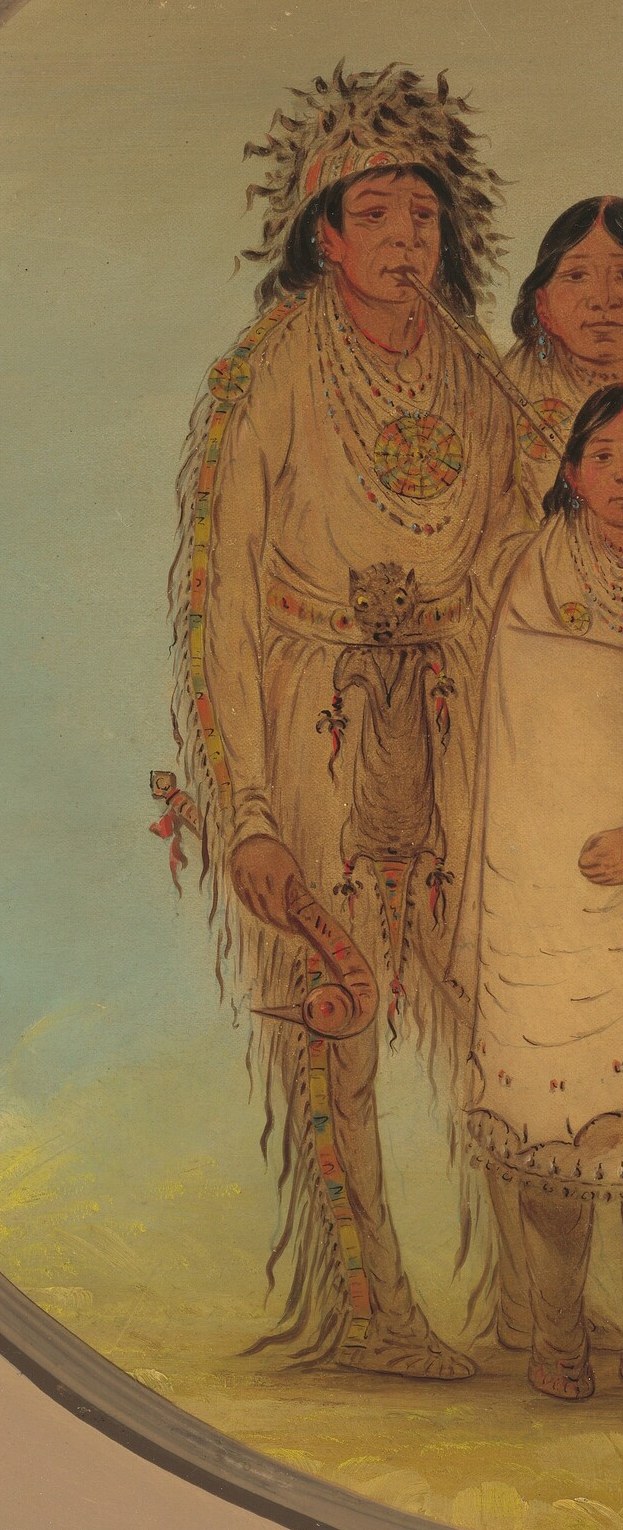
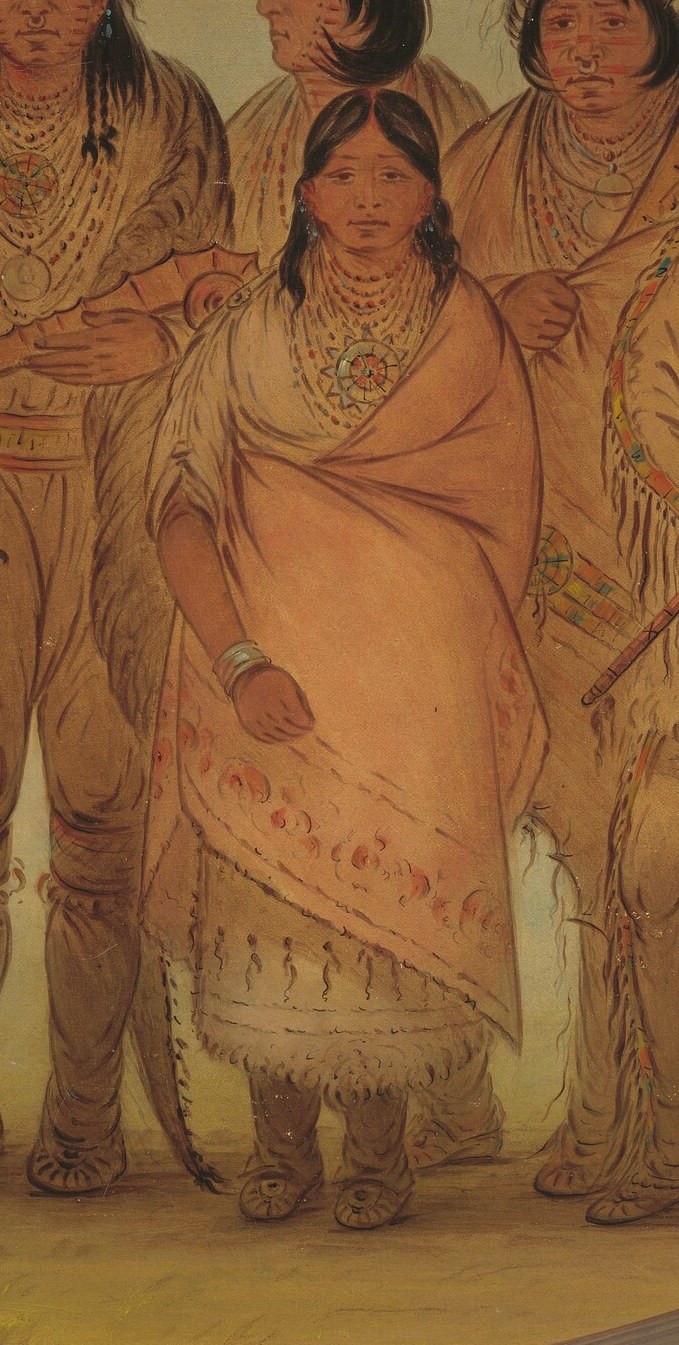
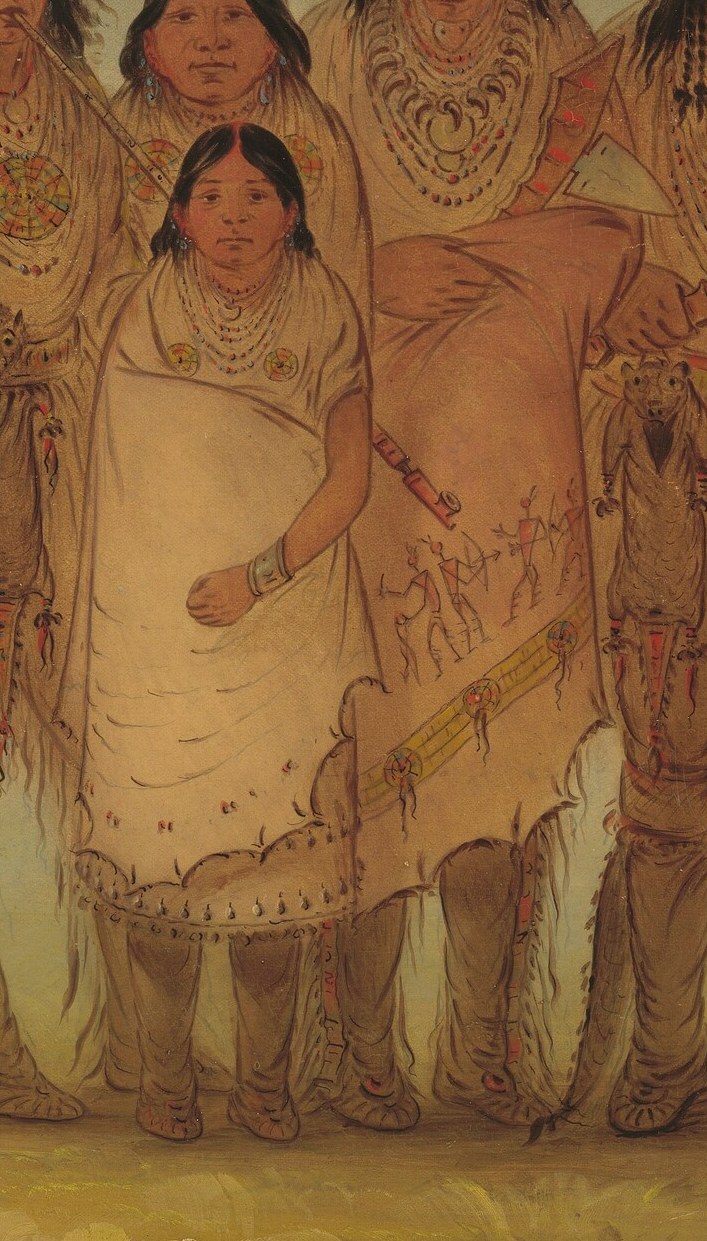
Look closely at the details Catlin preserved. Every figure wears distinct regalia: towering feathered headdresses signaling leadership, layered beaded necklaces and belts, and purposeful objects like the ceremonial pipe held by one man. The child in white stands at the center, a quiet contrast in scale and attire that reminds us this was a community, not just a delegation. The pale blue background is flat and uncluttered, so nothing distracts from the precise ornament and dress of each individual.
The visit was part of a wave of mid-nineteenth century transatlantic interest in Indigenous cultures, often framed as spectacle, but Catlin’s approach was unusually direct. Rather than exoticize, he lined them up in formal portraiture, treating them with the same compositional gravity he would any dignitary. The artist’s initials 'G.C.' and the number '59' in the upper margin hint that this was part of a larger catalog, a visual archive he assembled over a lifetime.
Catlin never found the wide success he hoped for. He died in 1872, his enormous collection unsold, eventually rescued by the Smithsonian. This small oil-on-card portrait remains as he intended: a plain, stubborn record of nine people who crossed an ocean and stood for their likeness, looking straight back at the viewer.
Details
Transcript
They were not in the American West. London, 1865. Nine Ojibwe delegates stand for a portrait. Each man wears the attire of his role and status. Look at the personal adornment: beaded necklaces and belts. He holds a ceremonial pipe, a tool for diplomacy and ritual. The painter was a lawyer who left the courtroom for the frontier. George Catlin believed their cultures were vanishing and aimed to record them. Yet here they are, dignified witnesses in the heart of empire.