Woman with a Pink by Rembrandt
This is Rembrandt's "Woman with a Pink," painted in 1660 and now at The Metropolitan Museum of Art. It is one of his late portraits, made during a period of personal hardship, yet the painting itself is a quiet demonstration of total technical control, how to build a living presence out of oil paint alone.
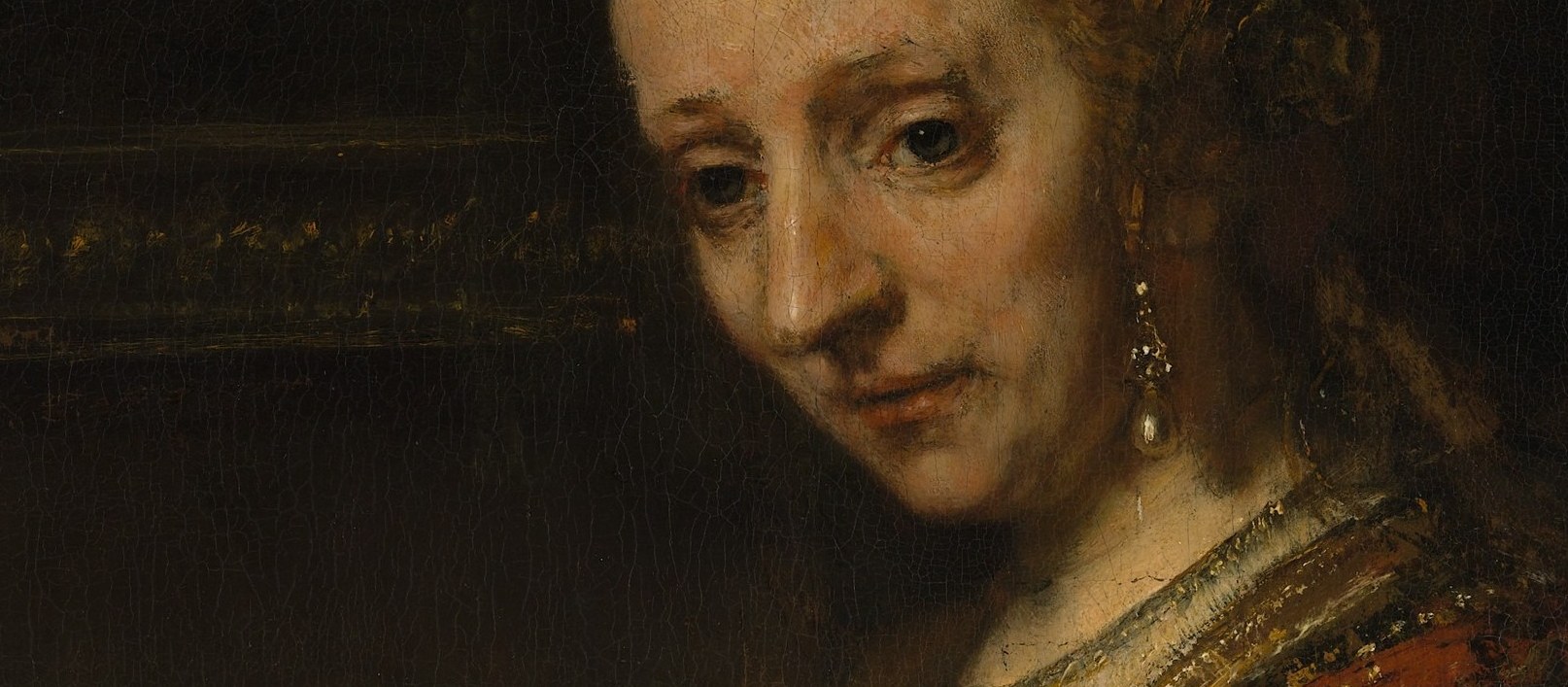
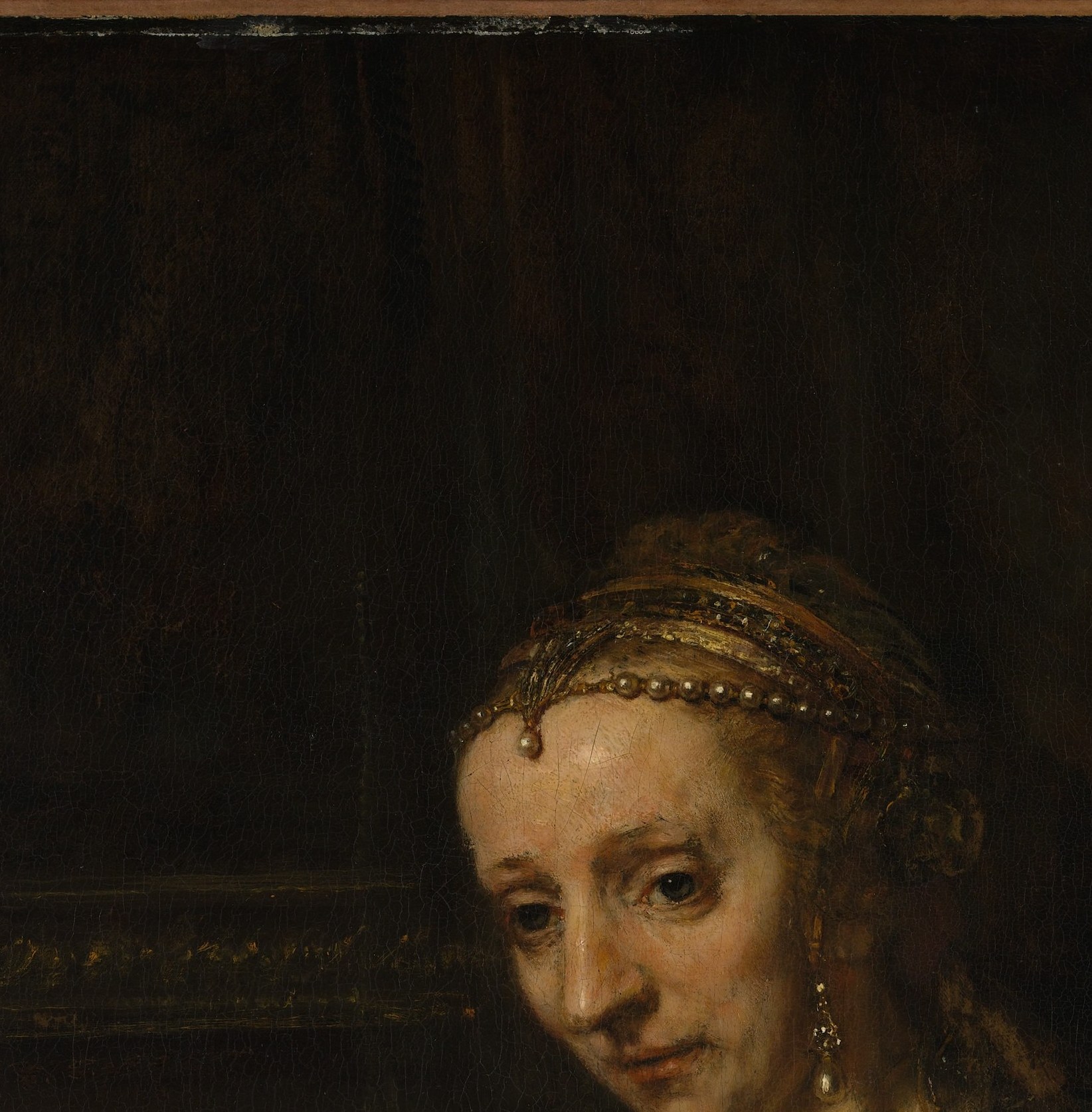
Look closely at her forehead and the bridge of her nose. You are seeing thick ridges of paint, applied with a palette knife or a heavily loaded brush. This is impasto, Rembrandt's late-style signature. The light literally catches the raised paste, mimicking the way skin catches light. Now look at the shadow side of her face: it nearly disappears into the dark ground. Where the light side is thick and sculptural, the shadow side is built with thin, transparent glazes that recede into depth.
The pink carnation she holds was a betrothal flower, this is likely a marriage portrait. But Rembrandt gives us less a document of status than a psychological encounter. Her eyes are slightly down-tilted, contemplative, and her expression resists easy reading. The white lace collar is a single rapid stroke of paint up close, a flash of brilliance framing her face.
Rembrandt never left the Netherlands, but he absorbed the lessons of the Italian masters through prints and peers. By 1660 he had buried his wife Saskia, lost his common-law wife Hendrickje, and was essentially bankrupt. And still he painted with this much restraint and force. Does the directness of her gaze feel to you like a sitter's pose, or like a conversation?
Details
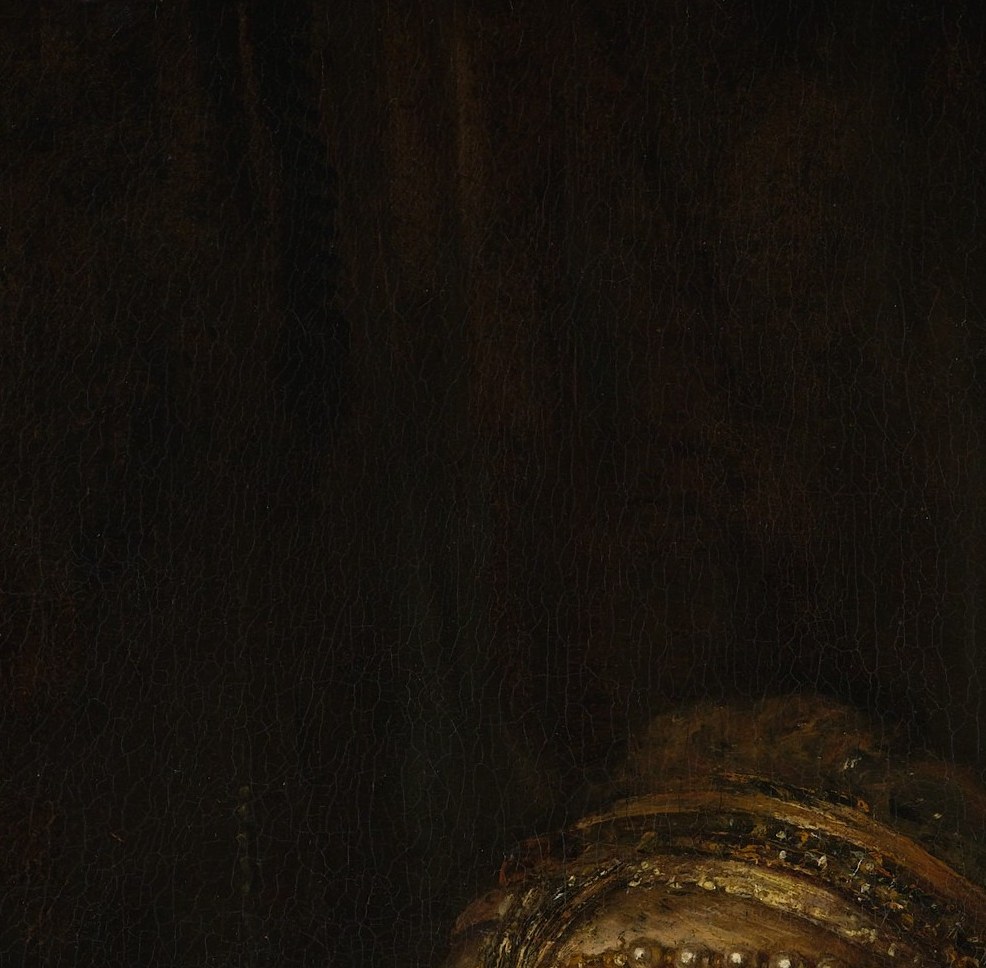
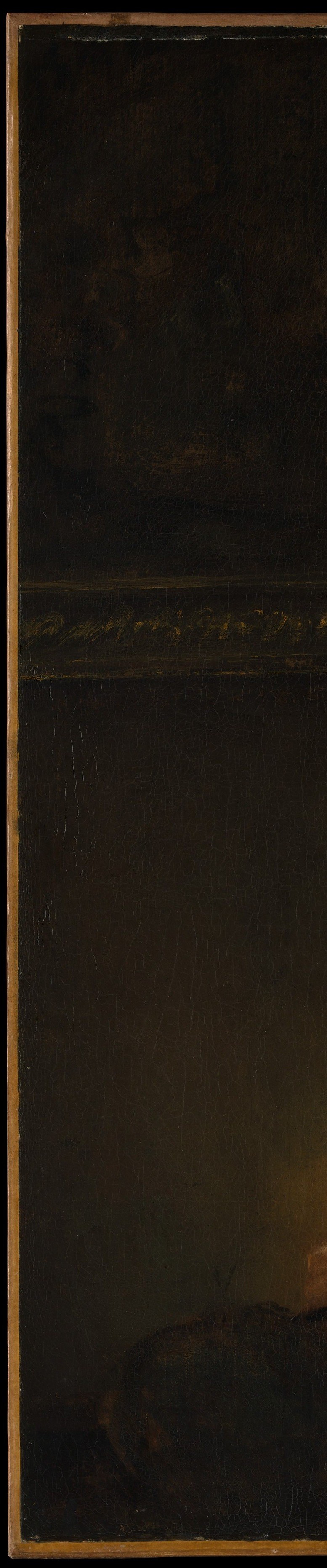
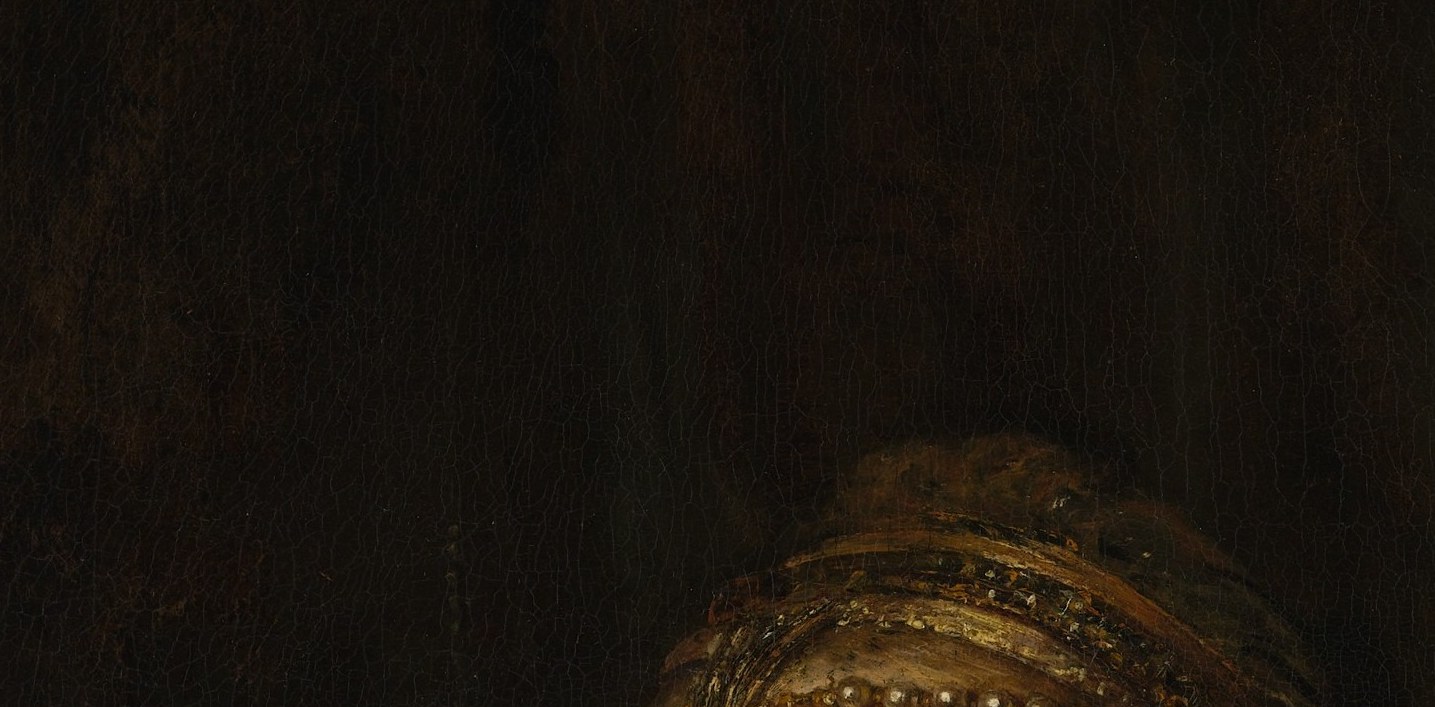
Transcript
The light on her forehead is not smooth. Rembrandt laid paint on thick with a knife. The shadow side of her face dissolves into almost nothing. He built the dark with thin, warm glazes. The collar is a single fast stroke of white. Look at her eyes. Quiet, inward, alive. A face formed by light hitting ridges of paste.