A Girl with a Flower in Her Hair by Rotari, Pietro
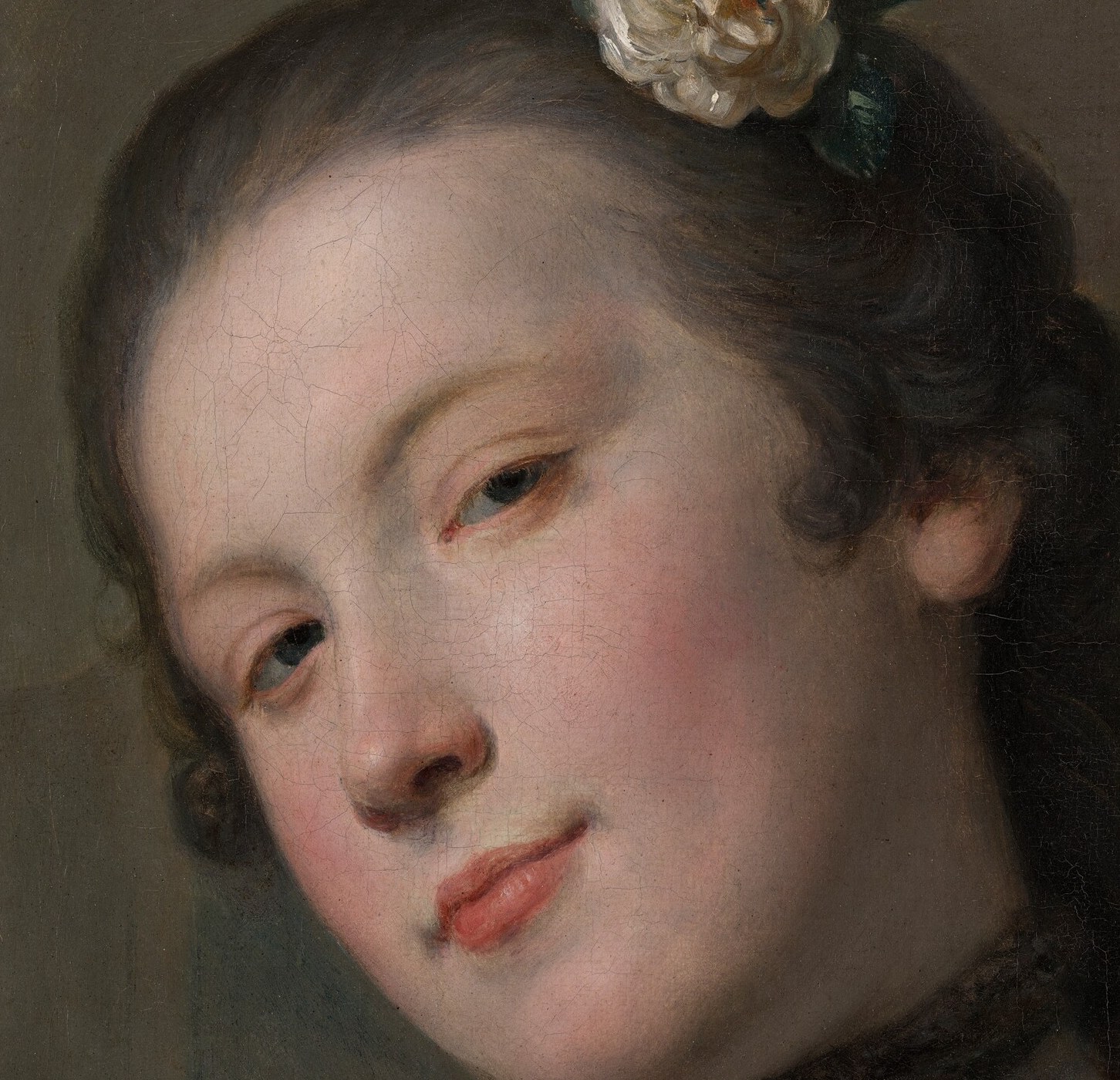
This is A Girl with a Flower in Her Hair, painted in 1761 by Pietro Antonio Rotari. It hangs in a quieter gallery now, but it began its life inside one of the most extravagant collections in Europe: the private rooms of Catherine the Great.
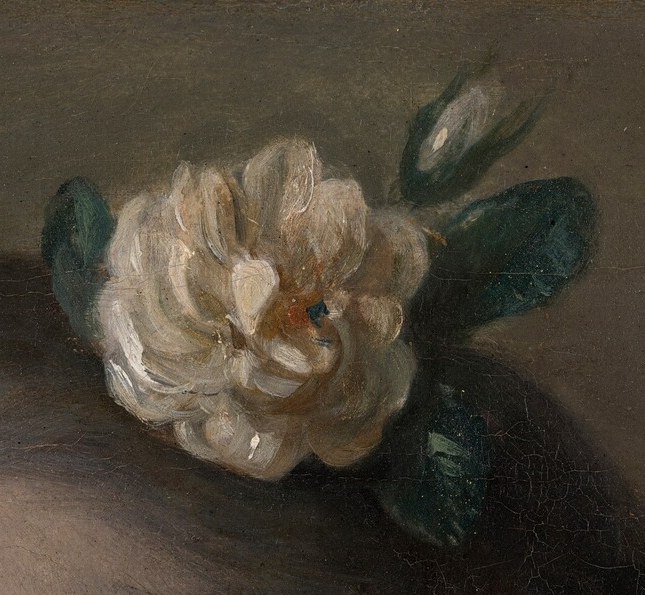
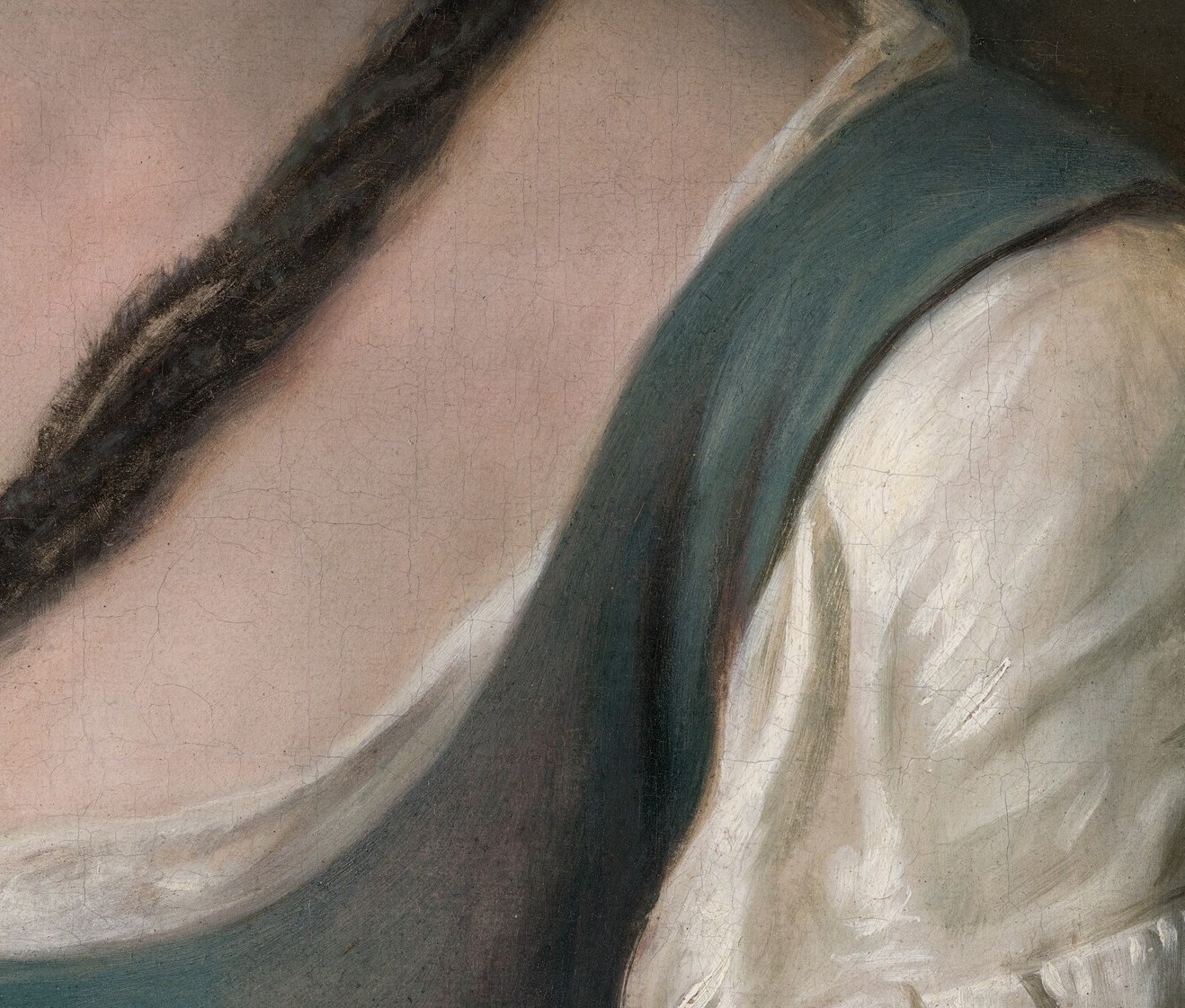
Look at the girl's left eye and the soft shadow beneath it. Rotari gives us no grand gesture, no jewel, only a dark braid, a white rose, and the quiet weight of someone who was never meant to be a famous name. The lace collar and the ribbon at her throat are painted with a delicacy that feels almost like a confidence shared between artist and sitter.
Rotari was born in Verona and worked his way across Europe, but in 1756 he made the journey to Saint Petersburg. Empress Elizabeth called him to paint the Russian court, and he stayed for the rest of his life. After his death, Catherine the Great acquired hundreds of his portraits, installing them as a collective 'cabinet of muses' at the Peterhof Palace, a room of young women, each turning her head with the same quiet intimacy as this one.
We don't know the girl's name. The flower in her hair has outlasted it. But that might be exactly what Rotari and Catherine understood: a face, given enough stillness, becomes a kind of story all its own.
Details
Transcript
She is not a grand duchess or a court beauty. Her name is lost. We know only the flower in her hair. The painter was Pietro Rotari, an Italian who moved to Russia in 1756. Empress Elizabeth summoned him to paint her court. He arrived to find a world of silk, ribbons, and whispered power. Rotari painted not just the empress, but a whole gallery of young women like this. Catherine the Great later bought three hundred of them. She called them her 'cabinet of muses', a private kingdom of faces.