Skiffs by Caillebotte, Gustave
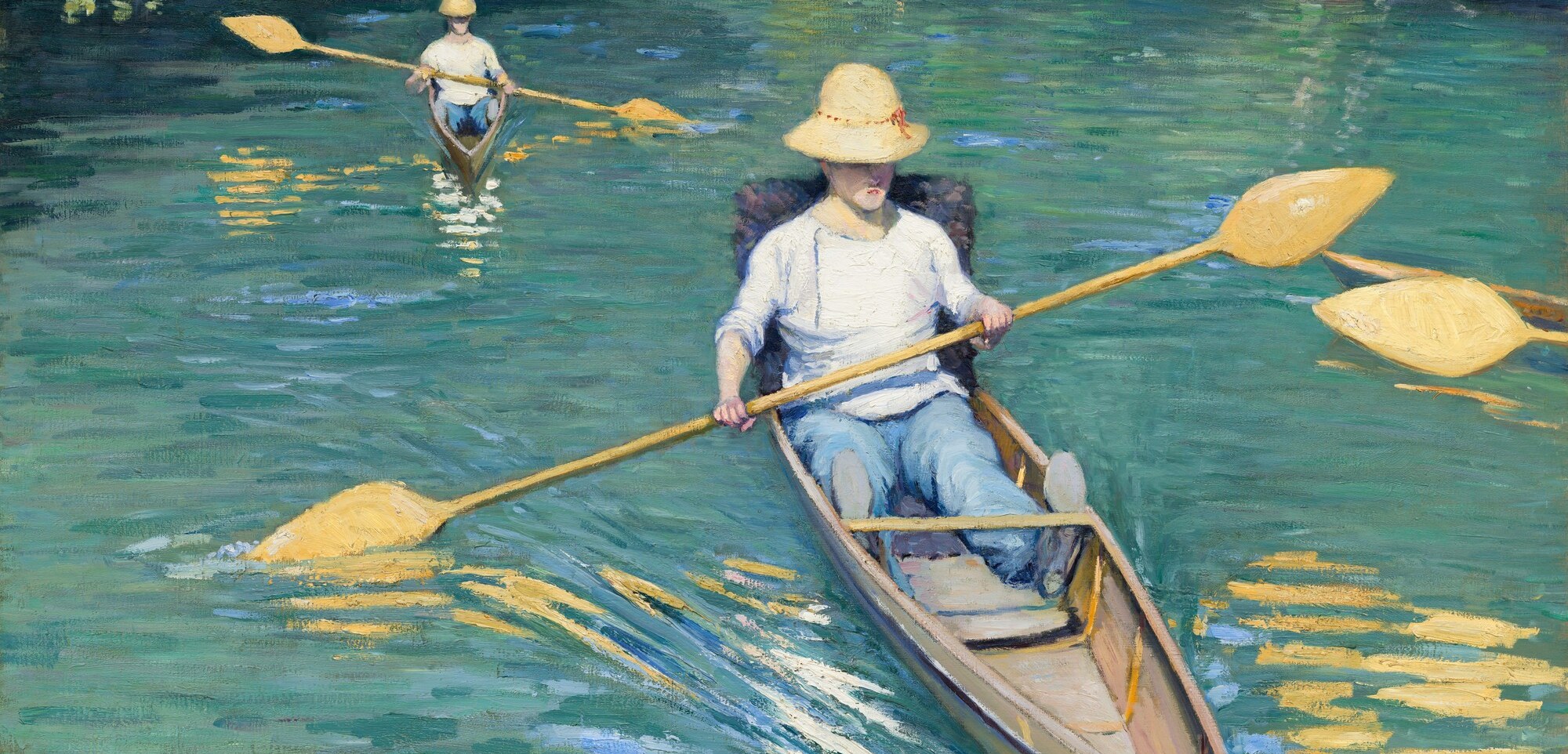
Gustave Caillebotte painted Skiffs in 1877 on the Yerres River at his family's summer estate. The painting shows three flat-bottomed boats called périssoires, notoriously unstable craft that demanded precise balance from their rowers. It now hangs in the National Gallery of Art in Washington, D.C.
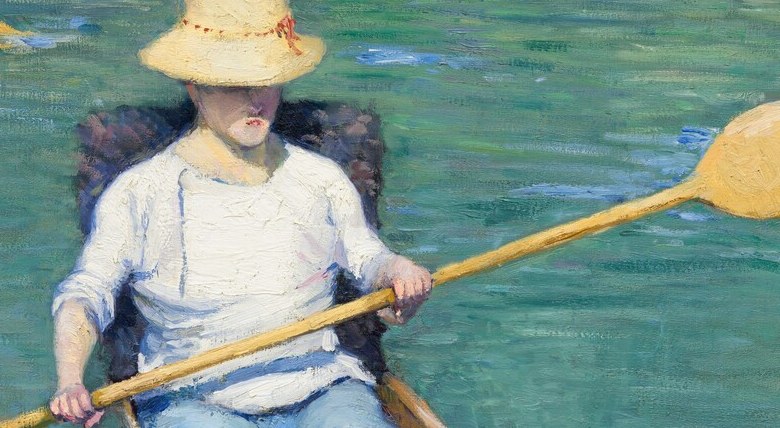
Most viewers notice the commanding foreground figure in his straw hat, and then the second boat in the middle distance. But tucked against the dark tree line at the upper edge, a third rower dissolves into the foliage. The far figure is rendered in loose, impressionistic strokes, just enough paint to establish a boat and a paddler, but so subtle that people scroll straight past it.
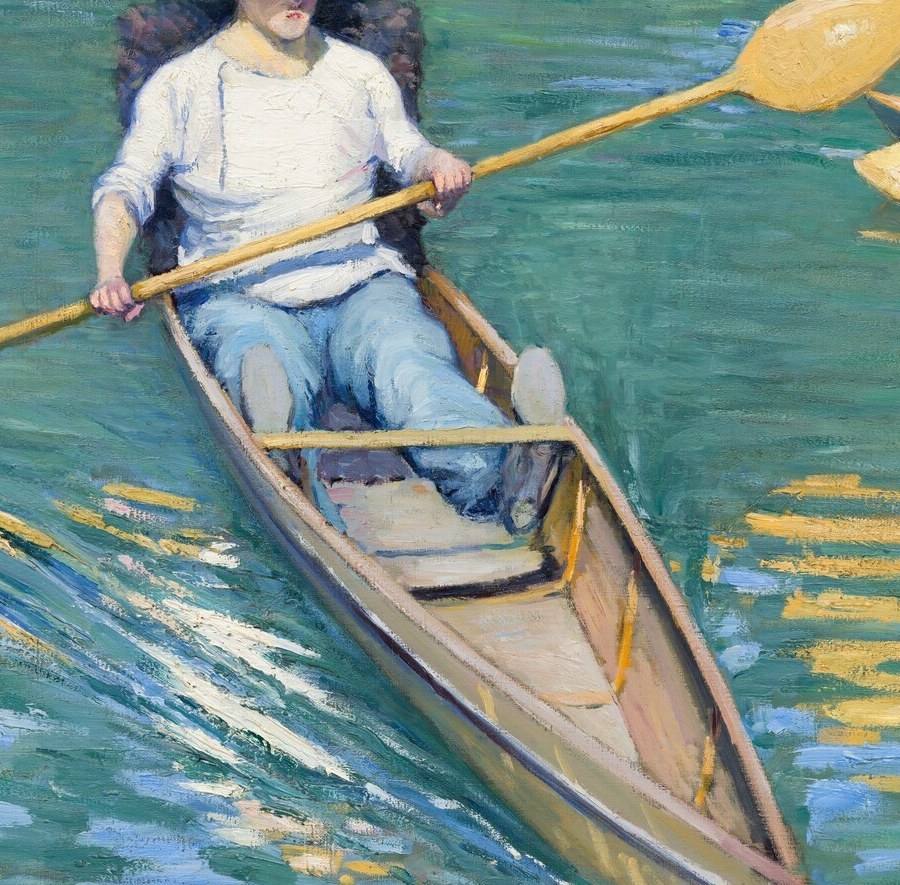
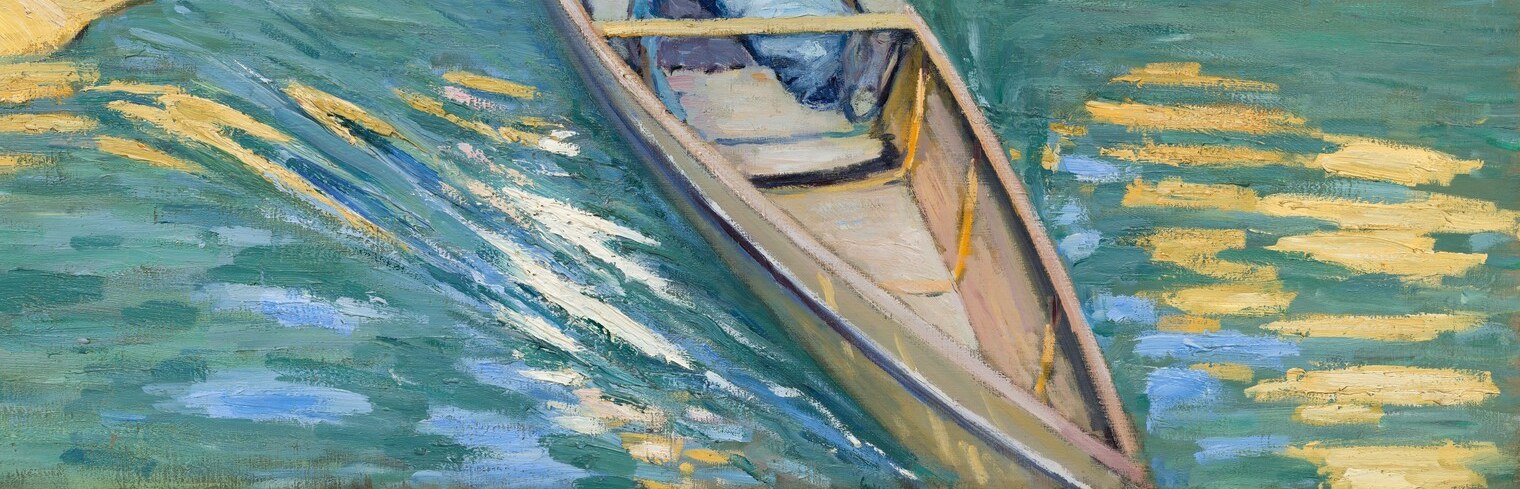
Caillebotte was an unusual figure among the Impressionists. Wealthy, trained as an engineer, and passionate about boat design, he brought a structural mind to painting. The oars in Skiffs form a deliberate X across the composition, the varnished hulls are built from tight parallel strokes, and the water vibrates with hundreds of short green and ochre touches that capture reflected light in motion.
The painting was shown at the fourth Impressionist exhibition in 1879, then stayed with Caillebotte's family until 1966, when it entered the collection of Paul Mellon. It was gifted to the National Gallery of Art in 1985. An enthusiastic sailor who sat on the board of the Paris sailing club, Caillebotte painted what he knew, and hid a whole extra boat at the top of the frame. Did you find it before the camera did?
#arthistory #impressionism #caillebotte
Details

Transcript
A rower in a straw hat cuts across the river. His face is hidden, like a stranger you pass on the water. Behind him, a second boat holds the same pose. Caillebotte was an engineer and a boat designer. He knew these périssoires could flip with one wrong move. But a third boat is hidden in this painting. Tucked against the far bank, almost dissolved into light.