Artwork
Skiffs
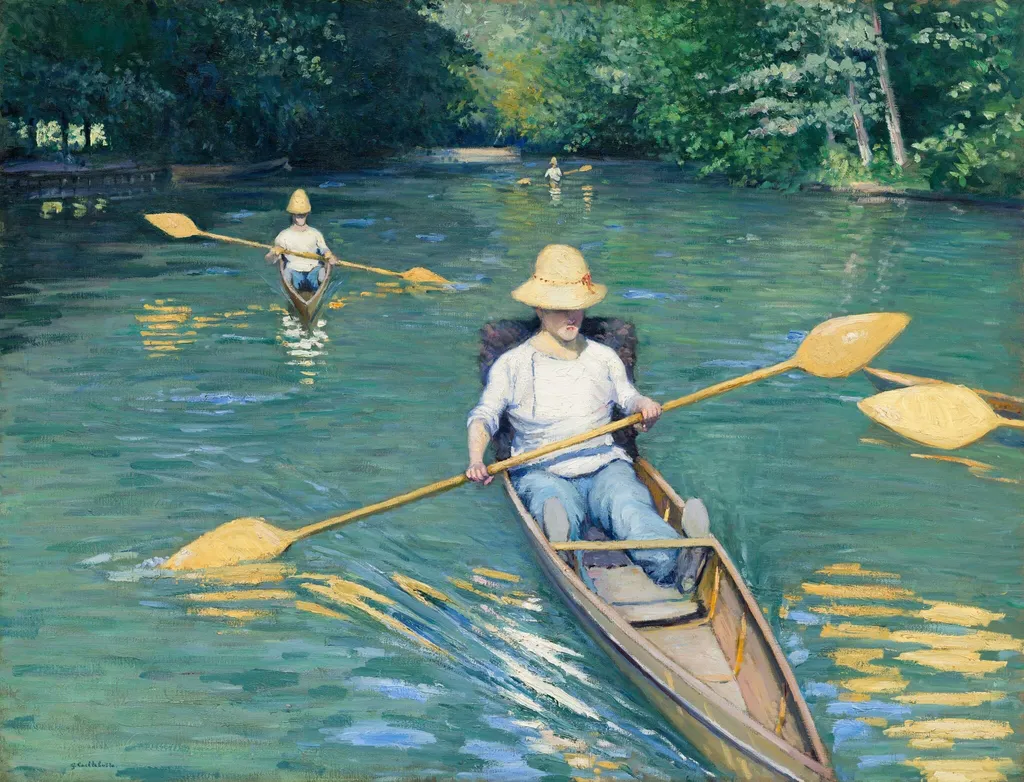
Skiffs is an oil painting by the Impressionist artist Gustave Caillebotte. It dates from 1877 and is held in the collection of the National Gallery of Art.
- Inscription
- Inscribed:upper right: G. Caillebotte / 1877; signed probably by someone other than the artist in imitation of atelier stamp, lower left: G. Caillebotte
About this work
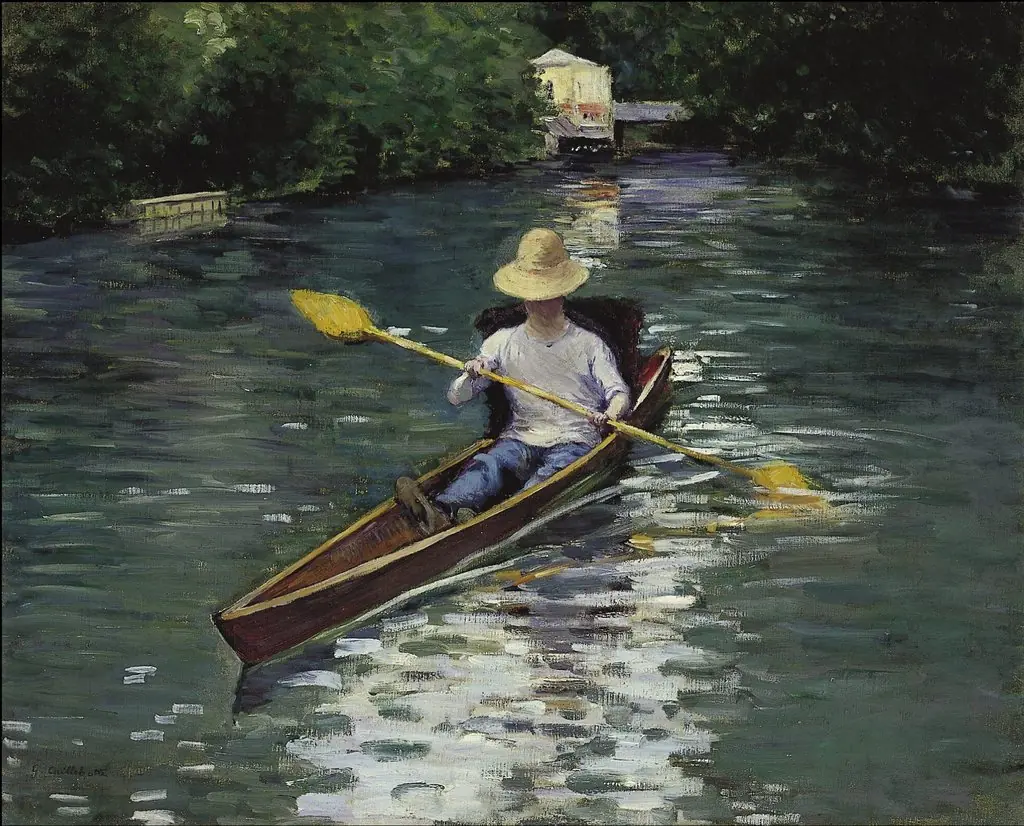
Three flat-bottomed skiffs glide down the Yerres River in staggered file, their paddlers in white shirts and straw hats dipping bright ochre oars into shimmering water. Gustave Caillebotte painted the scene in 1877 at his family's estate southeast of Paris, borrowing the broken brushwork of Monet and Renoir's bold color while keeping his own structural precision and high viewpoint.
Subject & Meaning
The painting depicts several rowers navigating périssoires, narrow, lightweight racing boats, on a waterway near Yerres, southeast of Paris.
The painting depicts several rowers navigating périssoires, narrow, lightweight racing boats, on a waterway near Yerres, southeast of Paris. The figures propel their skiffs toward the viewer, framed by a forested setting. As a genre scene, the work captures contemporary leisure activity among the bourgeoisie, a recurring interest for Caillebotte.
The forward-facing, almost confrontational composition of the rowers suggests both the physical dynamism of sport and a modern, direct engagement with the viewer. Exhibited at the fourth Impressionist exhibition in 1879, the painting exemplifies the movement's attention to modern life, outdoor recreation, and the effects of light on water and landscape.
Technique & Style
Skiffs is an oil on canvas painting executed by Gustave Caillebotte in 1877. The work measures 88.9 cm in height by 116.2 cm in width, a horizontal format suited to its depiction of rowers in périssoires advancing on a waterway toward the viewer amid a forested setting at Yerres. The medium and support align with Caillebotte's standard practice for his landscape and leisure scenes of this period.
The composition was shown at the fourth Impressionist exhibition in 1879 in Paris, situating the handling of paint and light within the group's stylistic concerns.
History & Provenance
Gustave Caillebotte painted Skiffs in 1877. The work remained in the artist's family after his death in 1894, as he died without children. In 1966, Wildenstein & Co., New York, acquired the painting from the family, then sold it that same year to Mr. and Mrs. Paul Mellon.
The Mellons gifted the work to the National Gallery of Art in 1985. The painting was exhibited at the fourth Impressionist exhibition in Paris in 1879.
Skiffs is held by the National Gallery of Art in Washington, D.C., where it entered the collection in 1985 as a gift from Mr. and Mrs. Paul Mellon. The Mellons had acquired the painting in 1966 from Wildenstein & Co. in New York, the same year it left the artist's family. The documented exhibition history is limited to its inclusion in the 4th Impressionist Exhibition in 1879 in Paris.
Overview
Gustave Caillebotte's 1877 oil painting, Skiffs, captures a dynamic scene on the Yerres River, near his family's summer estate. This work belongs to a focused group of canvases from 1877-1878 depicting various aquatic activities, including swimmers and rowers. The composition features three narrow, flat-bottomed boats, known as périssoires, navigated across the canvas, showcasing Caillebotte's distinctive blend of Impressionist technique with a precise structural approach.
Context
An enthusiastic sailor and boat designer, Gustave Caillebotte brought a deep personal understanding of watercraft to his depictions of river life. Skiffs is part of a series created at his family's estate along the Yerres River, where he frequently observed and participated in boating activities. This firsthand knowledge lends authenticity and immediacy to his portrayal of the périssoires and their interaction with the water.
Own this work as a print
Artist & collection

Artist
Gustave Caillebotte (French: ; 19 August 1848 – 21 February 1894) was a French painter who was a member and patron of the Impressionists, although he painted in a more realistic manner than many others in the group.

 Studied in the Impressionism course