Portrait of Elizabeth Stuart, Electress Palatine and Queen of Bohemia by Alexander Cooper
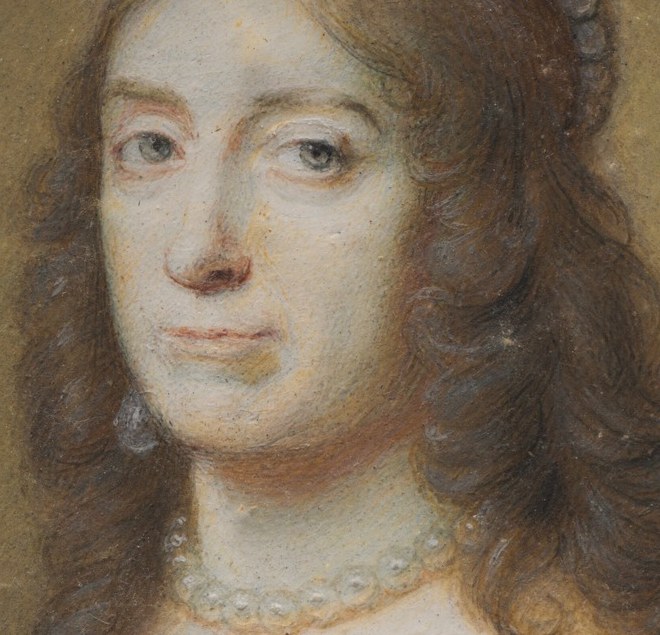
This striking portrait, painted by Alexander Cooper in 1630, depicts Elizabeth Stuart, the Electress Palatine and Queen of Bohemia, during a period of significant upheaval in her life. It is held at The Cleveland Museum of Art.
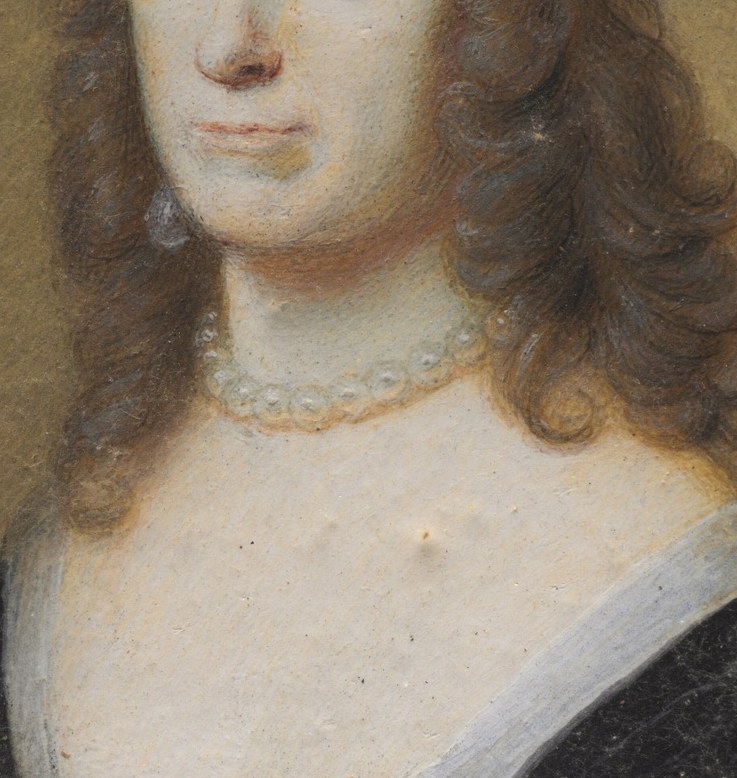
Known as the 'Winter Queen', Elizabeth Stuart's calm and serene expression in the painting belies the turbulent political landscape she navigated. Despite losing her Bohemian crown, the meticulous detail of her pearl necklace and elaborate brooch clearly communicate her enduring royal status and public image.
Such miniature portraits were often worn as personal jewelry, allowing for a constant, intimate connection to the sitter. This piece, with its delicate gold loop, was likely intended to be worn, serving as a powerful, portable symbol of her identity and the era's intricate courtly customs.
What do you notice first about her expression?
Details
Transcript
This is Elizabeth Stuart, an English princess and a queen in exile. In 1630, she had lost her crown, but never her regal composure. She was known as the 'Winter Queen' of Bohemia, a title gained and lost quickly. Her pearls and brooch signal her royal status, even without a kingdom. This miniature was often worn as jewelry, a personal emblem of power. Her portrait became a silent testament to her unwavering dignity.