Singerie: The Dance by Huet, Christophe
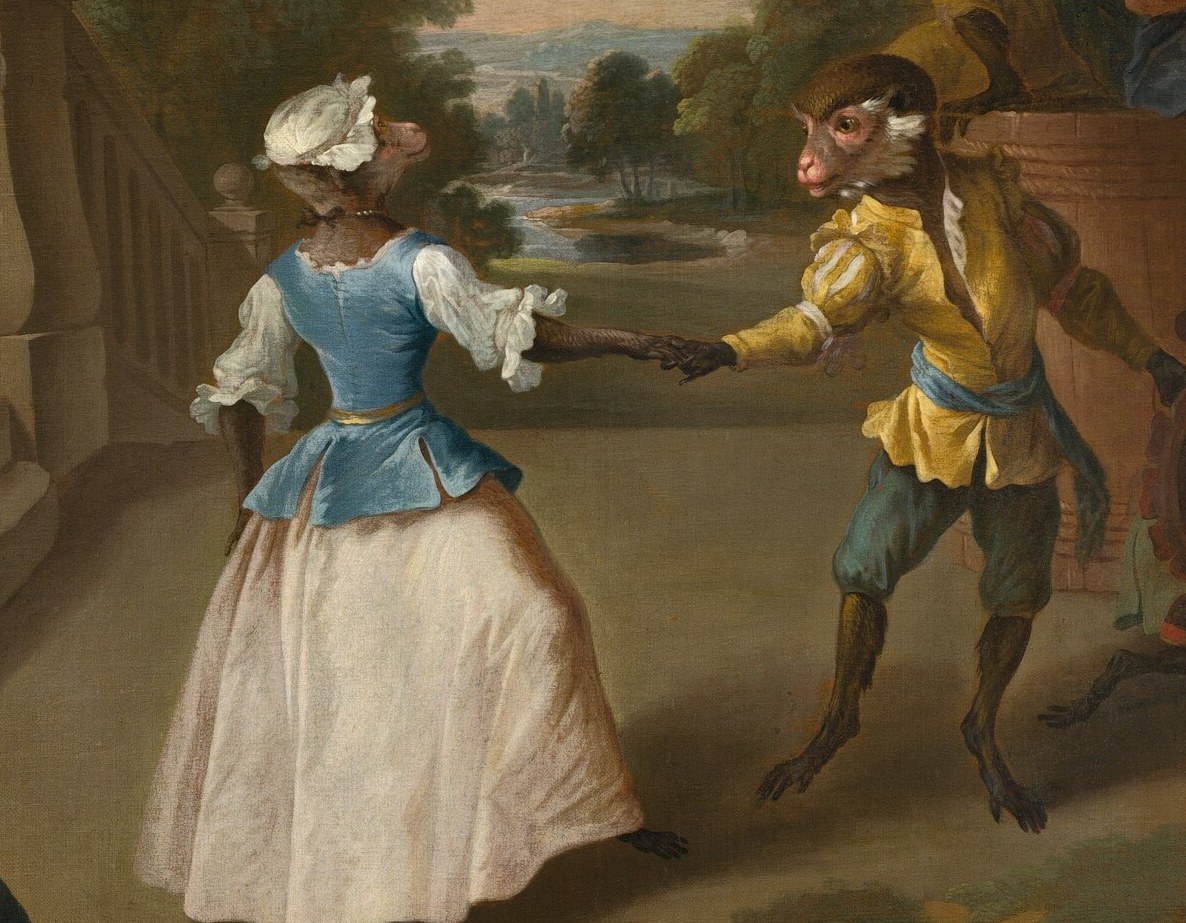
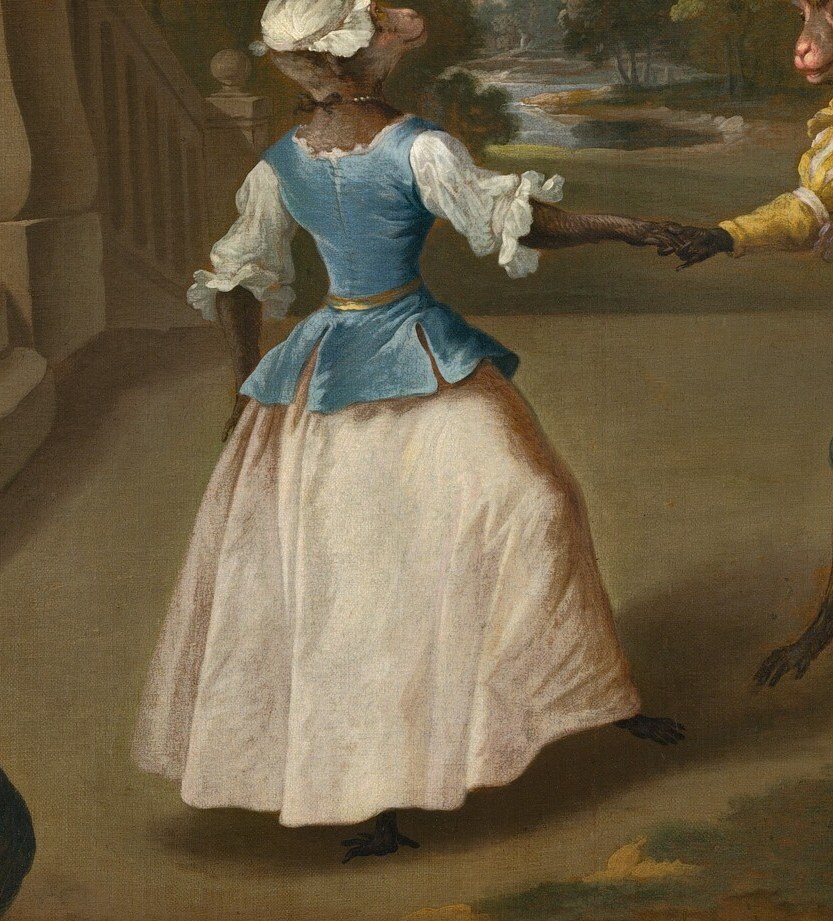
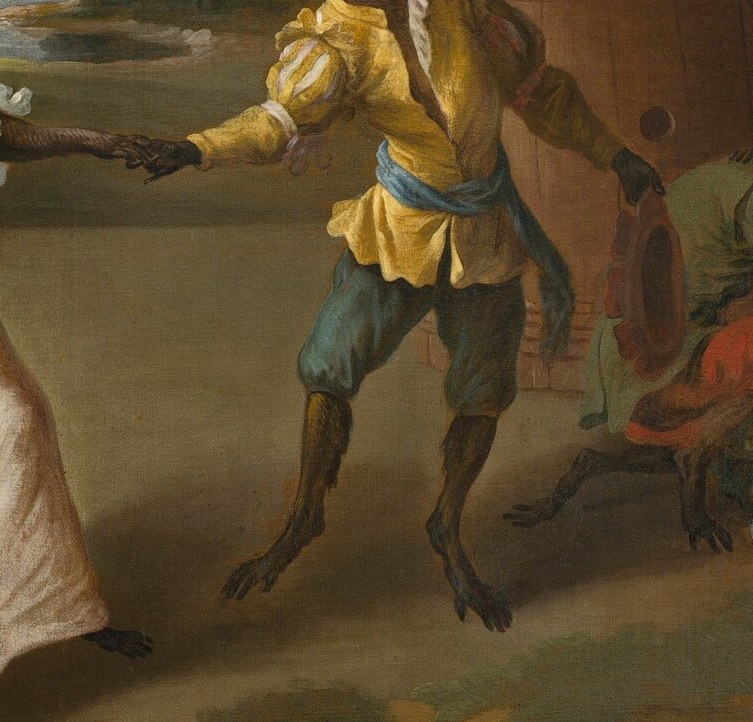
This is Christophe Huet's 'Singerie: The Dance', painted around 1739. A typical work of the French singerie genre, it depicts a troupe of monkeys adopting the manners of high society, a form of playful satire that delighted 18th-century aristocrats by gently mocking their own rituals.
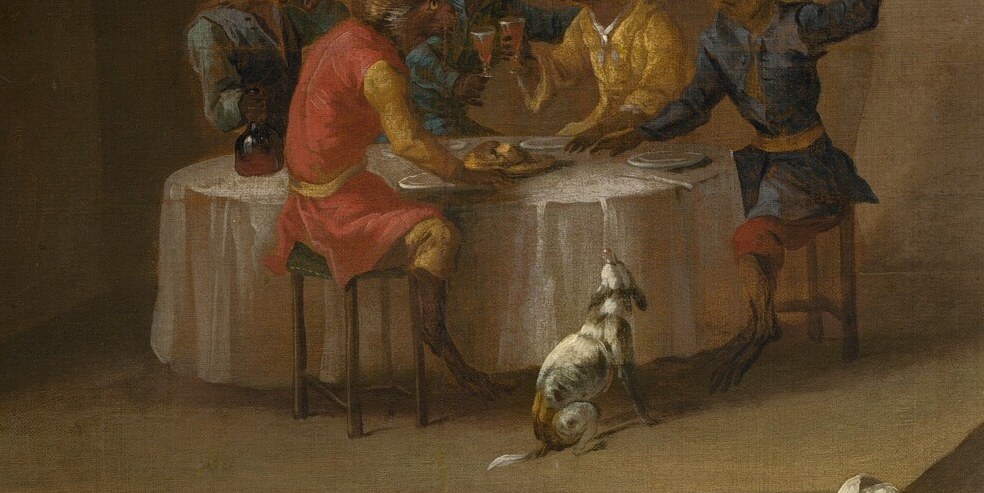
Every detail in the scene reinforces the joke. The musicians play for a room full of guests who dine, gossip, and dance in the latest fashion. But near the lower left edge, a small dog stands on its hind legs, mimicking the upright posture of the monkeys. Is it the only honest creature left, or is it trying as hard as everyone else to keep up appearances?
Christophe Huet was a noted decorative painter of the period, and works like this likely adorned the walls of a salon or private chamber, offering a witty mirror to the very people who gathered beneath them. The delightful chaos, the wine bottles on the ground, the exotic parrot, the classical urn, transforms a formal garden into a theater of indulgence.
What do you make of the dog? An eager participant, or an accidental witness to the folly?
Details
Transcript
It looks like a courtly celebration. Musicians play, couples dance, guests dine. But none of the dancers are human. This is a singerie: a satirical scene where monkeys mimic our social rituals. Painted around 1739 for a French aristocratic interior, it was meant to tease the well-heeled guests who saw it. Now find the lone dog, upright on its hind legs. It watches the monkeys, desperately trying to join their human charade.