The Shipwreck by Vernet, Claude-Joseph
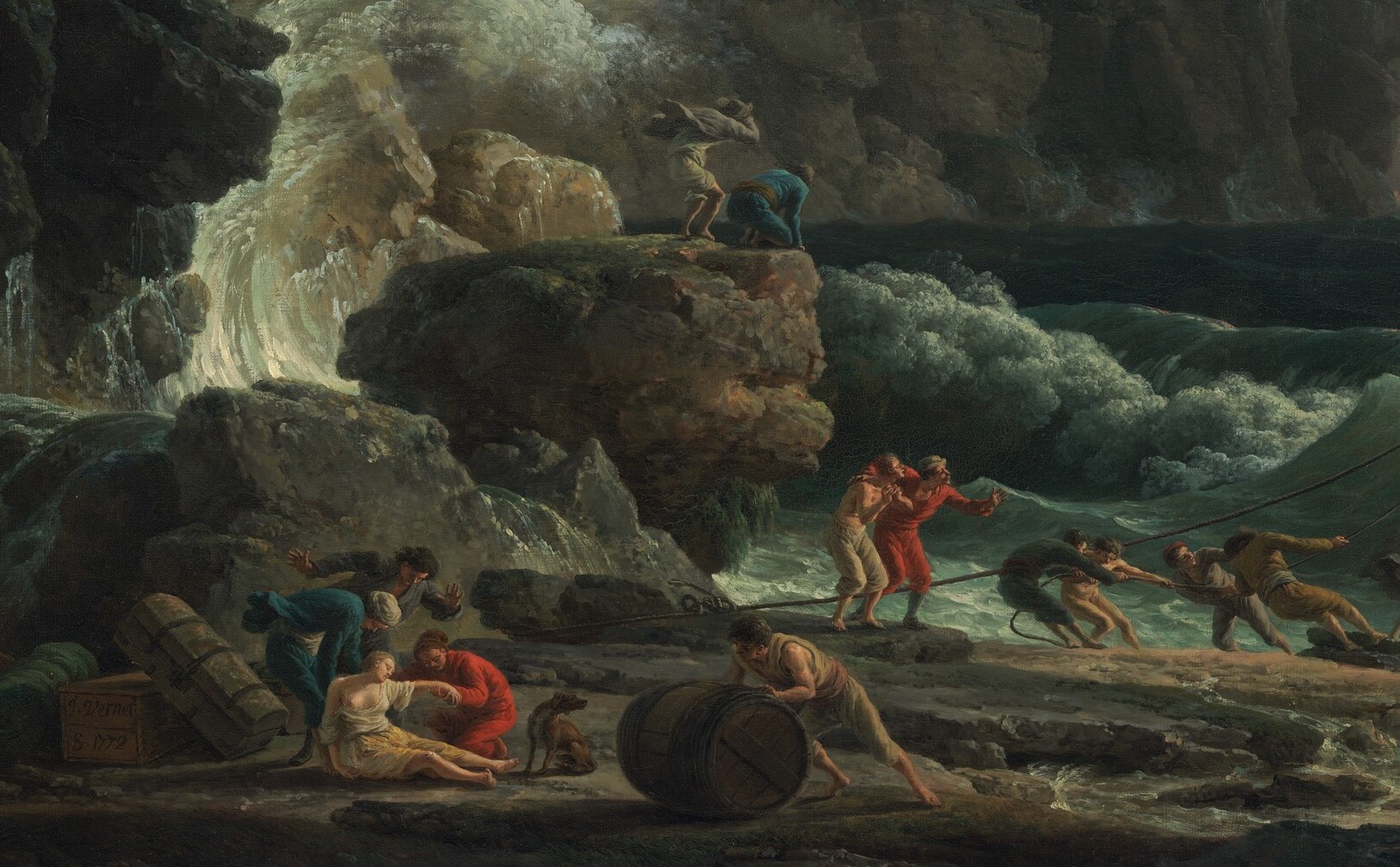
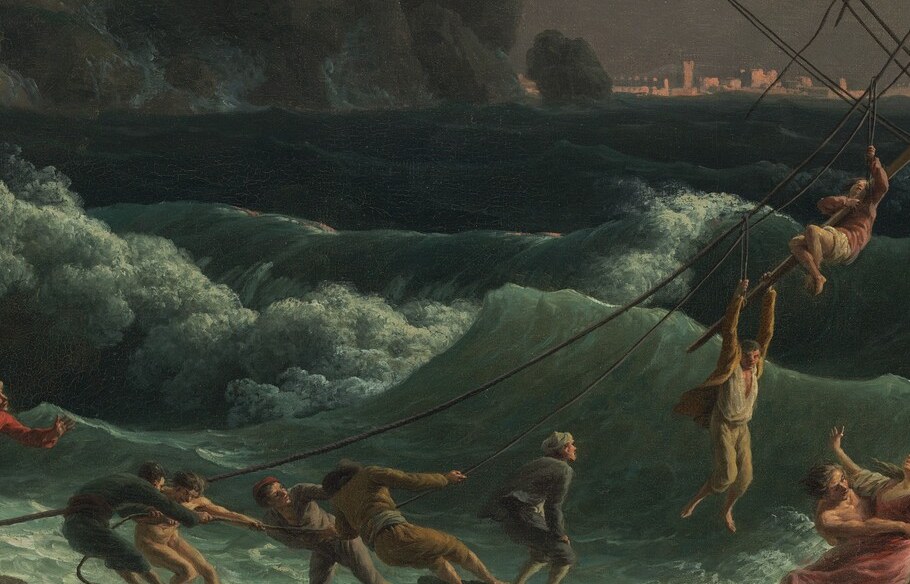
Claude-Joseph Vernet’s The Shipwreck (1772, National Gallery of Art) is often discussed as a study in sublime terror, the smallness of man against the sea. But what makes this painting land is quieter than the storm.
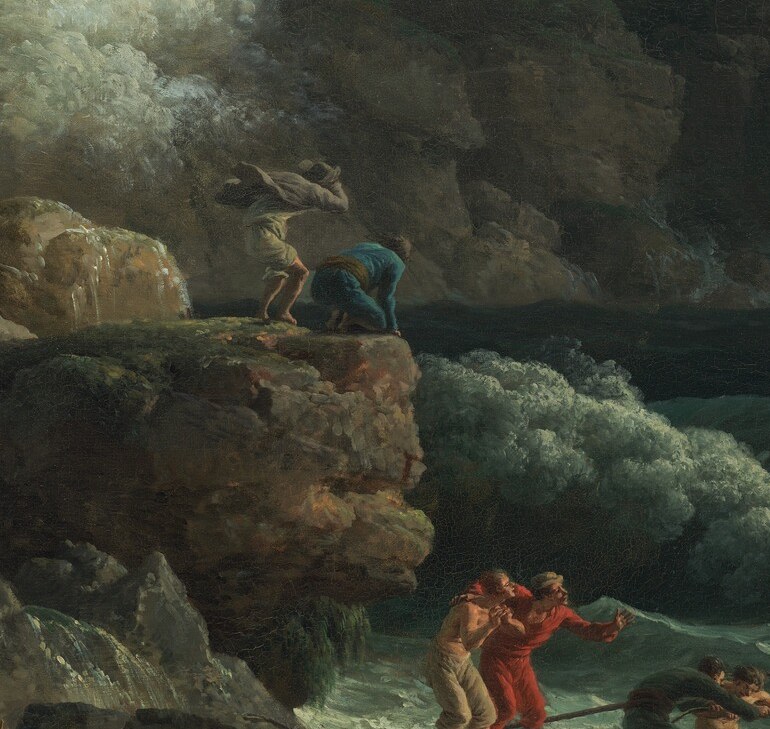
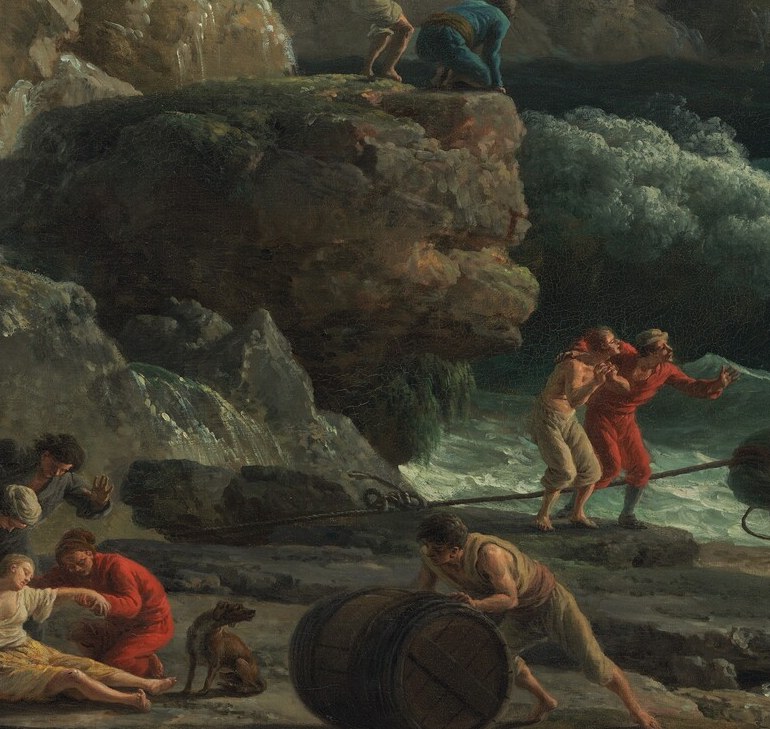
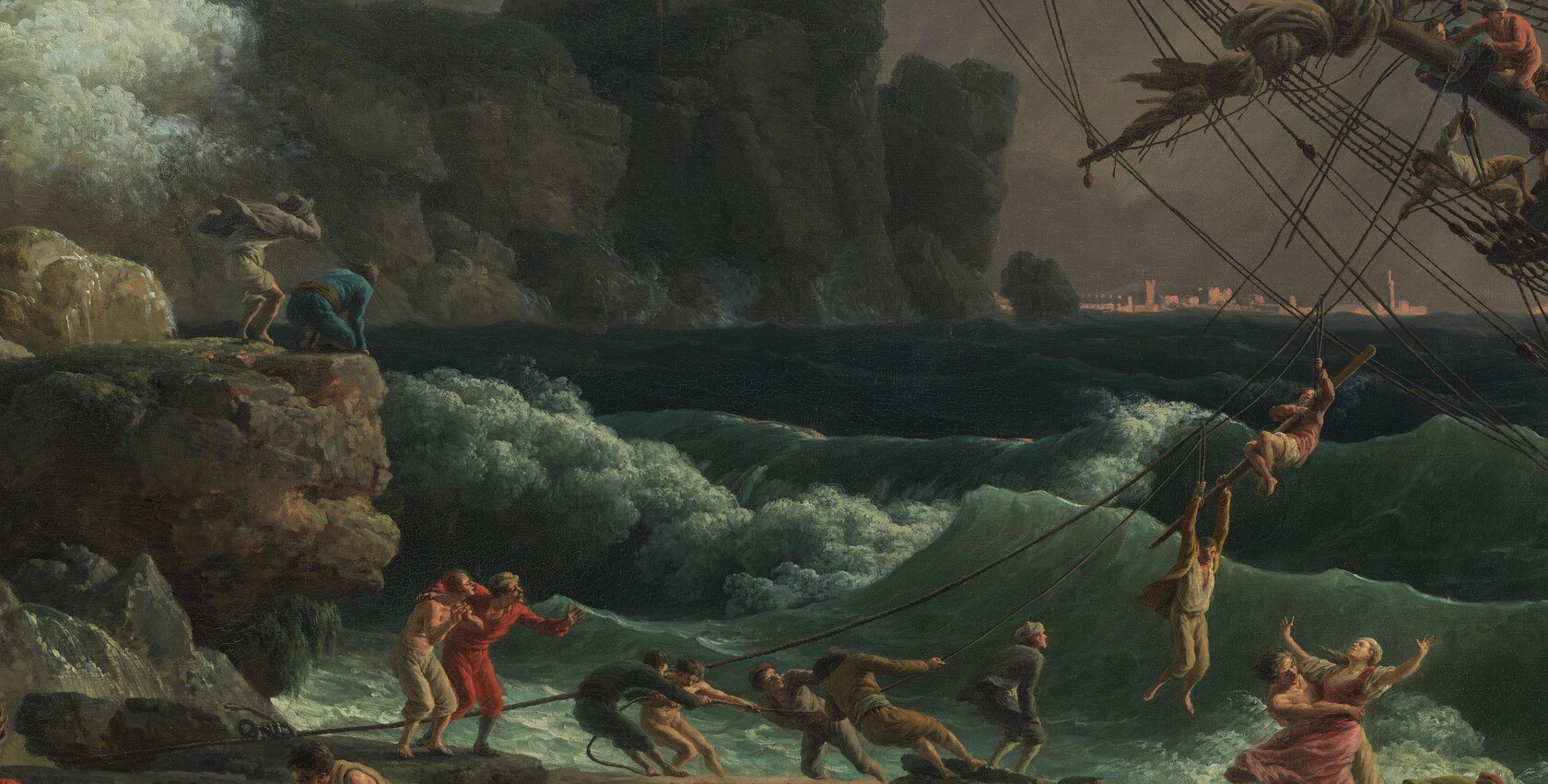
Look to the shore. A woman stands with her arms raised toward the wreck, a classical pose of anguish that reads instantly across any century. Just below her, another figure has dropped to one knee at the water’s edge, reaching toward the waves. And if you follow their gaze into the white surf between the rocks and the stricken ship, you will find what they are reaching for: a human body, partially submerged, easy to miss in the foam.
Vernet was the preeminent marine painter of his century, his waves were so admired that Diderot said he had “taught the sea to France.” In the 1770s, shipwrecks were not distant metaphors. Coastal communities often watched disasters unfold from shore with no means to intervene. The painting does not inflate tragedy into allegory; it records a particular horror: someone is drowning, and everyone on the rocks can do nothing but watch.
The warm amber light breaking on the right horizon only sharpens the cruelty, calm weather sits just out of reach. Vernet died in 1789, the year of the Revolution. His son and granddaughter both became painters, but this painting remains among his most emotionally direct works.
Details
Transcript
Look past the broken ship. Everyone on shore is watching the same patch of sea. One woman lifts her arms toward that spot. Someone else kneels at the water’s edge, reaching in. Now look inside the foam between the kneeling figure and the wreck. A body is there, half-submerged. Vernet painted this in 1772. Shipwrecks were not allegories. They happened. Families watched from the rocks.