Baron Alexander von Humboldt by Julius Schrader
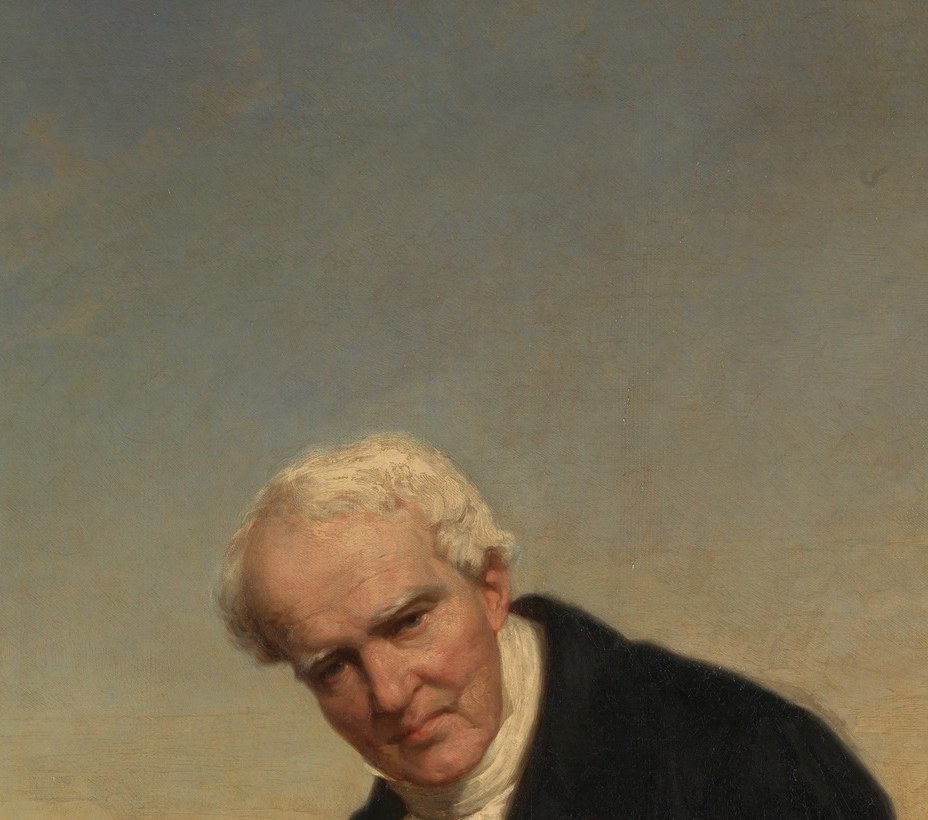
This is Baron Alexander von Humboldt, painted by Julius Schrader in 1859, now in the collection of The Metropolitan Museum of Art. It is the last portrait of the most famous scientist of the 19th century, finished when Humboldt was 90 years old and within weeks of his death.
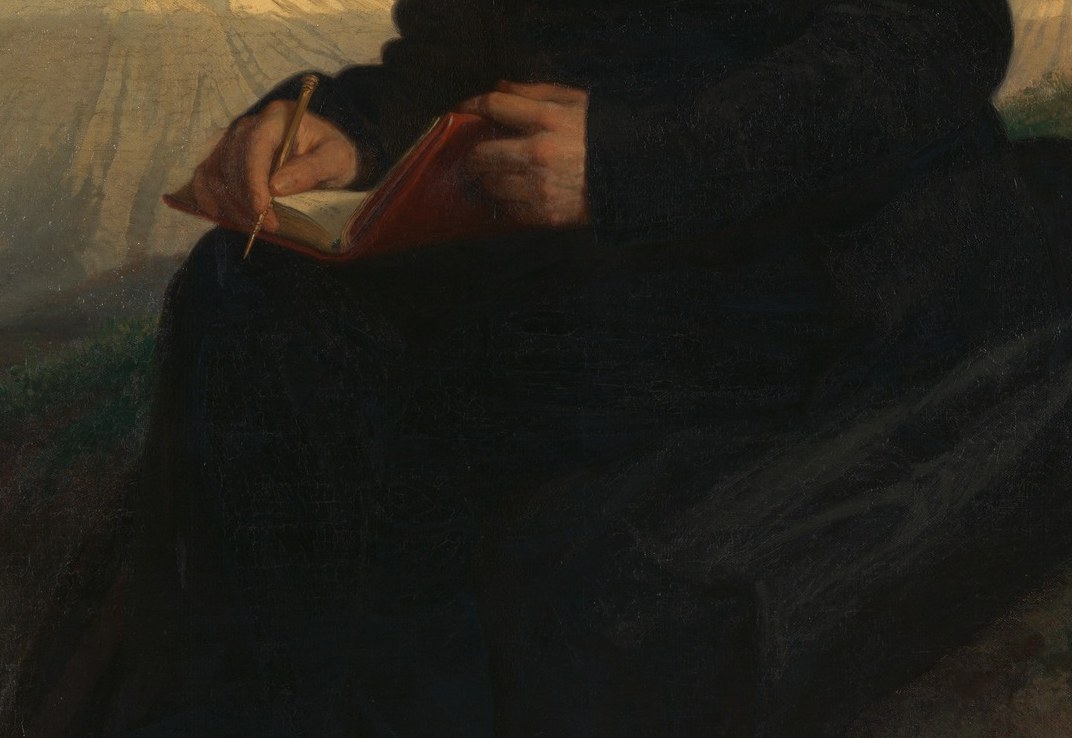
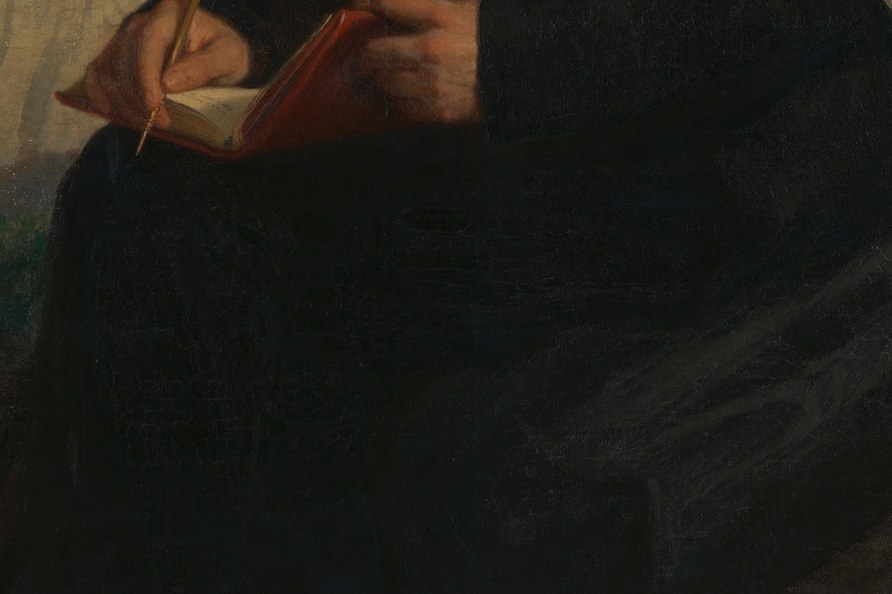
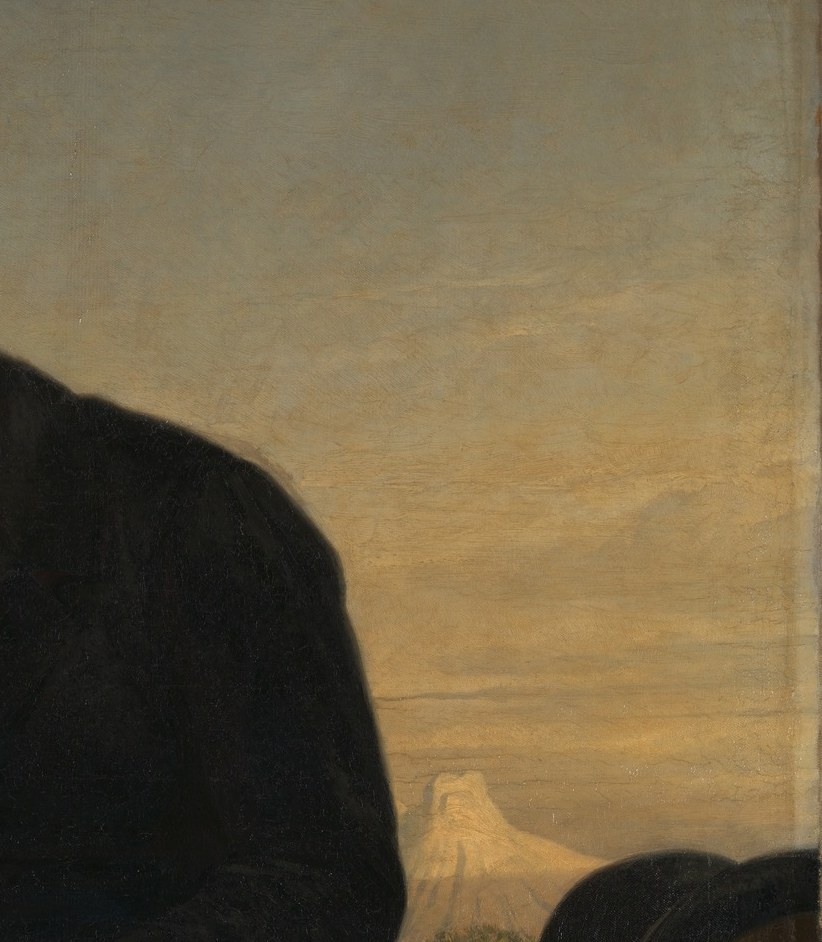
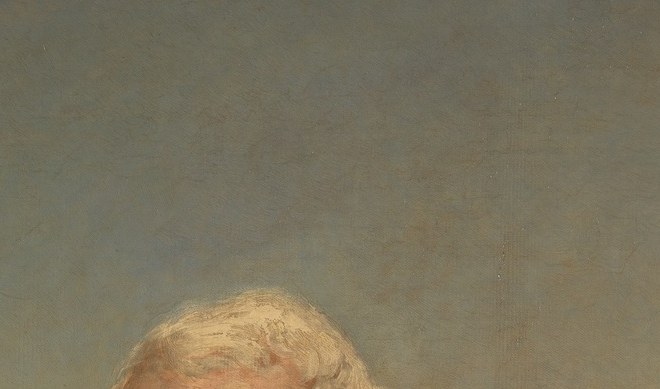
Look at the open notebook in his hands. Humboldt is not posed as a statesman or a grandee, he is a man interrupted while working. The hands and the notebook are the key to the entire composition: they tell you that his mind did not retire. Now look behind him. That volcano is Chimborazo, the Ecuadorian peak he climbed in 1802 to set a world altitude record no one would break for decades. It stands here as his biography in a single silhouette.
The scandal, such as it was, is peculiar and self-inflicted. Following Humboldt's death, the painter Julius Schrader grew dissatisfied with the portrait. He returned to the canvas and painted out the volcano, scraping Chimborazo off and replacing it with an empty sky. The mountain you see today was restored later, but for a period, the defining feature of Humboldt's identity was erased by the artist himself. No public outcry, no shredded reputation, just a painter's private revision that quietly warped history.
What does it mean when an artist loses faith in the symbol of a man's greatest achievement?
Details
Transcript
Berlin, 1859. The most famous scientist on Earth sits for a portrait. Alexander von Humboldt is 90 years old. He has weeks left. Look at what he holds. Not a book. Not a globe. An open notebook. He is still working, mid-thought, mid-sentence. Behind him, a volcano. Chimborazo, in Ecuador. He climbed it in 1802, higher than anyone had ever stood on Earth. That mountain is the story. But the painter removed it. Schrader later scraped the peak off the canvas and repainted only sky.