Lady Elizabeth Delmé and Her Children by Reynolds, Joshua, Sir
Sir Joshua Reynolds’s "Lady Elizabeth Delmé and Her Children," painted between 1777 and 1779, is a majestic group portrait now held at the National Gallery of Art in Washington, D.C. It perfectly embodies the “Grand Manner” style championed by Reynolds, prioritizing an idealized aristocratic presence over strict individual likeness.
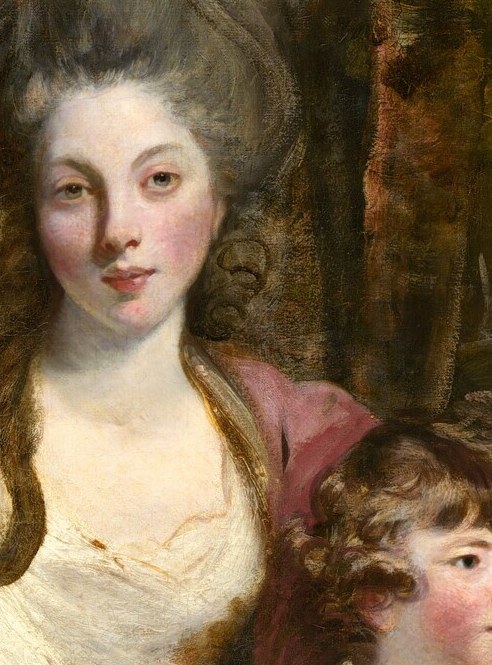
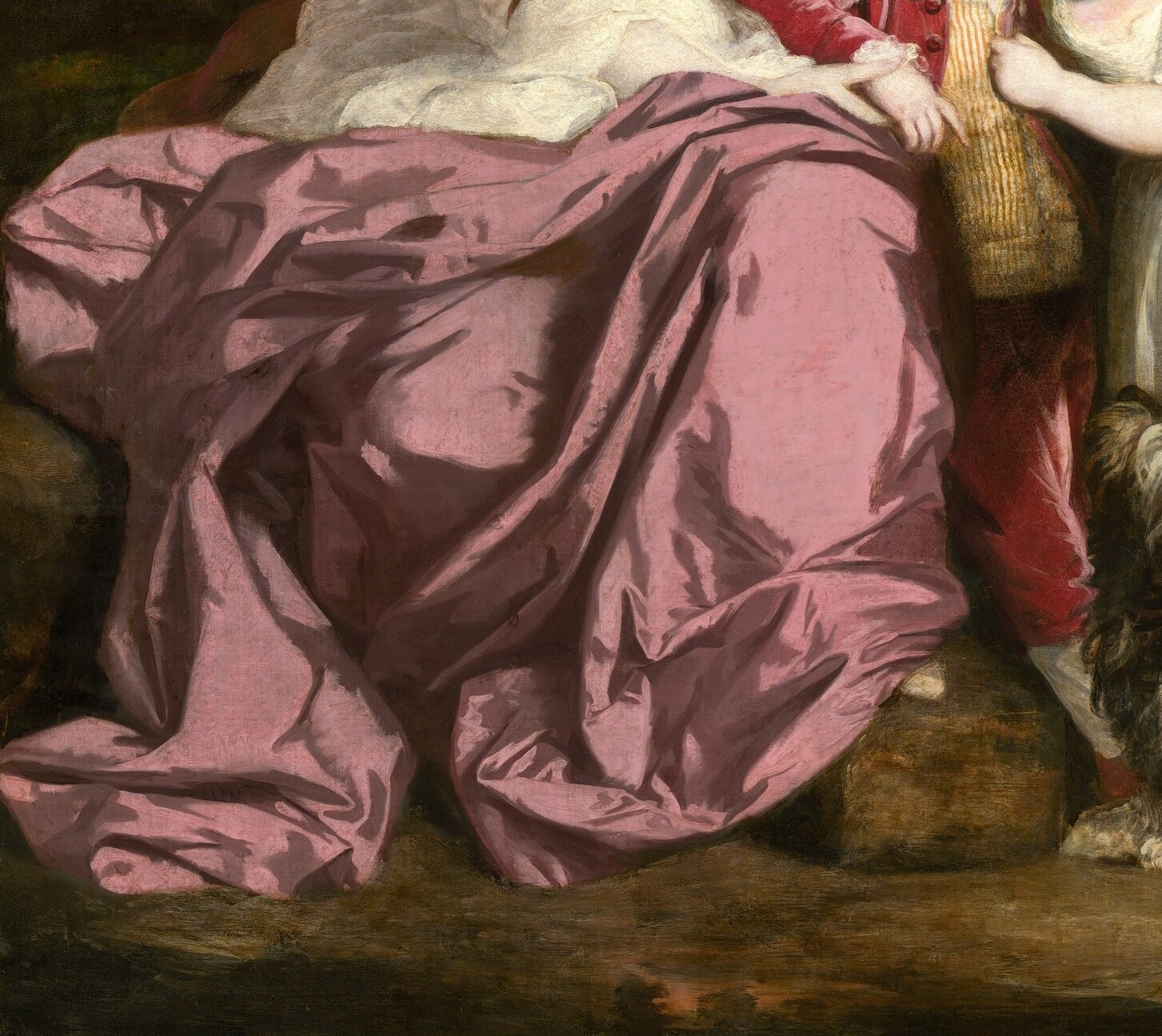
Notice Lady Elizabeth’s serene, almost distant expression, a hallmark of the Grand Manner which suppressed psychological individuality for a more stately grandeur. Yet, subtle details, like her hand resting gently on her son’s shoulder and his hand reaching back for her, suggest a profound, quiet bond beneath the formality.
Reynolds, who received three hundred pounds for this commission, meticulously crafted the scene, drawing inspiration from Raphael's Madonnas for the triangular composition and referencing Rembrandt and Titian in his use of rich, dark backgrounds. The painting remained with the family until 1937, when it was gifted to the National Gallery of Art.
This painting invites us to look beyond the posed formality to find the genuine human connections within. What emotions do you sense in their gestures?
Details
Transcript
This grand portrait of Lady Elizabeth and her children was painted in the 1770s. The painter aimed for aristocratic grandeur, not a precise likeness. Her serene face expresses suppressed individuality, as was the ideal for her rank. But look at her hand, a subtle touch on her eldest son's shoulder. And his hand, reaching for his mother, a quiet gesture of affection. Despite the formal style, true human connection shines through.