Father Hennepin Leaving the Mississippi to Join La Salle. May 8, 1680 by Catlin, George
George Catlin painted 'Father Hennepin Leaving the Mississippi to Join La Salle. May 8, 1680' in 1848, turning a 17th-century expedition into a meditation on scale and geology. It lives at the National Gallery of Art.
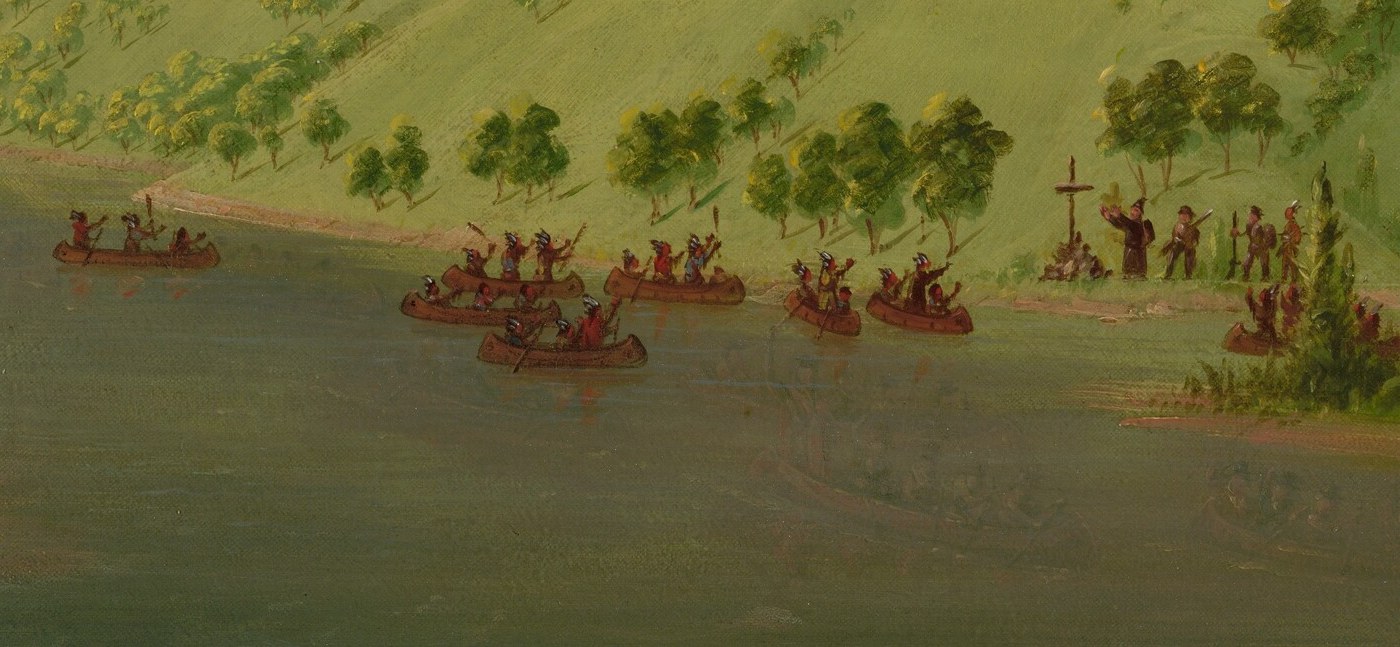
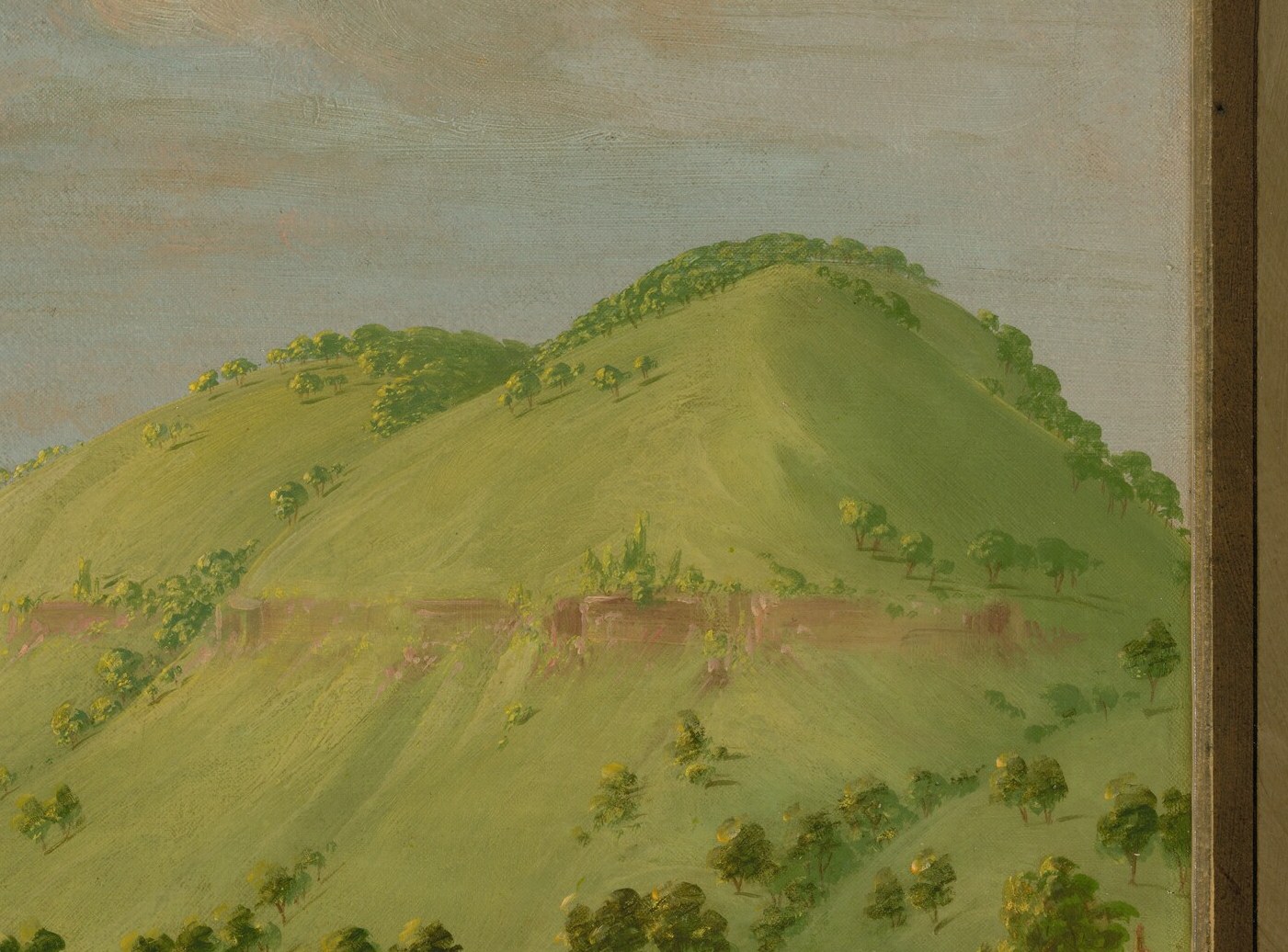
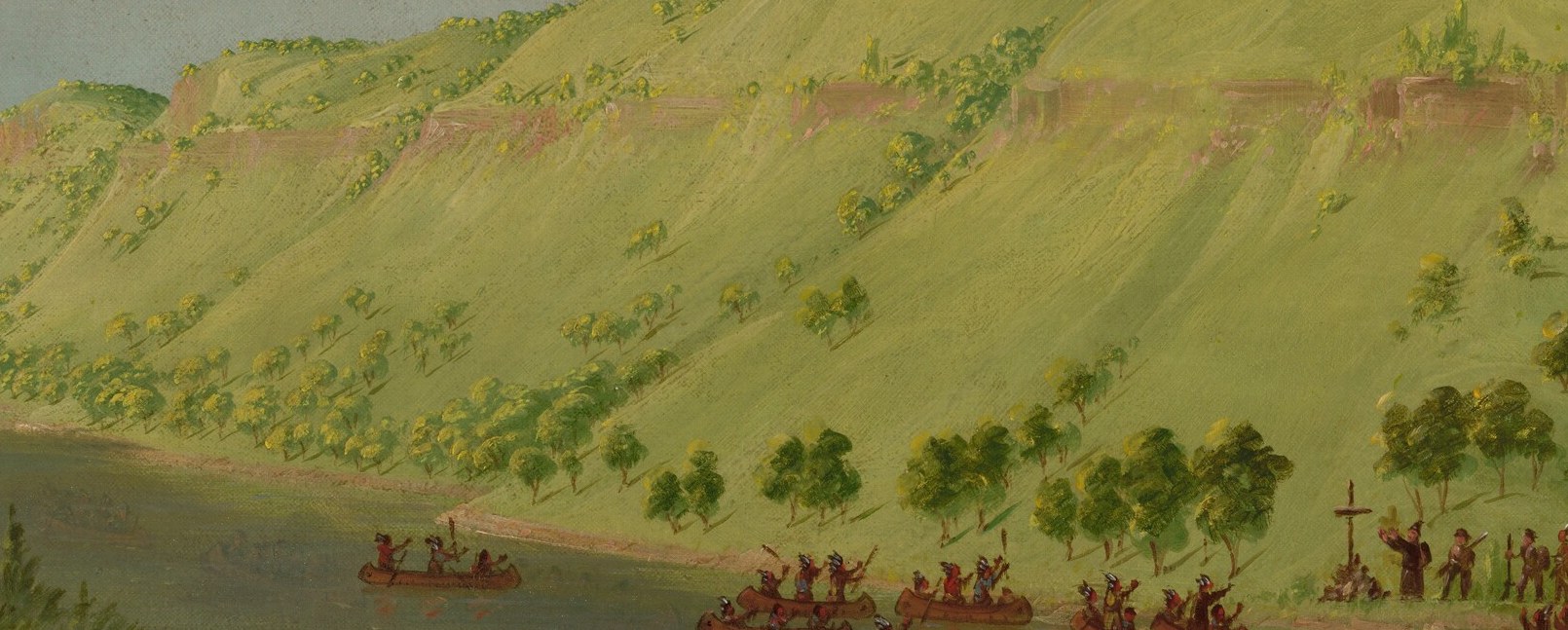
Find the canoes first, just specks on the broad river. The central character is the green limestone bluff. Catlin doesn't use a neat academic formula for the rocks; he renders the strata with a documentary eye he sharpened sketching on the frontier.
Catlin was a lawyer who left the courtroom to travel the American West five times in the 1830s, recording Plains Indian life. This painting is a departure. He reconstructed an event from 1680, when Father Hennepin paddled away to find La Salle, and he did it nearly two centuries later, romanticizing a landscape already vanishing.
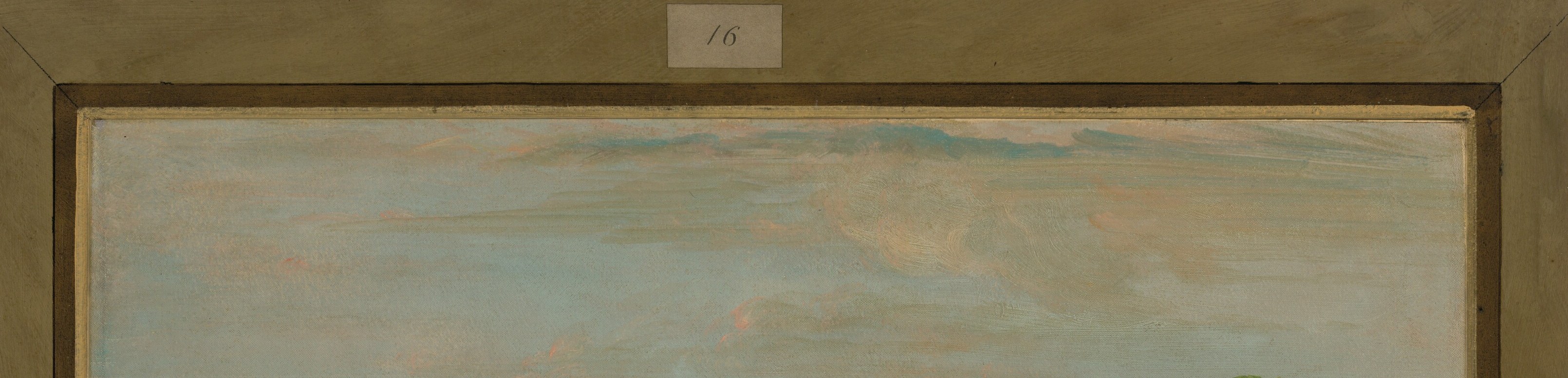
Watch the top of the bluff dissolve into warm atmospheric haze. That single gesture, the hard geology giving way to soft Romantic light, is the whole painting. What does that choice say about how Catlin saw the frontier?
Details
Transcript
They look like specks against it. A 17th-century priest and his party, vanishing into wilderness. The bluff is a wall of green limestone. Look at the rock face. No studio formula, just strata. Catlin was self-taught. He drew what the frontier taught him. Now look up. The bluff dissolves into warm haze. A naturalist's eye, a Romantic's sky. Both true at once.