Edmondo and Thérèse Morbilli by Degas, Edgar
Edgar Degas painted "Edmondo and Thérèse Morbilli" around 1865, a portrait of his own sister and her husband. He kept the painting for his entire life, never selling it. It now lives at the National Gallery of Art in Washington, D.C.
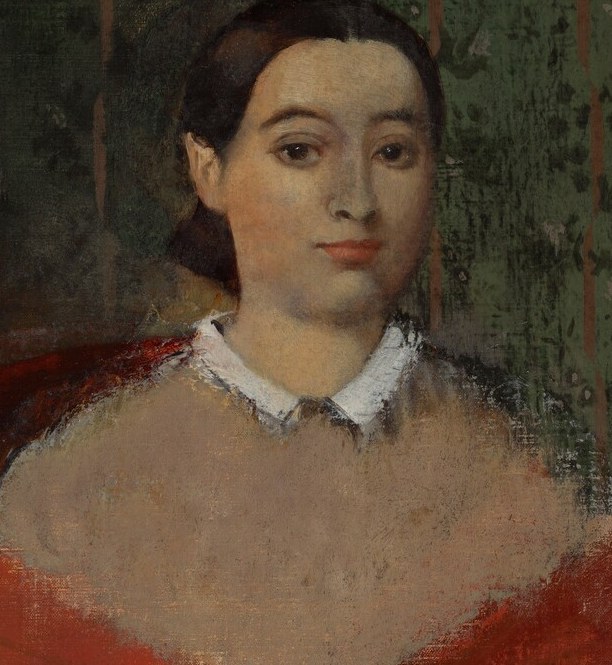
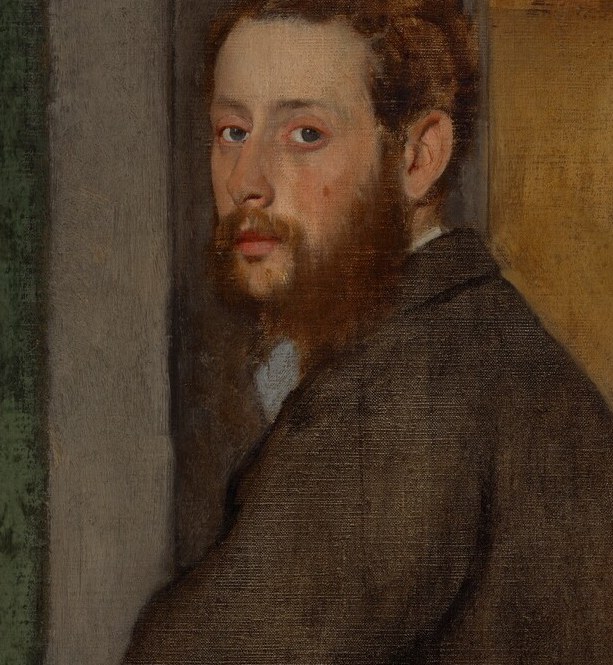
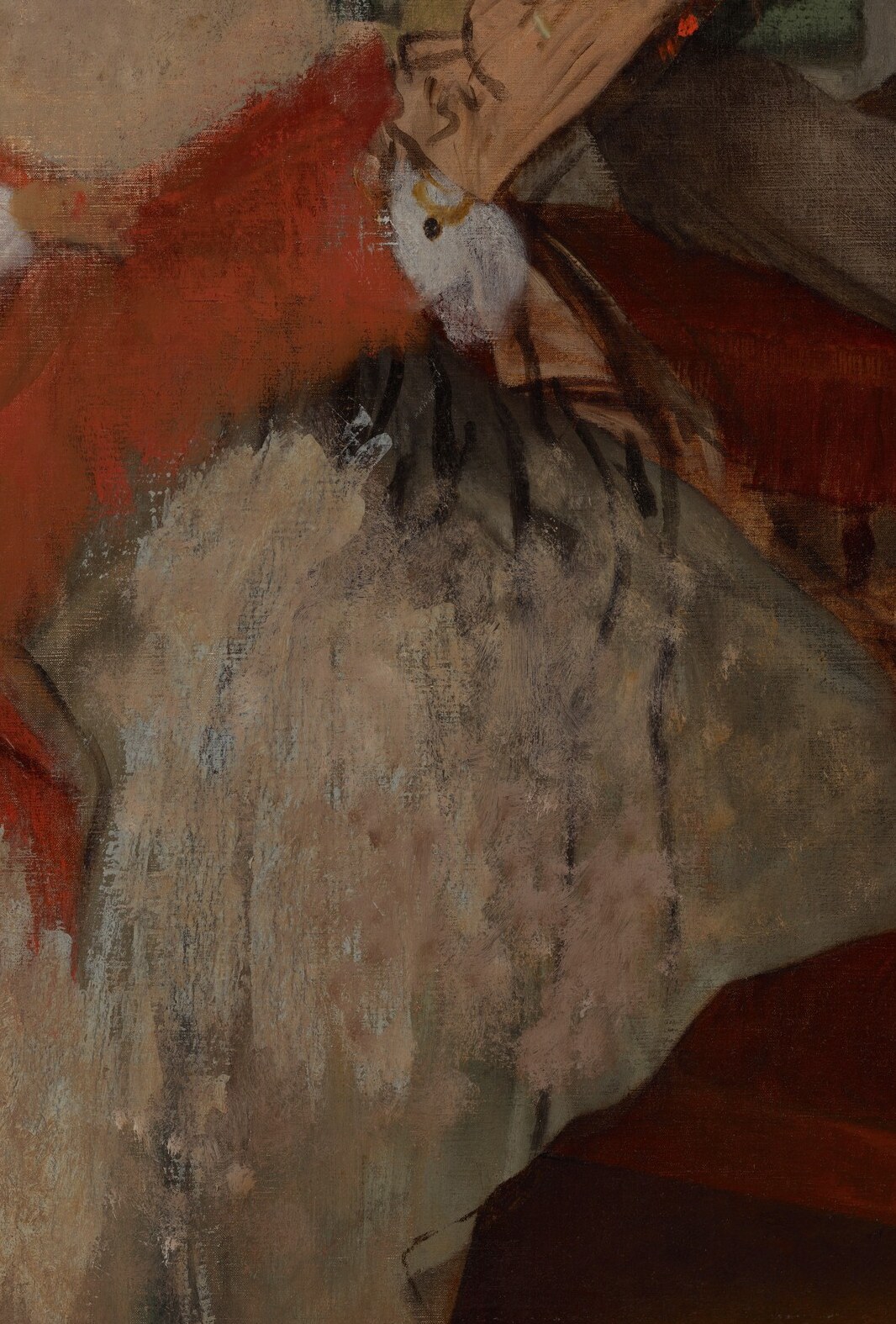
Look at the physical distance between them. She sits in a vivid red dress, holding a closed fan, her posture composed but her expression melancholic. He leans against the wall, his stare intense and aimed somewhere outside the frame. The green wallpaper and red sofa create a warm interior, but the couple does not share the space. They occupy the same canvas, not the same moment.
The marriage was not a happy one. Edmondo Morbilli was a banker from an aristocratic Italian family; Thérèse, his wife, was the daughter of a French banker and Degas's beloved sister. Family letters suggest genuine strain. Degas, a master of psychological observation, did not flatter them. He captured the quiet weight of two people bound by contract, sitting in a room where the connection has already evaporated.
A family portrait becomes a record of isolation. What do you see in her eyes that Degas might have wanted to protect?
Details
Transcript
She is Thérèse. She is the painter's sister. He is Edmondo, her husband, an Italian banker. They sit together, and yet they are worlds apart. Her hand is still. The fan is closed. His gaze is restless, fixed on something outside the room. Degas never sold this. He kept it until he died.