The Bridge at Villeneuve-la-Garenne by Alfred Sisley

Alfred Sisley's The Bridge at Villeneuve-la-Garenne (1872) cost just 200 francs when the dealer Paul Durand-Ruel bought it directly from the artist. That was one of the earliest purchases Durand-Ruel ever made from Sisley, a painter who would die in 1899 almost destitute and largely unrecognized. The canvas now hangs in The Metropolitan Museum of Art in New York, a cornerstone of their Impressionist holdings.

Look at how Sisley frames the iron bridge. He sets his easel low, almost at the river's surface, and crops the left stone pier so it runs off-canvas. The deck slashes diagonally across the composition. It is a shockingly modern compositional choice for 1872, borrowed more from Japanese prints and photography than from anything taught in the academies.

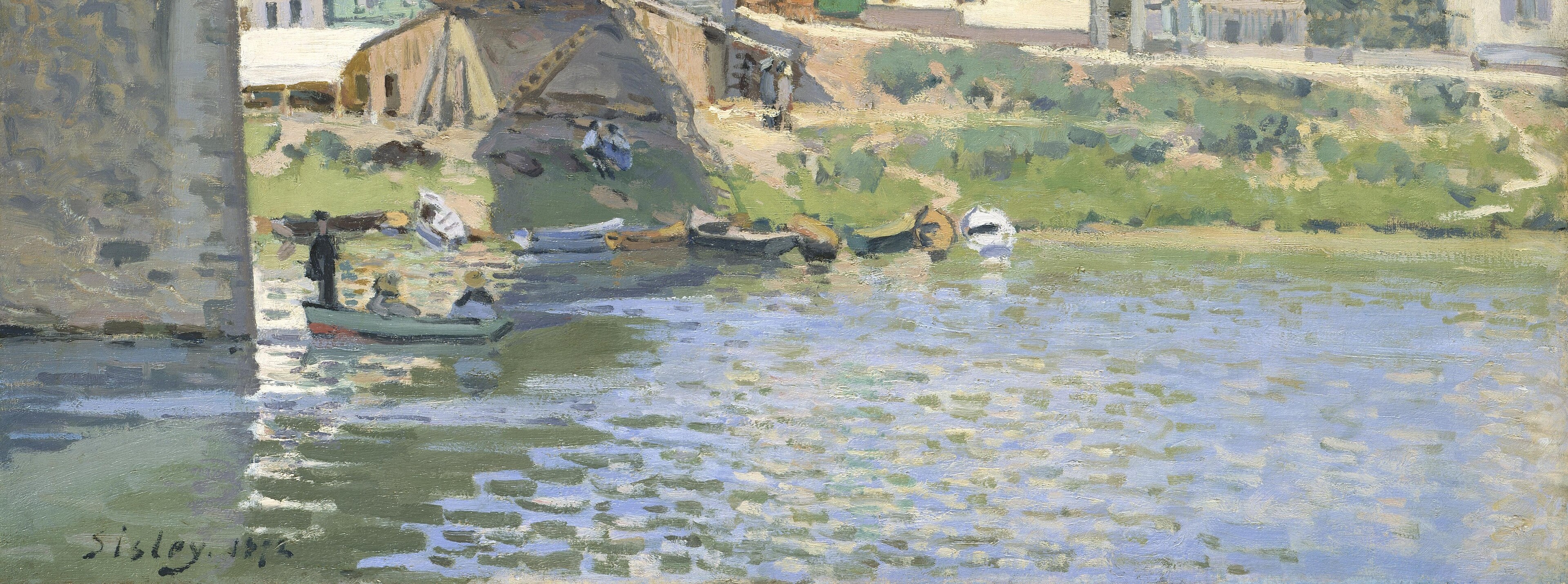
The small white skiffs and the promenading figures along the bank are not decorative. They document a new social reality: weekend leisure on the Seine, made possible by the expanding railway network that had also made this cast-iron bridge necessary. Industry and relaxation share the same frame, rendered in the same flickering, high-keyed brushwork.

After Durand-Ruel's initial purchase, the painting passed to the collector Jean-Baptiste Faure and remained in French private hands for decades. It crossed the Atlantic only in the mid-20th century, entering the Met as a gift in 1964. Sisley never saw a franc of that later value. What do you think a painting owes its maker once it leaves the studio?

#arthistory #impressionism #alfredsisley

Details
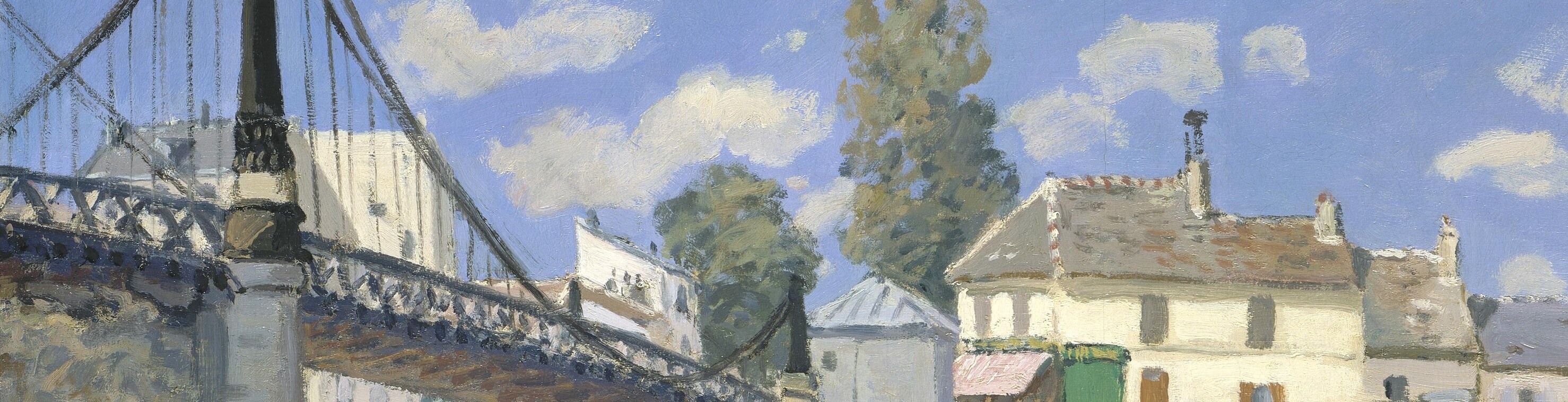
Sisley's most radical compositional choice , the deck enters cropped from the far left and rises toward the right in a near-geometric diagonal, treating iron engineering the way a modernist would treat an abstract plane; almost no contemporaneous painter framed a bridge this close.
This is the painting's technical showcase , directional horizontal strokes of cobalt, grey-green, and white create optical vibration that makes still water read as perpetually moving; the technique anticipates Monet's serial water studies by two decades.
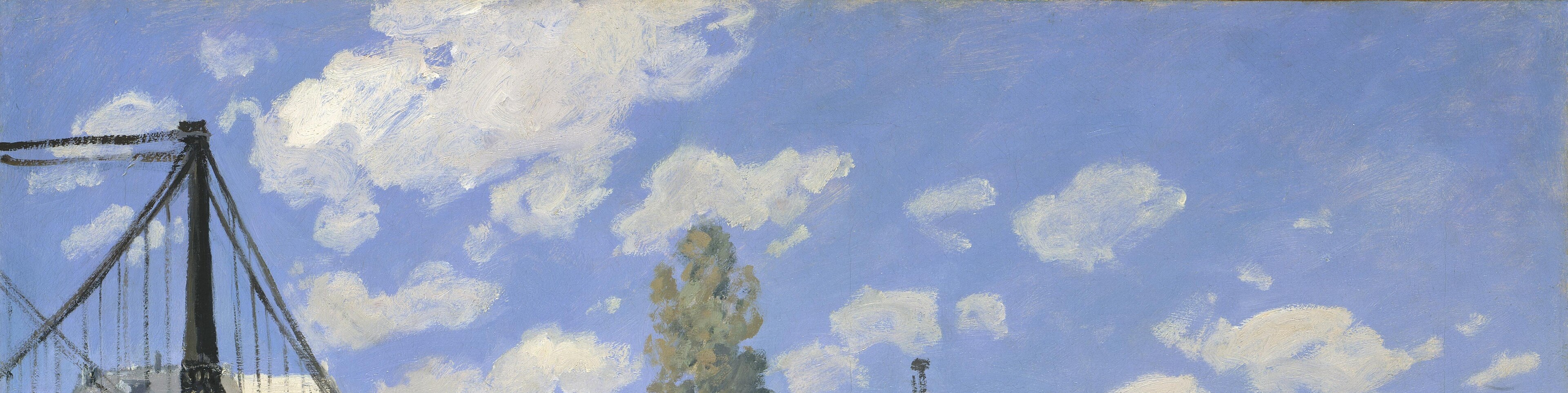
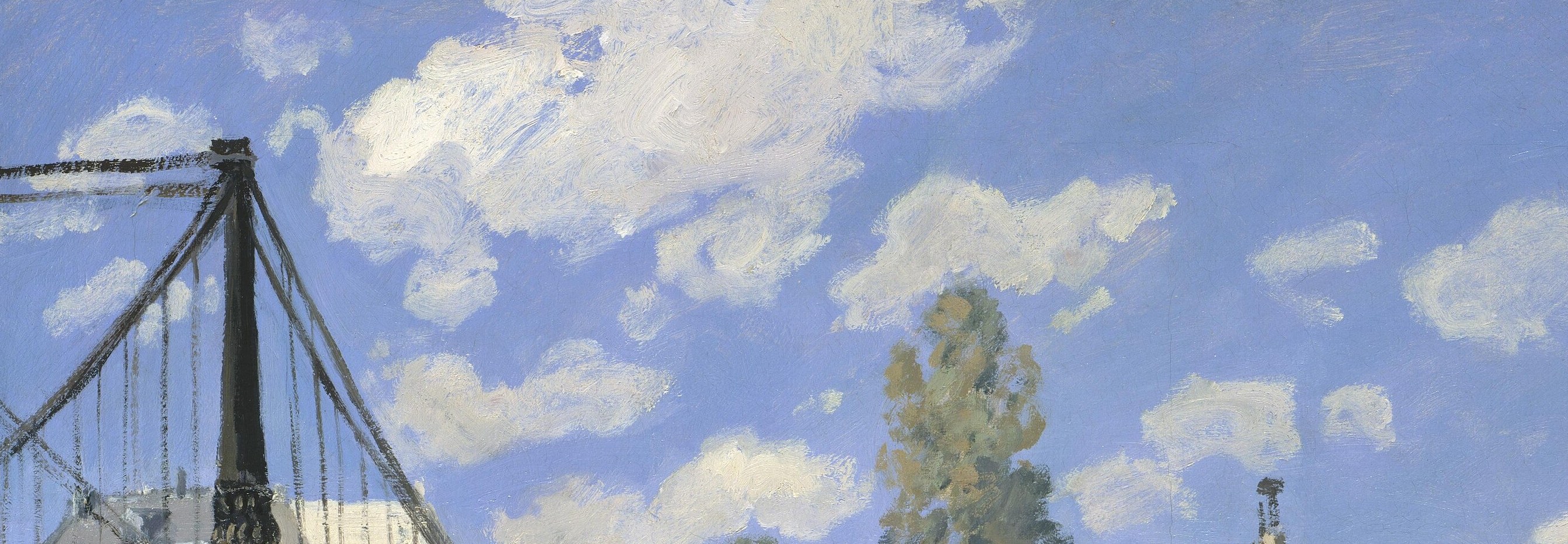
The sky occupies roughly the top quarter and is painted with flat, confident strokes of white and blue-grey; its rounded cloud masses rhyme with the stone of the piers and provide the tonal key against which all other values are calibrated.
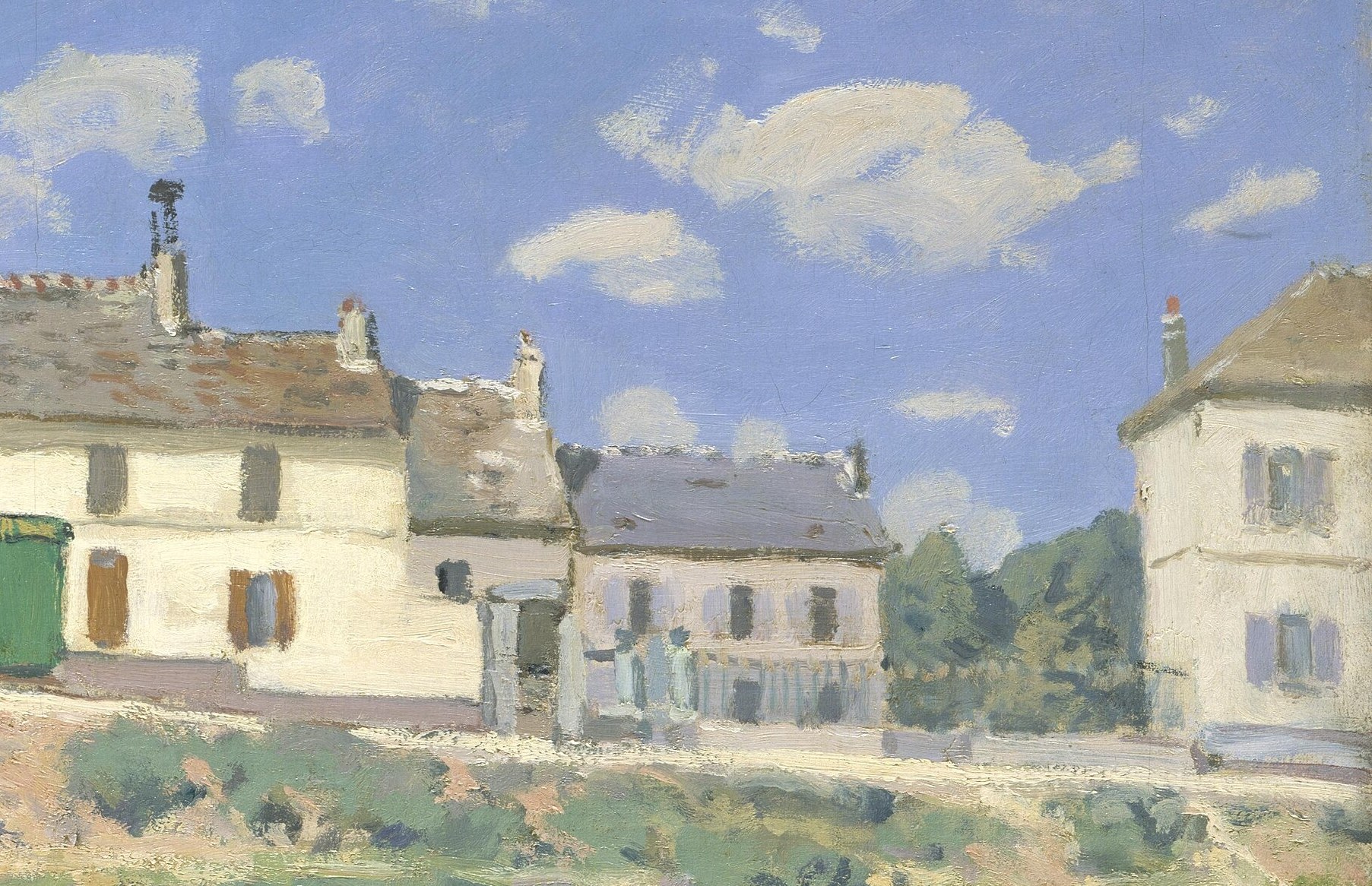
The warm white walls of Villeneuve-la-Garenne anchor the right side and name the painting's place; the shuttered windows and pitched roofs record a suburban vernacular that the iron bridge physically connected to Paris, changing the village's character entirely.
The ornate 1844 ironwork creates a rhythmic screen of curves and verticals that breaks the sky into compartments; the engineering detail is faithfully recorded yet dissolved into Impressionist flicker , industrial precision rendered as sensation.
Transcript

When Durand-Ruel bought this, he paid the artist 200 francs. Less than the cost of a good horse. Sisley set his easel nearly at water level. That diagonal deck was an audacious crop for 1872. It locks you inside the structure, not in front of it. Those tiny skiffs hold the painting's argument. Leisure on the Seine was new, brought by the same railroad that built this bridge. Sisley died in poverty. This work now anchors a Met gallery.