The Virgin and the Child by Petrus Christus
Petrus Christus's The Virgin and the Child (c. 1450, Museo del Prado) holds a small, powerful symbol of Christ's destiny. This oil painting is a prime example of Early Netherlandish art, showcasing meticulous detail and a sophisticated understanding of perspective.
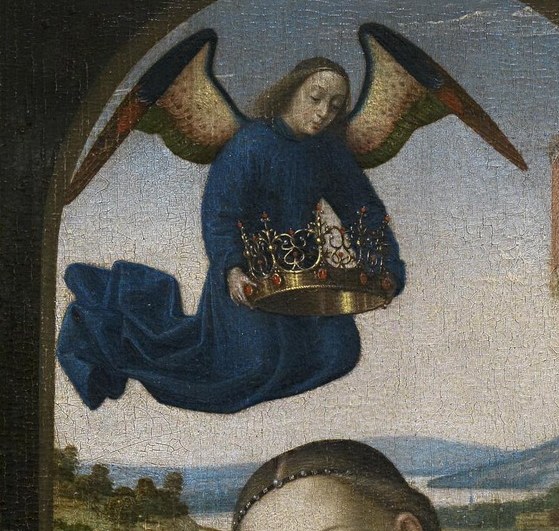
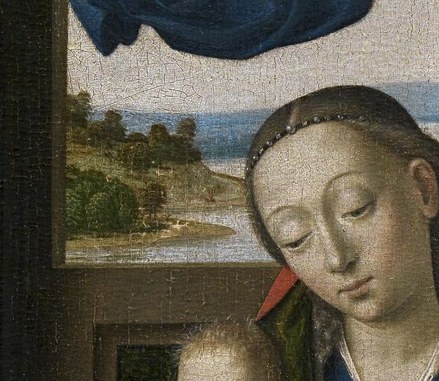
Observe the serene Virgin Mary, her blue garment a sign of her status, gently holding the infant Jesus. Notice the hovering angel, and the symbolic crown. The composition includes architectural elements and glimpses of distant landscapes, blending the sacred and the earthly.
Christus was a leading Bruges painter influenced by Jan van Eyck. This work, despite its relatively small size, is rich with theological meaning, a hallmark of the period's religious art. The painting now resides in the Museo del Prado.
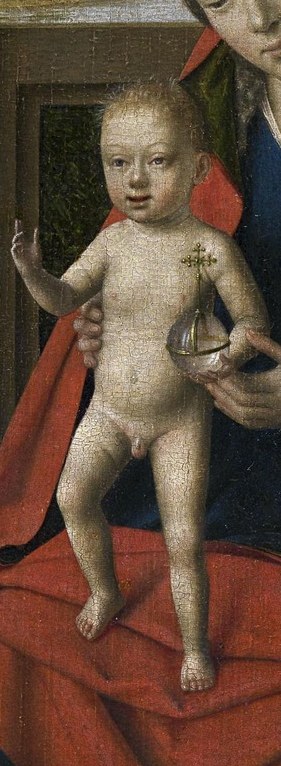
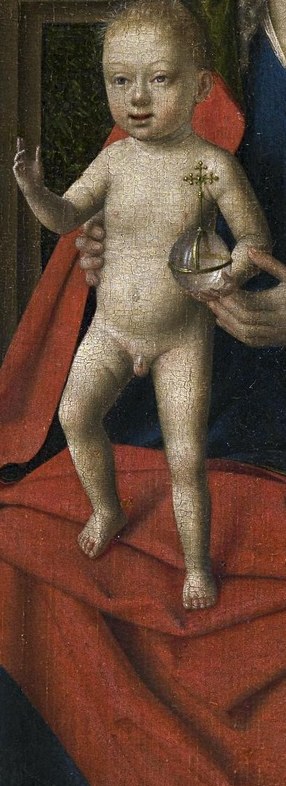
The detail of the small cross on the child's chest is a subtle reminder of his ultimate purpose, a quiet yet profound element often missed at first glance.
Details
Transcript
This painter was ahead of his time. He shows Mary holding the Christ Child. Mary's deep blue garment signifies royalty. An angel hovers above with a crown. Look closely at the child's chest. A tiny cross hints at future sacrifice.